Urgent: Amnesty appeal as Haitham al-Maleh’s health fails #syria #amnesty #almaleh #labwani

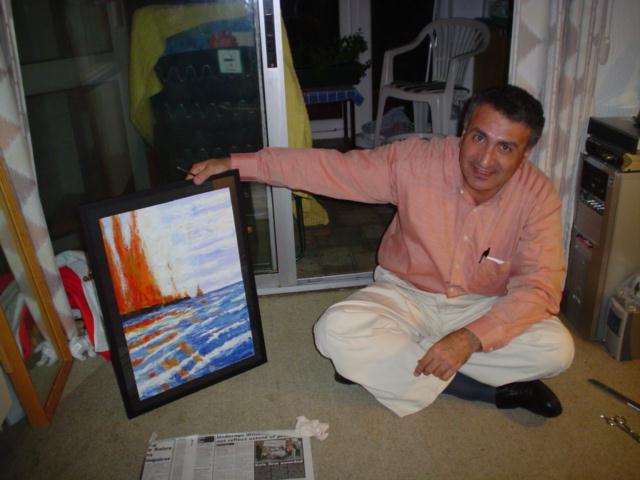
haytham al-malehVery worrying news from Amnesty International regarding the health of Hytham al-Maleh.

Haitham al-Maleh was born in Damascus, in 1931 holds a degree in Law from Damascus University and a diploma in public international law. He is an award-winning human rights activist and lawyer. On 7 December 2004 he received an award from the National Advisory Committee (French) for Human Rights for his research on torture. He received his award from the French ambassador in Damascus in a special ceremony because the authorities prevented him from travelling to Paris. On 11 March 2006 he was awarded a Dutch medal in recognition of his courageous struggle for human rights.

The text of Amnesty’s recent press release is reproduced below.

Please write as requested by Amnesty.



URGENT ACTION

Haitham al-Maleh’s health failing

Prisoner of conscience Haitham al-Maleh is very ill, and he has not taken any of the medication he needs since 11 February.

Since 11 February, the authorities have not allowed detainees in ‘Adra prison to obtain medication from anywhere but the prison pharmacy. Haitham al-Maleh will only take medication provided by his family, because he believes the prison pharmacy’s medicine is of poor quality.

He was brought before a military judge in Damascus on 22 February to face new charges of “insulting the president” and “slandering a governmental body”, in a public hearing. These charges were based on information from a prisoner detained for a non-political offence. Haitham al-Maleh said the information consisted of “lies and acts of provocation” by the prisoner.

Diplomats and two Italian lawyers representing the International Federation for Human Rights, an international non-governmental organization that aims at improving human rights protection, who had come to observe the trial session, were not allowed to attend. Haitham al-Maleh’s wife, who was present in court, was not allowed to shake his hand or talk to him. On his way out, security officers dragged him away from her when they embraced.

According to those who did attend the hearing, Haitham al-Maleh was so frail that his voice was weak. He had passed out during the week before the hearing, because he had not received his medication. The day after the hearing, the new charges were dropped under a presidential amnesty for prisoners convicted of minor offences, but the charges brought against him on 3 November still stand.

Conditions in ‘Adra prison are poor. Haytham al-Maleh sleeps on a mattress on the floor in an overcrowded cell. He has diabetes and an overactive thyroid gland and has not had any medication since 11 February, although he needs to take regular medication to treat both conditions. His health is deteriorating. Individuals suffering from diabetes and an overactive thyroid gland who do not take medication are at risk of severe weight loss, falling into a coma, and even heart and kidney failure. Unlike other detainees in ‘Adra prison, Haytham al-Maleh is usually accompanied by a prison officer when meeting with the prison doctor.

PLEASE WRITE IMMEDIATELY in Arabic, English, French or your own language:

Urging the authorities to release Haytham al-Maleh immediately and unconditionally, as he is a prisoner of conscience, detained solely for the peaceful exercise of his right to freedom of expression.

President

Bashar al-Assad
Presidential Palace
al-Rashid Street
Damascus, Syrian Arab Republic
Fax: +963 11 332 3410
Salutation: Your Excellency

Minister of Interior

His Excellency Major Sa’id Mohamed Samour
Ministry of Interior
‘Abd al-Rahman Shahbandar Street
Damascus, Syrian Arab Republic
Fax: +963 11 222 3428
Salutation: Your Excellency

Copies to: Minister of Foreign Affairs

His Excellency Walid al-Mu’allim
Ministry of Foreign Affairs
Abu Rummaneh
al-Rashid Street
Damascus, Syrian Arab Republic
Fax: +963 11 332 7620
Salutation: Your Excellency

Additional Information

Haitham al-Maleh was charged by a military judge on 3 November with “conveying false news”, “weakening national sentiment” and “slandering a governmental body”. These charges relate to his public criticism of human rights violations and corruption by Syrian officials, which included a phone interview in September with a Europe-based satellite channel, Baradda TV.

Kamal al-Labwani

Prison authorities often encourage prisoners charged with or convicted of non-political offences to inform on political prisoners and prisoners of conscience. On 23 April, Kamal al-Labwani, a prisoner of conscience was given an additional term of three years in prison by the First Criminal Military Court in Damascus for “broadcasting false or exaggerated news which would affect the morale of the country” under article 286 of the Penal Code. This sentence was added to the 12-year term he was already serving on account of his work advocating peaceful reform in the country. This new sentence was based on the testimony of a prisoner in his cell in ‘Adra prison that Kamal al-Labwani had returned from one of the hearings of his previous trial and spoken disparagingly of the government. Kamal al-Labwani denied the charge and said prisoners detained for non-political offences were working in conjunction with the prison authorities, who had ignored his complaints that he had been assaulted twice in the prison.

Walid al-Bunni

Another prisoner of conscience, Walid al-Bunni, is serving a 30-month sentence for his involvement in the Damascus  Declaration for Democratic National Change, a coalition of unauthorized political parties, human rights organizations and pro-democracy activists from across the political spectrum. He was brought before Damascus Criminal Court on a new charge of “conveying false news” on 4 May 2009, based on the testimony of another prisoner. The new charge was finally dropped on 17 June 2009 and Walid al-Bunni was acquitted.

Add to FacebookAdd to DiggAdd to Del.icio.usAdd to StumbleuponAdd to RedditAdd to BlinklistAdd to TwitterAdd to TechnoratiAdd to Yahoo BuzzAdd to Newsvine

Eva Sajovic: “Be-Longing” blog #sajovic #gypsy #roma #traveller

Readers may be interested to know that Eva Sajovic, the Slovenian photographer I’ve been writing about, has her own blog. Please check it out. Please stop by and take a look.

Add to FacebookAdd to DiggAdd to Del.icio.usAdd to StumbleuponAdd to RedditAdd to BlinklistAdd to TwitterAdd to TechnoratiAdd to Yahoo BuzzAdd to Newsvine

Syria: Koki, Aqil and other journalists freed by regime – a glimmer of hope for Kamal, Hytham, Anwar and colleagues? #labwani #syria

Alkarama have reported that Ma’an Aqil and Abdul Rahman Koki have been freed by the Syrian government within days of each other.

Aqil, a journalist in Damascus, was arrested on 22 November 2009 and was detained arbitrarily for three months (I blogged about his detention in December). Alkarama report that he was released Tuesday 23 February 2010.

Yesterday, Alkarama reported that Abdul Rahman Koki was released on Tuesday 16 February 2010, following a presidential pardon.

In both cases Alkarama had referred the cases to the UN Working Group on Arbitrary Detention.

Reporters Sans Frontières also report that two other journalists, Ali Taha and Ali Ahmed, have also been released after weeks of arbitrary detention.

Whilst being cautious not to overstate the significance of these releases, they offer a faint glimmer of hope in so far as the Syrian regime appears willing to free individuals who have clearly been prepared to challenge the government domestically and, in Koki’s case, be directly critical of  it. As Alkarama notes, we must take this opportunity to remind the Syrian authorities of their responsibility towards international human rights law and urge them to release all prisoners of conscience, including Kamal al-Labwani, Hytham al-Maleh and Anwar al-Bunni.

Add to FacebookAdd to DiggAdd to Del.icio.usAdd to StumbleuponAdd to RedditAdd to BlinklistAdd to TwitterAdd to TechnoratiAdd to Yahoo BuzzAdd to Newsvine

Brown, bullying and international perceptions

Regardless of the truth of the bullying allegations surrounding Brown and Number 10, they appear to be creating an even less savoury picture of goings on with our friends in the international community.

Apple Daily runs an online news channel called Next Media that, instead of using actors, animates its newscasts in order to make them more exciting. Launching simultaneously on 26 November 2009 in Taiwan and Hong Kong, it quickly courted controversy with parents complaining about explicit, erotic and violent content. If you are interested, Media, the marketing and communications newspaper for Asia-Pacific carries an interesting article on the rows surrounding Apple Daily on its website.

In any event, the sales-boosting bullying furore around Rawnsley’s new book, The End of the Party, has clearly attracted attention in the Asia-Pacific region and has made its way into the most extraordinary news bulletin I’ve yet seen on the matter:

It is difficult to know quite what to make of the provocative way in which Next Media presents current affairs. Suffice to say that their coverage of the bizarre legal dispute in Colarado over who owns the head of Mary Robbins (the Robbins family or Arizona’s Alcor Life Extension Foundation) suggests they like to sensationalise sensational stories.

However entertaining it is, it makes me grateful for the BBC and public service broadcasting.

Add to FacebookAdd to DiggAdd to Del.icio.usAdd to StumbleuponAdd to RedditAdd to BlinklistAdd to TwitterAdd to TechnoratiAdd to Yahoo BuzzAdd to Newsvine

Cold war ghosts: legacies in concrete and film

At dinner last night, we talked about the way that the experience of war imprints itself on the experiences of individuals and societies differently, according to the war and the immediacy of its domestic impact.

Reflecting on that conversation, it struck me that growing up with the threat of Mutually Assured Destruction hanging over us left its own imprints. Less immediately dramatic, perhaps, than the years of evacuation, rationing and lights out of World War Two, but no less terrifying in its own insidious way, the Cold War offered plenty of sleepless nights to this over-active imagination.

I remember panicking when we were told that total annihilation was just four minutes away. Whenever the sirens were tested I found myself wondering if the radar I now know was based at Jodrel Bank had picked up inbound enemy missiles that would destroy my school and my family and the small world of Langdon Hills that I inhabited. I imagined Soviet tanks trundling through my childhood stamping ground of the Fränkische Schweiz and rolling across Western Europe, destroying everything in their path.

Television films like Threads and the Day After depicted the horrors of a nuclear Armageddon in chilling detail. I remember lying awake for nights, terrified of what would happen.

I also remember taking the bus to Romford to see Rocky IV in 1985 and being reassured that we would always beat the bad guys. How could we not be? Our plucky little hero was avenging his friend’s death and completed his training montage in the frozen Russian countryside with just a few logs at his disposal.

Drago on the other hand, his giant of an opponent, was wired up to the most sophisticated computers and pumped full of steroids – yet our man still triumphed and, in doing so, won the admiration of the Russian President.

Gloriously awful nonsense, but now, looking back, the parameters seem so much safer. In much the way that my father’s grandparents reflected on the unique camaraderie of the Second World War, the sense of social obligation and national community, I catch myself thinking back fondly to the geo-strategic certainty of a time when two superpowers leaned in on each other. The USA and the USSR were the hammer-beam roof of our geo-politics, creaking and immobile under the weight of their respective nuclear edifices.

In this changed world of terrorist cells, underground bombers, dirty bombs and cyber-warfare, such certainty seems oddly nostalgic. For me, that surreal stalemate of infinite nuclear escalation has woven itself into the fabric of memory, mischievously tangling itself with normative childhood archetypes of safety, and I find myself prompted to rueful reflection by the architecture of redundant physical structures or the clumsily amateurish animation of public information broadcasts.

They each harbour the childhood ghosts of lingering summers spent wondering on the end of the world.

The Nuclear Bunker at Kelvedon Hatch is a local example of such a building. I find a certain poignancy in the way that this extraordinary structure, disguised beneath a simple cottage and chillingly significant in its original purpose, has been reduced to such a level that it can now be hired out for parties. If you click the picture below you might see what I mean in the gallery that I have pulled together on Flickr.

Kelvedon Hatch Nuclear Bunker

In a similar way, the series of Protect and Survive public information films retain their ability to shock, despite their amateurishness. I still wonder if hiding under some doors and suitcases would ensure my survival in the event of a nuclear strike.

But perhaps the greatest reminder that this period in our history is dead and gone is the strange news that Latvia recently sold Skrunda, an entire Soviet-era town, now completely deserted. Click on the photo below and you will be transported to an eerie gallery on Flickr that paints a haunting picture of decaying urban sprawl  – its architecture, posters and purpose abandoned to the past.

skrunda

Here the ghosts of my childhood nightmares can still play amongst the radar stations and the tower blocks and the crumbling, brick-strewn classrooms.

Add to FacebookAdd to DiggAdd to Del.icio.usAdd to StumbleuponAdd to RedditAdd to BlinklistAdd to TwitterAdd to TechnoratiAdd to Yahoo BuzzAdd to Newsvine

Kamal Labwani: parliamentary archives page #labwani

Since Kamal was illegally imprisoned by the Syrian regime in Adra Prison, in 2005, numerous of our democratically elected representatives have raised his plight in our national and international parliaments. I have trawled through the websites of the UK Parliament and the European Parliament to consolidate the various representations in one place. I have also linked again to the petition running on the Number 10 website.

Some of you may wonder why I bother.

To some, Kamal is just one more unfortunate political progressive caught on the wrong side of an unreconstructed Middle Eastern dictator.

Not to me.

I bother because he is an artist, a philosopher, a radical and a Liberal.

Most of all, though, I bother because he is my friend.

Please take a look at this parliamentary archives page and be grateful for our own freedoms and democracy.

Add to FacebookAdd to DiggAdd to Del.icio.usAdd to StumbleuponAdd to RedditAdd to BlinklistAdd to TwitterAdd to TechnoratiAdd to Yahoo BuzzAdd to Newsvine

Syria and Human Rights in the European Parliament, September 2009 #eu #syria# labwani

I don’t suppose I am alone in not paying much attention to what our representatives say in the European Parliament.

It is a mistake not to. Trawling through the archives I found the text of a debate from September last year in which the cases of Muhannad Al-Hassani, Kamal Al-Labwani and Anwar Al-Bunni are all referenced.
Take a moment to read it and realise that there is a point to what these people do – and we should be supporting them in their efforts.

Kamal, Anwar and Muhannad need us to.

Add to FacebookAdd to DiggAdd to Del.icio.usAdd to StumbleuponAdd to RedditAdd to BlinklistAdd to TwitterAdd to TechnoratiAdd to Yahoo BuzzAdd to Newsvine

Dr David Kelly – Norman Baker’s chilling book #iraq #davidkelly

The Strange Death of David KellyWith the Chilcott Inquiry proving a much more exacting process than many of us imagined it might, curiosity provoked me to buy a copy of The Strange Death of David Kelly by Norman Baker MP. Norman Baker stepped down from the Lib Dem front bench after the 2005 election, despite the offer to continue as Environment spokesman, so that he could spend time investigating the circumstances surrounding the sudden death of the United Nations’ pre-eminent expert on weapons inspections.

My curiosity was also piqued by the news that emerged earlier this year that Lord Hutton had requested a gagging order of 70 years on documents relating to Dr Kelly’s death, including the post-mortem reports and photographs. His inquiry was widely condemned at the time as a white-wash. I remember seeing the size of the report, watching MPs responding to its conclusions as presented by Tony Blair to the House of Commons,  and wondering how on earth they could make any sense of something so vast, with so much evidence, in the sort amount of time available to them to prepare for a government statement. Speaking to the BBC on 26 January 2010 about the gagging order, Norman Baker was typically forthright:

“It’s astonishing and unheard-of for material of this nature to be hidden away for any length of time, let alone 70 years.

Coroners’ inquests are held in public. Lord Hutton’s inquiry was unique in its format and unique in requesting restrictions of this nature.

His statement today undermines the validity of his own inquiry and gives further justification to the case being made by many for a proper inquest to be held into this most public of deaths.”

Writing in the Daily Mail on 25 January 2010, Norman Baker was even more blunt:

“Now we learn that evidence which was not presented at the inquiry has been locked away for 70 years – and this inquiry, remember, was to subject Dr David Kelly’s death to public scrutiny.

How could Lord Hutton have got it so wrong?

The reality is that his inquiry was fixed by Blair and his cohorts to produce the right result. If you put down the tracks, that’s the way the train goes.”

Think back seven years, to the frantic stories over the validity of the “dodgy dossier”, or to the earlier dossier with its claims that Iraq could deploy weapons of mass destruction in just 45 minutes. Think back to the surreal reports that Dr David Kelly had been found dead, just two days after he carefully and professionally gave evidence to the International Affairs Select Committee.

It seems like a lifetime away.

Seven years later, out of the Helleresque maelstrom of torturous logic twists that characterised so much of the political conversation at the time, it is easy to sweep this under the carpet of history and wait for it to quietly disappear. Commentators and analysts help push the subject to the margins, keen to avoid attracting career-hindering labels. A knowing journalistic smile places those who ask difficult questions in the company of loony conspiracists and authors of badly-formatted underground websites, moments before the jingling traffic report is read and the story is forgotten. Despite even Baroness Scotland writing to Sir John Chilcott to request that the inquiry include the death of David Kelly, a quick search of the transcript of evidence given by Tony Blair to the Chilcott Inquiry reveals David Kelly’s name doesn’t occur once.

As Norman Baker reminds us, we like to think that unpleasant things like political murder don’t occur in Britain.

So what of Georgi Markov?

What of Roberto Calvi?

What of Alexander Litvinenko?

If you are not going to buy the book, you can read a summary of the many questions in this article published by Norman Baker in the Daily Mail in October 2007.

Add to FacebookAdd to DiggAdd to Del.icio.usAdd to StumbleuponAdd to RedditAdd to BlinklistAdd to TwitterAdd to TechnoratiAdd to Yahoo BuzzAdd to Newsvine

What do Tesco and China have in common? Honest…

With China’s most recent Internet crackdown, and privacy campaigners periodically rumbling about Tesco’s ‘Big Brother’ Clubcard arrangements, you could be forgiven for thinking the answer is something hyper-linked.

However, this time it’s not.

I don’t know what is stirring in the heavenly ether but, with curious synchronicity, it would seem that in both Tesco and China there has been an outbreak of public pyjama-wearing.

I must confess that it has never occurred to me to head to either the supermarket or Shanghai in my pyjamas, even though there is a 24 hour garage at the Roundacre roundabout with a neat little M&S attached.

Anyway, from what I can deduce, it would seem that when the pyjamas are in latitudinal alignment, the prognosis for ex-pig farmers and errant footballers is uncomfortable…

For more on the Tesco story take a look at the BBC.

Fore more on the Shanghai story see this Boing Boing post.

Add to FacebookAdd to DiggAdd to Del.icio.usAdd to StumbleuponAdd to RedditAdd to BlinklistAdd to TwitterAdd to TechnoratiAdd to Yahoo BuzzAdd to Newsvine

Mozes on Syria’s policy of “resistance”: regional politics from a Syrian perspective #syria #labwani #maleh #bunni #aqil

Winston Churchill made an elaborate but astute observation regarding Russia in a radio broadcast in October 1939:

“I cannot forecast to you the action of Russia. It is a riddle, wrapped in a mystery, inside an enigma; but perhaps there is a key. That key is Russian national interest.”

Step forward seventy years and it’s not too great a leap of the imagination to make the same observation of Syria – though you might argue that the Syrian national interest bears a close correlation to the interests of Bashar al-Assad.

N. Mozes of the Middle East Media Research Institute (MEMRI) has compiled a comprehensive series of media reports that quote Syrian politicians and officials on Syria’s evolving regional and global political relations. The article, “Syria Regains Pivotal Regional, Int’l Role – The Triumph of the ‘Course of Resistance’”, reveals a Syria that has grown immeasurably in confidence, with a determination to resist what it sees as Western interference in its regional politics.

If you are interested in the politics of the Middle East, I urge you to read it.

Syria’s diplomatic bravura is understandable in terms of the politics of local alliances and attempting to forge a distinct and US-independent stabilising force in the region, along Islamic lines.

It is also entirely in keeping with the egoistical nature of Bashar’s regime. Hitherto, Damascus has been regarded by many as Ba’athist in name rather than principle. However, Syria’s posturing and tightened grip on matters of internal security (in obvious violation of its civil and political rights obligations in international law) has provided Syria, as the only regional power run by the Ba’ath Party, with a beacon status with which to lead a foreign policy that is based on revitalised Ba’athist ideals of pan-Arab nationalism.

In my view, domestic suppression is part of the code of that diplomatic flexing, demonstrating in its publicly loud prevarication over the EU-Syria Mediterranean Agreement that it will not see its economic interests subordinated to Western ideals of civil society.  The careful switch of language regarding the US that Mozes identifies, from enemy to adversary, shows Bashar understanding that the West are desperate to engage Syria but that, at the same time, by maintaining a measure of distance he can enhance his credibility as the emerging leader of the region.

This, to my mind, can only have worrying consequences for those like Kamal al-Labwani who advocate peaceful and democratic reform of Syria’s politics. He and others would appear to be exemplars of Bashar’s policy of resistance. If Bashar’s goal is consolidation of his regional status, he will be in no hurry to release those detained for democratic politics redolent of the West (and Israel), except maybe on an exceptional basis to titillate those European politicians determined to spot reformist intentions in the Syrian regime whatever the regional political weather (and cost to their own diplomatic credibility). If this is the case, maintaining the international spotlight on their plight is even more important.

The fact that the EU are so ready to embrace the EU-Syria Mediterranean Agreement suggest that Bashar’s ploy of deft belligerence is working and the diplomatic pressures that those of us concerned about the fate of Kamal al-Labwani, Anwar al-Bunni, Hatham al-Maleh and Ma’an Aqil wish to see exerted will not emerge. The UK, like its EU partners, is in danger of being suckered.

I hope I am very wrong.

Add to FacebookAdd to DiggAdd to Del.icio.usAdd to StumbleuponAdd to RedditAdd to BlinklistAdd to TwitterAdd to TechnoratiAdd to Yahoo BuzzAdd to Newsvine