Cameron’s Conservative Party, Con-coctions and Torydiddles: Anger as Tories increase teen pregnancies (The Fib List No. 2) #toryfail

In a decimal point slip of breath-taking ineptitude, David Cameron’s Conservative Party proclaimed an increase in the number of teens getting pregnant in Britain’s most deprived areas that was hugely in excess of the official figure.

Yesterday, the Tories published a document on Labour’s “Two Nations” that, as well as serving as a vehicle for cribbing Lib Dem policy such as the pupil premium, loudly proclaimed that 54% of Britain’s poorest teenage women became pregnant before the age of eighteen. The document, issued in David Cameron’s name, laid responsibility for this 54% increase squarely on the shoulders of Gordon Brown and his Government.

The actual figure is 5.4% – and this latest row comes just ten days after the Tories were lambasted by Sir Michael Scholar, the head of the UK Statistics Agency for misusing crime figures in a way that could damage public trust in official statistics.

So how did the Tories make such a stupid mistake?

The first question is did they? A cynic might assume this was a deliberate ploy, designed to fuel the prejudices of traditional Tory voters whilst inflating a general sense of outrage at the country’s moral breakdown. It would certainly fit with the apparent Tory habit of manipulating statistics for sensational political effect.

More likely, though, it was cock-up. In that case, one has to ask how on earth such a blatantly ridiculous statistic made it past the combined fact-checking powers of the Shadow Cabinet, their advisers, the Tories’ Parliamentary Research Unit (who I assume was asked to check it) and the Conservative Party Press Office – especially when David Cameron put his name to its foreword.

The frightening thought is that perhaps they are that out of touch with the country that they simply passed it over, shaking their heads as they collectively “tut-tutted”, assuming it was true.

An increase of 5.4% is nothing for Labour to be proud of.

Britain is regularly reported as having the highest rates of teenage pregnancy in Western Europe. The most recent figures for the Organisation for Economic Co-operation and Development (OECD) puts the rate of teenage births in the UK at 24.8 births per 1000 women aged 15-19. (Note – this is teenage births. Pregnancies would be higher – and this statistic does not account for births in teenagers under 15.)

A 2001 paper by Alice MacLeod, published in the British Medical Journal said:

“In England reduced rates of teenage pregnancy have been found to be associated with proximity to youth family planning clinics.”

The lack of access to proper advice would be consistent with a more recent YouGov survey for Channel 4 that found that almost a third of teenagers want more sex and relationships education.

The experience of other European countries, who have equally sexualised societies (and arguably more-so), but more comprehensive education about sex and relationships, is that rates of teenage pregnancy are lower. For instance, there has been controversy over proposals to end the parental opt-out of sex education in English schools once pupils turn fifteen (currently parents in can opt their children out until the age of nineteen), yet no such opt-out exists in most European countries. (There is an interesting comparative paper available from the National Foundation for Educational Research which, unfortunately, doesn’t include Britain, but does look at the way sex education is structured elsewhere in the world.)

Teenage pregnancy is an issue that needs tackling with proper understanding – firmly, calmly and compassionately. That isn’t achieved when you are electioneering from the campaign scrimmage, trading the misery of broken lives for the votes of “Disgusted of Tumbridge Wells” with utterly wrong information.

Concoction or cock-up, it doesn’t leave you with any confidence about the Tories’ real commitment to tackling social deprivation beyond their election re-branding.

Add to FacebookAdd to DiggAdd to Del.icio.usAdd to StumbleuponAdd to RedditAdd to BlinklistAdd to TwitterAdd to TechnoratiAdd to Yahoo BuzzAdd to Newsvine

Kamal Labwani: parliamentary archives page #labwani

Since Kamal was illegally imprisoned by the Syrian regime in Adra Prison, in 2005, numerous of our democratically elected representatives have raised his plight in our national and international parliaments. I have trawled through the websites of the UK Parliament and the European Parliament to consolidate the various representations in one place. I have also linked again to the petition running on the Number 10 website.

Some of you may wonder why I bother.

To some, Kamal is just one more unfortunate political progressive caught on the wrong side of an unreconstructed Middle Eastern dictator.

Not to me.

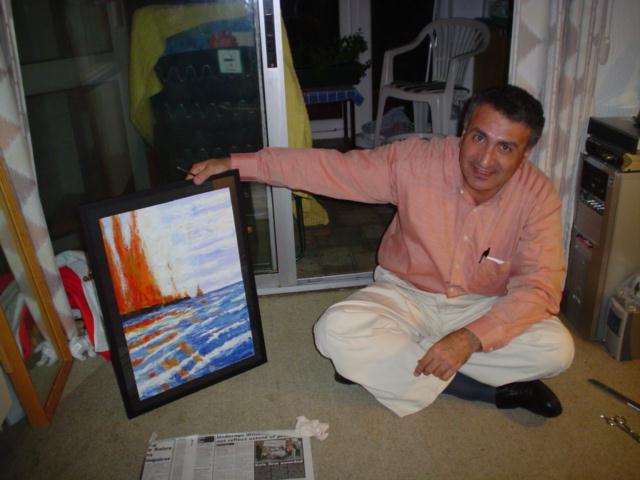
I bother because he is an artist, a philosopher, a radical and a Liberal.

Most of all, though, I bother because he is my friend.

Please take a look at this parliamentary archives page and be grateful for our own freedoms and democracy.

Add to FacebookAdd to DiggAdd to Del.icio.usAdd to StumbleuponAdd to RedditAdd to BlinklistAdd to TwitterAdd to TechnoratiAdd to Yahoo BuzzAdd to Newsvine

Syria and Human Rights in the European Parliament, September 2009 #eu #syria# labwani

I don’t suppose I am alone in not paying much attention to what our representatives say in the European Parliament.

It is a mistake not to. Trawling through the archives I found the text of a debate from September last year in which the cases of Muhannad Al-Hassani, Kamal Al-Labwani and Anwar Al-Bunni are all referenced.
Take a moment to read it and realise that there is a point to what these people do – and we should be supporting them in their efforts.

Kamal, Anwar and Muhannad need us to.

Add to FacebookAdd to DiggAdd to Del.icio.usAdd to StumbleuponAdd to RedditAdd to BlinklistAdd to TwitterAdd to TechnoratiAdd to Yahoo BuzzAdd to Newsvine

Cameron’s Conservative Party, Con-coctions and Torydiddles: internal party democracy (The Fib List No. 1) #toryfail

Look at the websites of local Conservative parties the length and breadth of the United Kingdom and you will find the following claim:

“the Conservative Party is now the most democratic political party in the UK”

From Chipping Barnet to Epping, from Maidstone to Aberdeen, Tory websites flaunt the party’s democratic credentials.

Democracy is a term derived from the Greek terms dêmos and krátos: people and power. You would therefore reasonably expect that, if you were a member of the most democratic party in the UK, the constitution and mechanisms of the party would enshrine decision-making power with its members.

Interesting then to read the following in the Daily Mail (not usually a paper regarded as hostile to the Conservative Party):

Mr Cameron, frustrated in his attempts to change the male, middle-class image of the Conservative Party, took emergency powers last month which allow him to impose short-lists of ‘suitable’ candidates on reluctant local party activists.

Until then, local associations had been allowed to make their own broad selection of possible candidates and send a short-list to Conservative Central Office for approval.Inevitably, Central Office would add some of their own candidates for the final list, but at least the local party had some say in the matter.

But under the new emergency powers, Central Office can impose its own short-list on any local association, leaving longstanding members with no say whatsoever.

This draconian  measure has incensed local party members up and down the country, triggering a wave of protests and resignations which is in danger of spilling over into a civil war with devastating implications for Mr Cameron.”

This is clearly a very particular and expert understanding of democracy shared by David Cameron, the Conservative Party and Kim Jong-il (the Supreme Leader of the Democratic People’s Republic of Korea).

But perhaps that is just candidates and, with a General Election approaching, perhaps we should cut Cameron some slack if he thinks his party doesn’t yet look right and instead decides to act decisively. Of course, you might think it a little hypocritical for an Eton-educated millionaire white male Conservative to be fixing selections because the likely candidate of choice of local associations isn’t representative of modern Britain, and it doesn’t say much about his confidence in these local associations, but perhaps I am being ungenerous.

So what of policy? If the Conservative Party is the most democratic in the United Kingdom (“and possibly the Western World” if you listen to bonkers Maidstone and the Weald) you would expect a robust mechanism of participation where members decide policy.

Er, no.

Have a look at the agenda for the last Conservative conference. When it comes to policy, members are excluded from decision-making. They receive presentations, hear speeches and get to take part in panel-discussions. Things looked up in 2006 when, with polished politico-spin, they announced a “Dragon’s Den-style” session:

“Tory candidates mimic the TV series by pitching their policy ideas to Ms Widdecombe and other ‘dragons’.

There will also be Who Wants To Be A Millionaire style ask-the-audience electronic votes on conference motions.”

Admirer as I am of Mrs Widdecombe, she isn’t the first person who springs to mind when I think of modern Britain. Anyway, the reality wasn’t quite so straightforward. Conservative Home had the real story:

“At the end of the session, conference will vote for the policy they would most like to see included in the Party’s policy review and the winner will be entitled to make a submission to the policy review panel.”

That’s it folks… You get a chance to vote on what you would like to see included (not decide) – and the winner will be entitled to make a submission to the policy review panel!

Whoa! Careful! Ordinary members might end up making a submission to a review! One at least.

Contrast that with the Liberal Democrats.

Candidates are selected by local parties. One member one vote. Simple. Democracy in action. (The Liberal Democrats openly share their full constitution on the web.)

Policy is made by its members. Local parties submit motions. Local parties elect delegates. The delegates vote. Simple. Democracy in action. The full process is laid out on the party’s website.

Cameron is attempting to make the appeal that they are not the same old Tories. The mendacious claims on local Tory websites across Britain will do nothing to give people confidence that his are people who say what they mean.

They don’t.

As a footnote, take a look at the Conservative Party website.

Notice something?

There is no obvious search function. You see exactly what they want you to see and nothing else – no rooting around to find out what you want to know. Be in no doubt – this is a party of centralisers and controllers who place a premium on slick presentation and encourage creative input only so long as it doesn’t rock the Cameron boat. “We know better than you” is a sentiment that Conservatives cannot shake, no matter how hard they try.

Don’t say we weren’t warned.

Add to FacebookAdd to DiggAdd to Del.icio.usAdd to StumbleuponAdd to RedditAdd to BlinklistAdd to TwitterAdd to TechnoratiAdd to Yahoo BuzzAdd to Newsvine

Dr David Kelly – Norman Baker’s chilling book #iraq #davidkelly

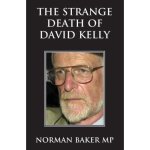
The Strange Death of David KellyWith the Chilcott Inquiry proving a much more exacting process than many of us imagined it might, curiosity provoked me to buy a copy of The Strange Death of David Kelly by Norman Baker MP. Norman Baker stepped down from the Lib Dem front bench after the 2005 election, despite the offer to continue as Environment spokesman, so that he could spend time investigating the circumstances surrounding the sudden death of the United Nations’ pre-eminent expert on weapons inspections.

My curiosity was also piqued by the news that emerged earlier this year that Lord Hutton had requested a gagging order of 70 years on documents relating to Dr Kelly’s death, including the post-mortem reports and photographs. His inquiry was widely condemned at the time as a white-wash. I remember seeing the size of the report, watching MPs responding to its conclusions as presented by Tony Blair to the House of Commons,  and wondering how on earth they could make any sense of something so vast, with so much evidence, in the sort amount of time available to them to prepare for a government statement. Speaking to the BBC on 26 January 2010 about the gagging order, Norman Baker was typically forthright:

“It’s astonishing and unheard-of for material of this nature to be hidden away for any length of time, let alone 70 years.

Coroners’ inquests are held in public. Lord Hutton’s inquiry was unique in its format and unique in requesting restrictions of this nature.

His statement today undermines the validity of his own inquiry and gives further justification to the case being made by many for a proper inquest to be held into this most public of deaths.”

Writing in the Daily Mail on 25 January 2010, Norman Baker was even more blunt:

“Now we learn that evidence which was not presented at the inquiry has been locked away for 70 years – and this inquiry, remember, was to subject Dr David Kelly’s death to public scrutiny.

How could Lord Hutton have got it so wrong?

The reality is that his inquiry was fixed by Blair and his cohorts to produce the right result. If you put down the tracks, that’s the way the train goes.”

Think back seven years, to the frantic stories over the validity of the “dodgy dossier”, or to the earlier dossier with its claims that Iraq could deploy weapons of mass destruction in just 45 minutes. Think back to the surreal reports that Dr David Kelly had been found dead, just two days after he carefully and professionally gave evidence to the International Affairs Select Committee.

It seems like a lifetime away.

Seven years later, out of the Helleresque maelstrom of torturous logic twists that characterised so much of the political conversation at the time, it is easy to sweep this under the carpet of history and wait for it to quietly disappear. Commentators and analysts help push the subject to the margins, keen to avoid attracting career-hindering labels. A knowing journalistic smile places those who ask difficult questions in the company of loony conspiracists and authors of badly-formatted underground websites, moments before the jingling traffic report is read and the story is forgotten. Despite even Baroness Scotland writing to Sir John Chilcott to request that the inquiry include the death of David Kelly, a quick search of the transcript of evidence given by Tony Blair to the Chilcott Inquiry reveals David Kelly’s name doesn’t occur once.

As Norman Baker reminds us, we like to think that unpleasant things like political murder don’t occur in Britain.

So what of Georgi Markov?

What of Roberto Calvi?

What of Alexander Litvinenko?

If you are not going to buy the book, you can read a summary of the many questions in this article published by Norman Baker in the Daily Mail in October 2007.

Add to FacebookAdd to DiggAdd to Del.icio.usAdd to StumbleuponAdd to RedditAdd to BlinklistAdd to TwitterAdd to TechnoratiAdd to Yahoo BuzzAdd to Newsvine

“The Woodsman”: Chance for Council to decide? #woodsman

Those who are interested in “The Woodsman” may wish to know that at the next Council meeting (18 February 2010 at 6pm) I will be moving the following motion for discussion:

“The Council welcomes the demonstration of public support for reinstating The Woodsman in St Martin’s Square, recognises the talent and generosity of Dave Chapple in giving The Woodsman to the people of Basildon, and commits to its restoration and reinstatement in St Martin’s Square at the earliest practical opportunity.”

It is the last item on the meeting’s agenda – and the agenda is a very long one as it will also deal with setting the level of Council Tax (there is therefore a danger that it might not be reached).

The Council meets in the St George’s Suite and it is a meeting open to the public (public question time is the first item on the agenda – questions have to be submitted in writing three days before (the deadline is usually regarded as 10am on Monday).

Add to FacebookAdd to DiggAdd to Del.icio.usAdd to StumbleuponAdd to RedditAdd to BlinklistAdd to TwitterAdd to TechnoratiAdd to Yahoo BuzzAdd to Newsvine

Lord Hanningfield: suspended from Conservative Party; resigns as Leader of Essex County Council; faces criminal charges #essex #conservatives #hanningfield

Paul White, known to most as Lord Hanningfield and leader of Essex County Council, is to face six criminal charges under Section 17 of the Theft Act 1968 (Section 17 is the part of the Act that relates to “false accounting”).

He, along with three Labour MPs (Elliot Morely MP, David Chaytor MP and Jim Devine MP), have been summonsed to appear at the City of Westminster Magistrates’ Court at 2pm on 11 March 2010. The maximum sentence that could be applied under Section 17 is seven years’ imprisonment.

As these cases have been investigated by the police, the authority responsible for prosecuting is the Crown Prosecution Service (CPS). Interestingly, although defence lawyers for those charged have raised the issue of Parliamentary privilege, the Director of Public Prosecutions Keir Starmer QC is clear in his statement that “the applicability and extent of any Parliamentary privilege claimed should be tested in court”.

Parliamentary privilege is an ancient privilege granted to parliamentarians, however the extent of its protection is both widely misunderstood and fiercely contested. When the Speaker made a statement to the House of Commons on 3 December 2008, regarding the arrest of Damian Green MP and entry into his offices, he reminded Members of Parliament  that, according to Erskine May (Parliament’s authoritative companion guide to procedure), parliamentary privilege has never prevented the operation of the criminal law. He also restated the position of the Joint Committee on Parliamentary Privilege in its 1999 report that “the precincts of the House are not and should not be ‘a haven from the law’”.

In respect of the specific charges against Paul White (Lord Hanningfield), Keir Starmer QC said:

“The charges allege that between March 2006 and May 2009, Paul White dishonestly submitted claims for expenses to which he knew he was not entitled, including numerous claims for overnight expenses for staying in London when records show that he was driven home and did not stay overnight in London.”

According to the BBC, Lord Hanningfield has resigned his front bench position as Conservative business spokesman and stood down as leader of Essex County Council. David Cameron also requested that Lord Strathclyde, the leader of the Conservative opposition in the Lords, suspend the Conservative whip with immediate effect.

Keir Starmer QC’s closed his statement with the following:

“Can I remind all concerned that the four individuals now stand charged of criminal offences and they each have the right to a fair trial. It is extremely important that nothing should be reported which could prejudice any of these trials.”

Add to FacebookAdd to DiggAdd to Del.icio.usAdd to StumbleuponAdd to RedditAdd to BlinklistAdd to TwitterAdd to TechnoratiAdd to Yahoo BuzzAdd to Newsvine

“The Power of Creativity”: Lib Dems launch arts vision paper #libdems #arts

On December 15 2008 Nick Clegg delivered a speech to the think tank Demos entitled “Why I am a Liberal”. It was both passionate and philosophical, a very personal evocation of liberalism that captures the essence of political empowerment:

“A Liberal believes in the raucous, unpredictable capacity of people to take decisions about their own lives… A Liberal believes a progressive society is distinguished by aspiration, creativity and non-conformity.”

Today, Don Foster MP, the Liberal Democrats Shadow Secretary of State for Culture, Media and Sport, launched “The Power of Creativity” – a vision document for the arts that translates Liberal ideals into political commitments, policies and aspirations.

As the document highlights, the first Chairman of the Arts Council was John Maynard Keynes, the noted economist and lifelong member of the Liberal Party. He set out a clear mission for the Arts Council:

“The purpose of the Arts Council of Great Britain is to create an environment, to breed a spirit, to cultivate an opinion, to offer a stimulus to such purpose that the artist and the public can each sustain and live on the other in that union which has occasionally existed in the past at the great ages of a communal civilised life.”

In the current political and economic climate, funding, innovation, local support and creative risk-taking are all in jeopardy.  Our own experience in Basildon, with “The Woodsman”, “Progression” and The Wat Tyler Sculpture Trail are testimony to the low priority that the arts receive in terms of support from local government, particularly where politicans are obsessed with enormous capital projects to cement their political legacy. Foster’s paper seeks to sustain Keyne’s original and Liberal vision for the arts in these more uncertain times.

Add to FacebookAdd to DiggAdd to Del.icio.usAdd to StumbleuponAdd to RedditAdd to BlinklistAdd to TwitterAdd to TechnoratiAdd to Yahoo BuzzAdd to Newsvine

“The Woodsman” – Basildon Community Video Club’s video story (now on DVD) #woodsman

A reader has been in touch to explain that the “Basildon Community Video Club” produced a video recording the story of the tree which was used by Dave Chapple to produce his sculpture “The Woodsman”. Filmed during 1995, the 20 minute documentary shows Dave Chapple at work creating the statue of “The Woodsman” from the trunk of a fallen tree from Langdon Hills.

The Essex Media Workshop based in Parkside, Pitsea, has now transferred the original VHS tape onto DVD. I have been in touch with them and those who would like to see the story of how “The Woodsman” was made can purchase a copy. The Essex Media Workshop are a registered charity in England and Wales that specialises in helping charity groups and disabled organisations realise their video projects. Any proceeds from the DVD will help them continue the valuable work they do with all manner of vountary groups.

The video of “The Woodsman” being carved is available from: Essex Media Workshop, Parkside, Basildon, SS13 1NL.

The price is £4 (or £5 inclusive of post and packing).

Please order via Andy Alexander at the Essex Media Workshop, Tel. 01268 555 771 or via e-mail at andy@essexmediaworkshop.co.uk

“Progression”: ‘extraordinary attitudes’ that did for “The Woodsman”? #woodsman

Following my post on “Progression” and “The Woodsman” I made contact with the artist Michael Condron, the sculptor commissioned by Basildon Council to make “Progression”. I thought it courteous to draw his attention to the fact I was blogging about his work. His response – which he is happy for me to share – is an extraordinary and depressing indictment of the lack of courtesy and general ignorance of Basildon Council (and by extension its Conservative administration) in its dealings with artists and issues of public art:

“The attitude Basildon DC has shown towards it’s public art is pretty extraordinary, and fortunately not the kind of behaviour I’ve come across elsewhere.

The relocation of my Progression sculpture was not something I was consulted on.  Whilst I’m not entirely happy with the new situation, it is better than the artwork rotting in a storage yard somewhere.

You mentioned NYC’s percent for art programme in the blog, and I wonder if you’re aware that Essex County Council also has a percent for art policy.  Many commissions have been funded by developers through “section 106” planning requirements, including my recent Life Cycle installation at Hanningfield reservoir.

Generally speaking public art is vibrant in Essex!”

What is particularly depressing is that, whilst Basildon’s Conservatives neglect and rip out our public art, the record of Essex County Council, another Conservative administration, is a national leader when it comes to supporting public art. As Condron notes, Essex does indeed operate a percent policy for art. Art in the Open singles out Essex as its case study for best practice in “embedding public art within Council-led capital projects”. The page on commissioning guidance states:

“Essex County Council (ECC) has been commissioning art in the public realm as part of its Capital Development Programme and Essex Design Initiative for many years.  It was the first County Council to develop and adopt the principle of a public art policy in the late 1980s.  In 2002 it adopted a Percent for Art policy and, more recently, has developed a central budgeting process to create a new fund, the Public Art Common Fund, that draws money directly from ECC’s capital programmes budget, enabling the public arts team to plan longer term.  This has lead to the development of a three-year programme of more substantial commissions under the banner of ‘Genius Loci’ (‘Spirit of Place’).  These commissions are predominantly permanent but also include some temporary work to help highlight and pave the way for the permanent.”

What’s more, Essex demonstrates that it truly understands the purpose of public art:

“ECC seeks to commission art in the public realm to:

  • Improve the aesthetics of the built environment
  • Enhance a sense of community and place
  • Foster community pride and ownership
  • Celebrate artistic achievement
  • Reflect a ‘spirit of place’”

To demonstrate how serious Essex is about supporting public art, Art in the Open explains how the County Council organises the staff that support public art:

“ECC believes in an embedded and informed approach to commissioning art in the public realm.  It runs workshops and organises study trips to support internal development and understanding; the public art team sits within the built environment department, ensuring a close working relationship across planning and development teams; a Public Art Strategy Group, chaired by a cabinet member and including officers from across the council, helps keep an informed overview; occasionally, external organisations are brought in to provide additional commissioning support.”

And the big question in local government is always the money:

“Funding streams:

  • Percent for Art: up to 1 per cent of almost all capital builds across the council. This has been consolidated for 2007-2010 as the Public Art Common Fund where 0.74 per cent, £2.14 million, has been designate for Genius Loci. The continuation of the Common Fund beyond 2010 is subject to approval by the Council and is depended on a successful bid from the Public Art Team.
  • Money can also be brought in through section 106 (however, this mechanism is dependent on the policy of the local planning authority not the County Council).”

To be honest, it is a pretty extraordinary commitment from a local authority and I applaud Essex’s seriousness in making public art accessible and relevant – not shoved away in corners as museum pieces to be visited.

So why is it, with such a leading example so politically and geographically close to home, that Basildon’s Conservative Party acts like a Neanderthal collective when it comes to  public art? I can’t answer that. However, I can only think that the “pretty extraordinary” attitude identified by Condron was a principal contributing factor to the appalling ruin of “The Woodsman”.

Add to FacebookAdd to DiggAdd to Del.icio.usAdd to StumbleuponAdd to RedditAdd to BlinklistAdd to TwitterAdd to TechnoratiAdd to Yahoo BuzzAdd to Newsvine