It is sometimes shocking to sit and think how quickly technology has come on in just a few short years. Photography is something I have always enjoyed, being brought up on Dad’s slides and even his own attempts to create a dark room in the attic.
I remember my first Kodak camera with its stacked, one-use-per-bulb flash, and how proud I was to finally be able to take my own pictures. It had no zoom, no focus and used what I regarded as proper film. (Funny how whatever it is you start with you regard as proper film, at least until you grow up and start using standard 35mm.) I remember, too, getting my first Olympus, sadly rarely used, and the pictures I took with it on my honeymoon less than ten years ago, when there was no imminent prospect of digital superseding plastics and silver salts.
Now, most of us have phones that can take better pictures than even the most expensive digital cameras of ten years ago, with top-end digital cameras such as the Canon EOS 7D or EOS 5D Mk II being so sophisticated that they can replace movie cameras, opening up the world of movie-making to amateurs the world over.
The Light Farm are an enthusiast co-operative “dedicated to the renaissance of handcrafted silver gelatin emulsions”. They have got their hands on a historic film by Kodak, which details the process of making film.
Boing Boing, one of my favourite quirky blogs, has a great piece of nostalgia for fellow geek gamers. It’s a compilation of classic arcade game deaths. Funny how, for a whole generation, these blocky, pixellated images evoke memories of wet Saturday afternoons hunched over the latest state of the art console. Video games were an integral part of my growing up. If you get it, enjoy.
You may or may not be familiar with the amusingly odd website Will It Blend? Basically, the website’s title says it all.
You may also remember that I have previously blogged about my irrational dislike of all things Apple. Such a cathartic moment, then, to discover that the folks at Will It Blend? have decided to apply themselves to the iPhone.
Bit risky this for a Sunday morning, bearing in mind what folks may have been up to the night before. But anyway… Found these brain-bendingly fun. I’ve always been a sucker for an optical illusion.
This is an election that analysts, experts and historians will pore over for decades.
The confluence of mobile technology, media influence, information democracy on the web and voter alienation has created a serendipitous moment for the Liberal Democrats as a voice for fundamental change of a political system that is rotten to its core. From the way we pay for our politics and politicians, to the way government agencies manage information about us, to the way politics is run by two old parties who, as gigantic corporate spin operations, have lost their connection with real people and their every day concerns, people are bewildered and angry.
Paxman’s interview with Nick Clegg was telling in one particular regard: he sought to dismiss the value of £700, the average benefit of the Liberal Democrats’ income tax policy of raising the threshold to £10,000. Even the BBC, in the person of Jeremy Paxman, fail to understand that £700 is a colossal amount of money.
I was talking to a family friend at the weekend who, as someone who struggled to keep his small gardening business going, told me that £700 was a fortune. For BBC board member Ashley Highfield, that is less than the £773 he claimed for a single dinner on 4th February 2008 (see BBC expenses). It is difficult to imagine that such expenses are not available to their star presenters, so it is no wonder that Paxman is so out of touch with how hard it is in the real world.
But nowhere is this anti-politics more evident than on the Facebook Group Rage Against the Election. To the astonishment of new media watchers and seasoned party hacks alike, people are taking back their politics and using the democratic nature of the web to make their anger known. Elizabeth Eisenstein’s exhaustive work The Printing Press as an Agent of Change documents the extraordinary impact of the a technical revolution on the democratisation of information. Academics and lofty historians might scoff, but their should be no doubting the impact of the likes of Facebook on the way people want to take ownership of information and use corporate tools for non-corporate purposes.
Set-up entirely independently of the Liberal Democrats, it has a single objective: to secure one million members in support of the Liberal Democrats and propel them into office.
Read that again: it has been set-up entirely independently of the Liberal Democrats. People out there, angry at their politicians, see the Liberal Democrats as a vehicle for change.
Checking in at 8.20am its membership stood at a staggering 110,847.
That is 110,847 individuals who are confident enough to attach their name to a public statement saying that they want to see the Liberal Democrats in office.
If you wonder what that means, try these figures for comparison, each checked just after 8.30am:
Official Conservative Facebook page 50,794
Official Lib Dem Facebook page 45,189
Official Labour Facebook page 25,658
There is nothing quite so rewarding as seeing people speaking up and refusing to be told what to think and what to believe. With 16 days until polling day, who knows how many will end up joining the Rage Against the Election?
Bit like when I blogged about Ukrainian sand artist Kseniya Simonova, I am way behind the popular curve on this one. (Not surprising really as I have never been trendy exactly!)
However, like all good things it deserves a reprise…
British Design and Art Direction was founded in 1962 by artists including David Bailey and Terence Donovan. These days it is known simply as D&AD. Since 1963 it has made annual awards, its purpose “dedicated to celebrating creative communication, rewarding its practitioners, and raising standards across the industry”.
Last year, two students responded to a D&AD design brief from Hewlett Packard, the company that makes printers: “Present an idea which promotes HP Workstations ability to bring to life anything the creative mind can conceive.”
“He is as Autumn shadows, stealing soundlessly beneath the vaulted arches of the Moon-burnt sky, the deadly promise of a winter’s blade in the dark watches of the night. Relentlessly he pursues Her. Defiantly he loves Her.”
Keredh Windryder, Ranger
Gaming is either something you get or something you don’t.
For some of us, the prospect of immersing ourselves in the LCD glow of a world constructed from bits and bytes sets our pulses racing. Our imaginations can spend all day rehearsing the moment we turn the lights off and sit down to lead our friends and guild-mates into battle.
For the rest, the prospect leaves them cold. The world of the geek gamer is a dark and alien place, strewn with the detritus of a life lived online: cans of coke, empty coffee mugs with a crusted sediment deep inside, discarded crisp packets and sweet wrappers – and the musty – occasionally rancid – smell of immobile, sleepless concentration.
I suspect most of my family, friends and colleagues fall into this latter category, bemused at the hours of life that Em and I can spend in these virtual worlds, each with its own lexicon, politics and social mores.
Computer gaming, though, has been a huge part of my life for almost thirty years.
As technology has developed, so the boundaries between real life and virtual life have shifted and blurred. Sometimes this has had catastrophic personal consequences – and on other occasions it has resulted in moments of sheer serendipity. I can honestly say that gaming, specifically the two incarnations of Everquest, has impacted my life in far more significant ways than I could have ever envisaged.
More on that another time, perhaps.
So it was today, sitting at work, that I felt a familiar ache. A longing for a place I know better than the back of my hand. A place that most script kiddies and World of Warcraft fanbois have never known – but a place that makes Azeroth look as exciting as Tellytubby land.
On and off for the last seven years, Everquest (Everquest 2 for me these days) has been a way of escaping from the stresses and strains of an exhausting day. But how did I reach a point in life where I can see a point to investing hours in the development, customisation and manipulation of a virtual avatar, a wood-elf ranger that specialises in striking down his enemies with a blow from the shadows or a bow-strike inflicting massive damage from afar? (And believe me, I can!)
That is a story that takes me from Mazogs on the ZX-81 in 1982, to Sentinel of Fate, the latest EQ2 expansion, in 2010. In an occasional series of pieces in the coming weeks I will explore that story. I want to reflect on the friendships forged in huddled hours around the screen – and remember the computers and the games that have given me so many fond memories.
In the meantime, take a look at where it started in 1982:
So there I am, thinking about a post I want to write on my imminent return to Everquest 2, when absent Googling throws up this little gem. 100 Amiga games in ten minutes. What a trip down memory lane!
Regardless of the truth of the bullying allegations surrounding Brown and Number 10, they appear to be creating an even less savoury picture of goings on with our friends in the international community.
Apple Daily runs an online news channel called Next Media that, instead of using actors, animates its newscasts in order to make them more exciting. Launching simultaneously on 26 November 2009 in Taiwan and Hong Kong, it quickly courted controversy with parents complaining about explicit, erotic and violent content. If you are interested, Media, the marketing and communications newspaper for Asia-Pacific carries an interesting article on the rows surrounding Apple Daily on its website.
In any event, the sales-boosting bullying furore around Rawnsley’s new book, The End of the Party, has clearly attracted attention in the Asia-Pacific region and has made its way into the most extraordinary news bulletin I’ve yet seen on the matter:
It is difficult to know quite what to make of the provocative way in which Next Media presents current affairs. Suffice to say that their coverage of the bizarre legal dispute in Colarado over who owns the head of Mary Robbins (the Robbins family or Arizona’s Alcor Life Extension Foundation) suggests they like to sensationalise sensational stories.

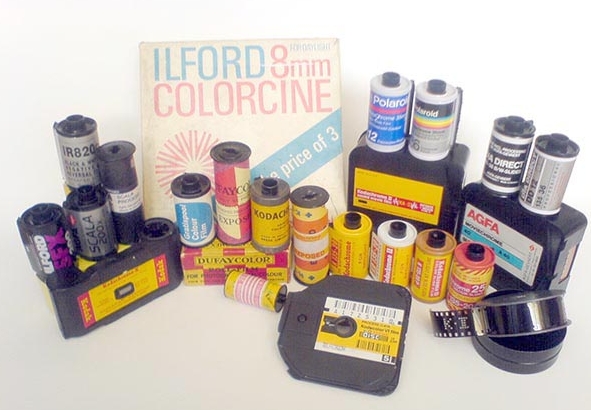 It is sometimes shocking to sit and think how quickly technology has come on in just a few short years. Photography is something I have always enjoyed, being brought up on Dad’s slides and even his own attempts to create a dark room in the attic.


 Fragments and Reflections