Syria and Human Rights in the European Parliament, September 2009 #eu #syria# labwani

I don’t suppose I am alone in not paying much attention to what our representatives say in the European Parliament.

It is a mistake not to. Trawling through the archives I found the text of a debate from September last year in which the cases of Muhannad Al-Hassani, Kamal Al-Labwani and Anwar Al-Bunni are all referenced.
Take a moment to read it and realise that there is a point to what these people do – and we should be supporting them in their efforts.

Kamal, Anwar and Muhannad need us to.

Add to FacebookAdd to DiggAdd to Del.icio.usAdd to StumbleuponAdd to RedditAdd to BlinklistAdd to TwitterAdd to TechnoratiAdd to Yahoo BuzzAdd to Newsvine

Cameron’s Conservative Party, Con-coctions and Torydiddles: internal party democracy (The Fib List No. 1) #toryfail

Look at the websites of local Conservative parties the length and breadth of the United Kingdom and you will find the following claim:

“the Conservative Party is now the most democratic political party in the UK”

From Chipping Barnet to Epping, from Maidstone to Aberdeen, Tory websites flaunt the party’s democratic credentials.

Democracy is a term derived from the Greek terms dêmos and krátos: people and power. You would therefore reasonably expect that, if you were a member of the most democratic party in the UK, the constitution and mechanisms of the party would enshrine decision-making power with its members.

Interesting then to read the following in the Daily Mail (not usually a paper regarded as hostile to the Conservative Party):

Mr Cameron, frustrated in his attempts to change the male, middle-class image of the Conservative Party, took emergency powers last month which allow him to impose short-lists of ‘suitable’ candidates on reluctant local party activists.

Until then, local associations had been allowed to make their own broad selection of possible candidates and send a short-list to Conservative Central Office for approval.Inevitably, Central Office would add some of their own candidates for the final list, but at least the local party had some say in the matter.

But under the new emergency powers, Central Office can impose its own short-list on any local association, leaving longstanding members with no say whatsoever.

This draconian  measure has incensed local party members up and down the country, triggering a wave of protests and resignations which is in danger of spilling over into a civil war with devastating implications for Mr Cameron.”

This is clearly a very particular and expert understanding of democracy shared by David Cameron, the Conservative Party and Kim Jong-il (the Supreme Leader of the Democratic People’s Republic of Korea).

But perhaps that is just candidates and, with a General Election approaching, perhaps we should cut Cameron some slack if he thinks his party doesn’t yet look right and instead decides to act decisively. Of course, you might think it a little hypocritical for an Eton-educated millionaire white male Conservative to be fixing selections because the likely candidate of choice of local associations isn’t representative of modern Britain, and it doesn’t say much about his confidence in these local associations, but perhaps I am being ungenerous.

So what of policy? If the Conservative Party is the most democratic in the United Kingdom (“and possibly the Western World” if you listen to bonkers Maidstone and the Weald) you would expect a robust mechanism of participation where members decide policy.

Er, no.

Have a look at the agenda for the last Conservative conference. When it comes to policy, members are excluded from decision-making. They receive presentations, hear speeches and get to take part in panel-discussions. Things looked up in 2006 when, with polished politico-spin, they announced a “Dragon’s Den-style” session:

“Tory candidates mimic the TV series by pitching their policy ideas to Ms Widdecombe and other ‘dragons’.

There will also be Who Wants To Be A Millionaire style ask-the-audience electronic votes on conference motions.”

Admirer as I am of Mrs Widdecombe, she isn’t the first person who springs to mind when I think of modern Britain. Anyway, the reality wasn’t quite so straightforward. Conservative Home had the real story:

“At the end of the session, conference will vote for the policy they would most like to see included in the Party’s policy review and the winner will be entitled to make a submission to the policy review panel.”

That’s it folks… You get a chance to vote on what you would like to see included (not decide) – and the winner will be entitled to make a submission to the policy review panel!

Whoa! Careful! Ordinary members might end up making a submission to a review! One at least.

Contrast that with the Liberal Democrats.

Candidates are selected by local parties. One member one vote. Simple. Democracy in action. (The Liberal Democrats openly share their full constitution on the web.)

Policy is made by its members. Local parties submit motions. Local parties elect delegates. The delegates vote. Simple. Democracy in action. The full process is laid out on the party’s website.

Cameron is attempting to make the appeal that they are not the same old Tories. The mendacious claims on local Tory websites across Britain will do nothing to give people confidence that his are people who say what they mean.

They don’t.

As a footnote, take a look at the Conservative Party website.

Notice something?

There is no obvious search function. You see exactly what they want you to see and nothing else – no rooting around to find out what you want to know. Be in no doubt – this is a party of centralisers and controllers who place a premium on slick presentation and encourage creative input only so long as it doesn’t rock the Cameron boat. “We know better than you” is a sentiment that Conservatives cannot shake, no matter how hard they try.

Don’t say we weren’t warned.

Add to FacebookAdd to DiggAdd to Del.icio.usAdd to StumbleuponAdd to RedditAdd to BlinklistAdd to TwitterAdd to TechnoratiAdd to Yahoo BuzzAdd to Newsvine

Dr David Kelly – Norman Baker’s chilling book #iraq #davidkelly

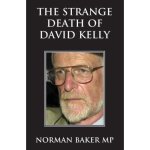
The Strange Death of David KellyWith the Chilcott Inquiry proving a much more exacting process than many of us imagined it might, curiosity provoked me to buy a copy of The Strange Death of David Kelly by Norman Baker MP. Norman Baker stepped down from the Lib Dem front bench after the 2005 election, despite the offer to continue as Environment spokesman, so that he could spend time investigating the circumstances surrounding the sudden death of the United Nations’ pre-eminent expert on weapons inspections.

My curiosity was also piqued by the news that emerged earlier this year that Lord Hutton had requested a gagging order of 70 years on documents relating to Dr Kelly’s death, including the post-mortem reports and photographs. His inquiry was widely condemned at the time as a white-wash. I remember seeing the size of the report, watching MPs responding to its conclusions as presented by Tony Blair to the House of Commons,  and wondering how on earth they could make any sense of something so vast, with so much evidence, in the sort amount of time available to them to prepare for a government statement. Speaking to the BBC on 26 January 2010 about the gagging order, Norman Baker was typically forthright:

“It’s astonishing and unheard-of for material of this nature to be hidden away for any length of time, let alone 70 years.

Coroners’ inquests are held in public. Lord Hutton’s inquiry was unique in its format and unique in requesting restrictions of this nature.

His statement today undermines the validity of his own inquiry and gives further justification to the case being made by many for a proper inquest to be held into this most public of deaths.”

Writing in the Daily Mail on 25 January 2010, Norman Baker was even more blunt:

“Now we learn that evidence which was not presented at the inquiry has been locked away for 70 years – and this inquiry, remember, was to subject Dr David Kelly’s death to public scrutiny.

How could Lord Hutton have got it so wrong?

The reality is that his inquiry was fixed by Blair and his cohorts to produce the right result. If you put down the tracks, that’s the way the train goes.”

Think back seven years, to the frantic stories over the validity of the “dodgy dossier”, or to the earlier dossier with its claims that Iraq could deploy weapons of mass destruction in just 45 minutes. Think back to the surreal reports that Dr David Kelly had been found dead, just two days after he carefully and professionally gave evidence to the International Affairs Select Committee.

It seems like a lifetime away.

Seven years later, out of the Helleresque maelstrom of torturous logic twists that characterised so much of the political conversation at the time, it is easy to sweep this under the carpet of history and wait for it to quietly disappear. Commentators and analysts help push the subject to the margins, keen to avoid attracting career-hindering labels. A knowing journalistic smile places those who ask difficult questions in the company of loony conspiracists and authors of badly-formatted underground websites, moments before the jingling traffic report is read and the story is forgotten. Despite even Baroness Scotland writing to Sir John Chilcott to request that the inquiry include the death of David Kelly, a quick search of the transcript of evidence given by Tony Blair to the Chilcott Inquiry reveals David Kelly’s name doesn’t occur once.

As Norman Baker reminds us, we like to think that unpleasant things like political murder don’t occur in Britain.

So what of Georgi Markov?

What of Roberto Calvi?

What of Alexander Litvinenko?

If you are not going to buy the book, you can read a summary of the many questions in this article published by Norman Baker in the Daily Mail in October 2007.

Add to FacebookAdd to DiggAdd to Del.icio.usAdd to StumbleuponAdd to RedditAdd to BlinklistAdd to TwitterAdd to TechnoratiAdd to Yahoo BuzzAdd to Newsvine

“The Woodsman”: Chance for Council to decide? #woodsman

Those who are interested in “The Woodsman” may wish to know that at the next Council meeting (18 February 2010 at 6pm) I will be moving the following motion for discussion:

“The Council welcomes the demonstration of public support for reinstating The Woodsman in St Martin’s Square, recognises the talent and generosity of Dave Chapple in giving The Woodsman to the people of Basildon, and commits to its restoration and reinstatement in St Martin’s Square at the earliest practical opportunity.”

It is the last item on the meeting’s agenda – and the agenda is a very long one as it will also deal with setting the level of Council Tax (there is therefore a danger that it might not be reached).

The Council meets in the St George’s Suite and it is a meeting open to the public (public question time is the first item on the agenda – questions have to be submitted in writing three days before (the deadline is usually regarded as 10am on Monday).

Add to FacebookAdd to DiggAdd to Del.icio.usAdd to StumbleuponAdd to RedditAdd to BlinklistAdd to TwitterAdd to TechnoratiAdd to Yahoo BuzzAdd to Newsvine

In defence of Neanderthals: a reader writes

In my recent post ““Progression”: ‘extraordinary attitudes’ that did for “The Woodsman”?” I questioned why “Basildon’s Conservative Party acts like a Neanderthal collective when it comes to  public art?”

This prompted one irritated reader to point out by email that this comparator was unfair to Neanderthals. As I explained in my response, I had actually worried about that myself, but decided that, on balance – and after a careful read of Wikipedia on the subject of the Neanderthal the issue of artistic activity in Neanderthal society is still significantly contested enough for me to err on the side of cliché.

However, upon reflection, the fact that it is even contested suggests the possibility of its existence in Neanderthal society in a way that could not possibly be true of Basildon’s Conservative Party.

Read for yourselves:

“How dare you make such allegations in your Blog!

I refer to your posting of 3rd February in which you liken the Basildon Conservative party to a Neanderthal collective.

I speak on behalf of that extinct community which continues to receive a negative image as a result of ill-considered remarks such as yours. For many years Neanderthals have been treated as sub-human simply because of the physical appearance of their skull. For years they were thought to be stupid and dumb as no hyoid bone had ever been found, indicating that they had vocal chords. And then twenty years ago, in 1989, a Neanderthal skeleton was found with the hyoid bone intact, and suddenly anthropologists deigned to grant the Neanderthals the power of speech – but they were still considered to be ignorant.

The trouble is that time has a strange effect on artefacts, and Neanderthal artefacts are 50,000 – 60,000 years old. Some years ago a carved bone was found in a Neanderthal cave. And last month there was the discovery of Neanderthal “make-up” artefacts in southern Spain suggested that they were “capable of symbolic thinking”.

It seems that we started off with a negative image of the Neanderthal and only concede that they have positive aspects when there is archaeological proof. I believe that Homo neanderthalensis was as civilized and cultured as the Homo erectus of 50,000 years ago. At least the Neanderthal’s left some artefacts behind by which we can judge them. The way the Basildon Conservative party is going, there will be nothing left of Basildon’s culture 50,000 years hence!

May I therefore request that when seeking a comparator in future, you do not impugn the reputation of the Neanderthals by associating them with the Basildon Conservative Party.”

However tongue-in-cheek it might sound, the point is a valid one. As the BBC is demonstrating in conjunction with the British Museum (see “A History of the World in Objects – a brilliant idea from the BBC”), our history is told through ordinary objects. We regularly impune Neanderthals for a lack of sophistication, based on little more than cartoon caricature and a lack of physical evidence.

Read more on the story of the Neanderthal ‘make-up’ containers.

Read more on the story of the discovery of the Neanderthal ‘face’.

Prehistoric art is a subject I’ll return to at a future date. In the meantime, suggestions for a more appropriate comparator to Basildon’s Conservative Party would be welcome.

Add to FacebookAdd to DiggAdd to Del.icio.usAdd to StumbleuponAdd to RedditAdd to BlinklistAdd to TwitterAdd to TechnoratiAdd to Yahoo BuzzAdd to Newsvine

And yet more pointless municipal vandalism…

Sometimes a picture says all that can be said. For some reason, Conservative-controlled Basildon Council has decided to rip out the relatively recently constructed features that distinguish St Martin’s Square. When the bid to the Government for money for new lighting was discussed, this wasn’t. (Nor were the design and placement of the lights, but that’s another story.)

When Em’s family visited for the first time they commented on how pleasant and unusual that part of St Martin’s Square looked. How sad that this is the last picture I took of it.

Demolishing St Martin's Square

Demolishing St Martin's Square

I can’t help feeling that these Conservative councillors care less and less about the area and more and more about building some lasting concrete (!) legacy. Exactly the criticism they made of previous Labour councillors. Is it any wonder that people give up in despair?

Rooting around on the Council’s website I found the notice to tender for the contract. Strangely, there is no information in the appropriate section to say who got the contract. To that end, concerned residents might wish to be aware that the tender has just closed for further works to Compass Square (I believe Compass Square is the area immediately in front of the Bascentre). I wonder if the Council will say who has secured that?

Add to FacebookAdd to DiggAdd to Del.icio.usAdd to StumbleuponAdd to RedditAdd to BlinklistAdd to TwitterAdd to TechnoratiAdd to Yahoo BuzzAdd to Newsvine

What do Tesco and China have in common? Honest…

With China’s most recent Internet crackdown, and privacy campaigners periodically rumbling about Tesco’s ‘Big Brother’ Clubcard arrangements, you could be forgiven for thinking the answer is something hyper-linked.

However, this time it’s not.

I don’t know what is stirring in the heavenly ether but, with curious synchronicity, it would seem that in both Tesco and China there has been an outbreak of public pyjama-wearing.

I must confess that it has never occurred to me to head to either the supermarket or Shanghai in my pyjamas, even though there is a 24 hour garage at the Roundacre roundabout with a neat little M&S attached.

Anyway, from what I can deduce, it would seem that when the pyjamas are in latitudinal alignment, the prognosis for ex-pig farmers and errant footballers is uncomfortable…

For more on the Tesco story take a look at the BBC.

Fore more on the Shanghai story see this Boing Boing post.

Add to FacebookAdd to DiggAdd to Del.icio.usAdd to StumbleuponAdd to RedditAdd to BlinklistAdd to TwitterAdd to TechnoratiAdd to Yahoo BuzzAdd to Newsvine

Lord Hanningfield: suspended from Conservative Party; resigns as Leader of Essex County Council; faces criminal charges #essex #conservatives #hanningfield

Paul White, known to most as Lord Hanningfield and leader of Essex County Council, is to face six criminal charges under Section 17 of the Theft Act 1968 (Section 17 is the part of the Act that relates to “false accounting”).

He, along with three Labour MPs (Elliot Morely MP, David Chaytor MP and Jim Devine MP), have been summonsed to appear at the City of Westminster Magistrates’ Court at 2pm on 11 March 2010. The maximum sentence that could be applied under Section 17 is seven years’ imprisonment.

As these cases have been investigated by the police, the authority responsible for prosecuting is the Crown Prosecution Service (CPS). Interestingly, although defence lawyers for those charged have raised the issue of Parliamentary privilege, the Director of Public Prosecutions Keir Starmer QC is clear in his statement that “the applicability and extent of any Parliamentary privilege claimed should be tested in court”.

Parliamentary privilege is an ancient privilege granted to parliamentarians, however the extent of its protection is both widely misunderstood and fiercely contested. When the Speaker made a statement to the House of Commons on 3 December 2008, regarding the arrest of Damian Green MP and entry into his offices, he reminded Members of Parliament  that, according to Erskine May (Parliament’s authoritative companion guide to procedure), parliamentary privilege has never prevented the operation of the criminal law. He also restated the position of the Joint Committee on Parliamentary Privilege in its 1999 report that “the precincts of the House are not and should not be ‘a haven from the law’”.

In respect of the specific charges against Paul White (Lord Hanningfield), Keir Starmer QC said:

“The charges allege that between March 2006 and May 2009, Paul White dishonestly submitted claims for expenses to which he knew he was not entitled, including numerous claims for overnight expenses for staying in London when records show that he was driven home and did not stay overnight in London.”

According to the BBC, Lord Hanningfield has resigned his front bench position as Conservative business spokesman and stood down as leader of Essex County Council. David Cameron also requested that Lord Strathclyde, the leader of the Conservative opposition in the Lords, suspend the Conservative whip with immediate effect.

Keir Starmer QC’s closed his statement with the following:

“Can I remind all concerned that the four individuals now stand charged of criminal offences and they each have the right to a fair trial. It is extremely important that nothing should be reported which could prejudice any of these trials.”

Add to FacebookAdd to DiggAdd to Del.icio.usAdd to StumbleuponAdd to RedditAdd to BlinklistAdd to TwitterAdd to TechnoratiAdd to Yahoo BuzzAdd to Newsvine

“The Power of Creativity”: Lib Dems launch arts vision paper #libdems #arts

On December 15 2008 Nick Clegg delivered a speech to the think tank Demos entitled “Why I am a Liberal”. It was both passionate and philosophical, a very personal evocation of liberalism that captures the essence of political empowerment:

“A Liberal believes in the raucous, unpredictable capacity of people to take decisions about their own lives… A Liberal believes a progressive society is distinguished by aspiration, creativity and non-conformity.”

Today, Don Foster MP, the Liberal Democrats Shadow Secretary of State for Culture, Media and Sport, launched “The Power of Creativity” – a vision document for the arts that translates Liberal ideals into political commitments, policies and aspirations.

As the document highlights, the first Chairman of the Arts Council was John Maynard Keynes, the noted economist and lifelong member of the Liberal Party. He set out a clear mission for the Arts Council:

“The purpose of the Arts Council of Great Britain is to create an environment, to breed a spirit, to cultivate an opinion, to offer a stimulus to such purpose that the artist and the public can each sustain and live on the other in that union which has occasionally existed in the past at the great ages of a communal civilised life.”

In the current political and economic climate, funding, innovation, local support and creative risk-taking are all in jeopardy.  Our own experience in Basildon, with “The Woodsman”, “Progression” and The Wat Tyler Sculpture Trail are testimony to the low priority that the arts receive in terms of support from local government, particularly where politicans are obsessed with enormous capital projects to cement their political legacy. Foster’s paper seeks to sustain Keyne’s original and Liberal vision for the arts in these more uncertain times.

Add to FacebookAdd to DiggAdd to Del.icio.usAdd to StumbleuponAdd to RedditAdd to BlinklistAdd to TwitterAdd to TechnoratiAdd to Yahoo BuzzAdd to Newsvine

“The Woodsman” – Basildon Community Video Club’s video story (now on DVD) #woodsman

A reader has been in touch to explain that the “Basildon Community Video Club” produced a video recording the story of the tree which was used by Dave Chapple to produce his sculpture “The Woodsman”. Filmed during 1995, the 20 minute documentary shows Dave Chapple at work creating the statue of “The Woodsman” from the trunk of a fallen tree from Langdon Hills.

The Essex Media Workshop based in Parkside, Pitsea, has now transferred the original VHS tape onto DVD. I have been in touch with them and those who would like to see the story of how “The Woodsman” was made can purchase a copy. The Essex Media Workshop are a registered charity in England and Wales that specialises in helping charity groups and disabled organisations realise their video projects. Any proceeds from the DVD will help them continue the valuable work they do with all manner of vountary groups.

The video of “The Woodsman” being carved is available from: Essex Media Workshop, Parkside, Basildon, SS13 1NL.

The price is £4 (or £5 inclusive of post and packing).

Please order via Andy Alexander at the Essex Media Workshop, Tel. 01268 555 771 or via e-mail at andy@essexmediaworkshop.co.uk