“Progression”: ‘extraordinary attitudes’ that did for “The Woodsman”? #woodsman

Following my post on “Progression” and “The Woodsman” I made contact with the artist Michael Condron, the sculptor commissioned by Basildon Council to make “Progression”. I thought it courteous to draw his attention to the fact I was blogging about his work. His response – which he is happy for me to share – is an extraordinary and depressing indictment of the lack of courtesy and general ignorance of Basildon Council (and by extension its Conservative administration) in its dealings with artists and issues of public art:

“The attitude Basildon DC has shown towards it’s public art is pretty extraordinary, and fortunately not the kind of behaviour I’ve come across elsewhere.

The relocation of my Progression sculpture was not something I was consulted on.  Whilst I’m not entirely happy with the new situation, it is better than the artwork rotting in a storage yard somewhere.

You mentioned NYC’s percent for art programme in the blog, and I wonder if you’re aware that Essex County Council also has a percent for art policy.  Many commissions have been funded by developers through “section 106” planning requirements, including my recent Life Cycle installation at Hanningfield reservoir.

Generally speaking public art is vibrant in Essex!”

What is particularly depressing is that, whilst Basildon’s Conservatives neglect and rip out our public art, the record of Essex County Council, another Conservative administration, is a national leader when it comes to supporting public art. As Condron notes, Essex does indeed operate a percent policy for art. Art in the Open singles out Essex as its case study for best practice in “embedding public art within Council-led capital projects”. The page on commissioning guidance states:

“Essex County Council (ECC) has been commissioning art in the public realm as part of its Capital Development Programme and Essex Design Initiative for many years.  It was the first County Council to develop and adopt the principle of a public art policy in the late 1980s.  In 2002 it adopted a Percent for Art policy and, more recently, has developed a central budgeting process to create a new fund, the Public Art Common Fund, that draws money directly from ECC’s capital programmes budget, enabling the public arts team to plan longer term.  This has lead to the development of a three-year programme of more substantial commissions under the banner of ‘Genius Loci’ (‘Spirit of Place’).  These commissions are predominantly permanent but also include some temporary work to help highlight and pave the way for the permanent.”

What’s more, Essex demonstrates that it truly understands the purpose of public art:

“ECC seeks to commission art in the public realm to:

  • Improve the aesthetics of the built environment
  • Enhance a sense of community and place
  • Foster community pride and ownership
  • Celebrate artistic achievement
  • Reflect a ‘spirit of place’”

To demonstrate how serious Essex is about supporting public art, Art in the Open explains how the County Council organises the staff that support public art:

“ECC believes in an embedded and informed approach to commissioning art in the public realm.  It runs workshops and organises study trips to support internal development and understanding; the public art team sits within the built environment department, ensuring a close working relationship across planning and development teams; a Public Art Strategy Group, chaired by a cabinet member and including officers from across the council, helps keep an informed overview; occasionally, external organisations are brought in to provide additional commissioning support.”

And the big question in local government is always the money:

“Funding streams:

  • Percent for Art: up to 1 per cent of almost all capital builds across the council. This has been consolidated for 2007-2010 as the Public Art Common Fund where 0.74 per cent, £2.14 million, has been designate for Genius Loci. The continuation of the Common Fund beyond 2010 is subject to approval by the Council and is depended on a successful bid from the Public Art Team.
  • Money can also be brought in through section 106 (however, this mechanism is dependent on the policy of the local planning authority not the County Council).”

To be honest, it is a pretty extraordinary commitment from a local authority and I applaud Essex’s seriousness in making public art accessible and relevant – not shoved away in corners as museum pieces to be visited.

So why is it, with such a leading example so politically and geographically close to home, that Basildon’s Conservative Party acts like a Neanderthal collective when it comes to  public art? I can’t answer that. However, I can only think that the “pretty extraordinary” attitude identified by Condron was a principal contributing factor to the appalling ruin of “The Woodsman”.

Add to FacebookAdd to DiggAdd to Del.icio.usAdd to StumbleuponAdd to RedditAdd to BlinklistAdd to TwitterAdd to TechnoratiAdd to Yahoo BuzzAdd to Newsvine

Cultural vandals: Basildon’s Tories tear up the national motorboat collection as the Motorboat Museum is closed #toryfail #basildon

In yet another display of cultural vandalism, Basildon’s Tories have torn up the national motorboat collection, following their closure of the nation’s Motorboat Museum so it can be converted into a “green” centre. To give you an idea of the collection’s significance, here is an excerpt from the note on the website about it:

“The Motorboat Museum has been Britain’s leading authority on sporting and leisure motorboats since its creation in 1986.

Many record breakers and rare examples of boats, inboard and outboard motors are housed in the Museum. There is also an extensive collection of historic replica models and memorabilia.

The comprehensive library holds books, magazines and plans dating back to the 1890s. The library is open for use by researchers by appointment only. Enquiries can also be made through the post.”

The museum’s website says the following:

“We’re sorry to announce that the Motorboat Museum is closing down as of 4th December 2009.

Due to large scale refurbishment of the building housing the Motorboat Museum, it is necessary to close the Motorboat Museum and repatriate the collection.”

Back in November, The Echo ran a story on with the headline £1m green centre to open on site of boat museum. In that article, there is a reference to the Council’s postition:

“It would see half of the existing motorboat museum transformed into the new green museum by Spring 2011.

The other half will go out to lease, but could still remain as a venue for powerboat enthusiasts if an interested party comes forward to take over the running from Basildon Council.

Although planning is still in the early stages, it could also house historical artefacts and other items of interest.”

The article concludes:

“The council stressed all options were still open regarding the remainder of the motorboat museum, which is now only visited by about 10 per cent of visitors to the park annually.”

On the 12th November, Cabinet met and agreed to take further funding from the Department for Communities and Local Government under its Parklands Initiative. (I sit on Cabinet but, detained at work, missed the first items on the agenda, including this one. You can see from the voting record at the back of the minutes.) The report to Cabinet states:

“The second phase of funding will develop part of the Motorboat Museum to create a new community facility that provides education on the environment and the reduction of carbon.”

As this was an extensive redevelopment, you would expect it to close to the public for some time – and for the collection to be temporarily relocated.

So to recap…

On 9 November The Echo runs a story saying it could close.

On 12 November Cabinet meets and paves the way for the museum’s closure to permit the works at Wat Tyler.

On 4 December or before, the  Motorboat Museum posts a story on its website saying that as of 4 December the Motorboat Museum is to be closed and its collection repatriated.

Look again at that press comment. It is written in the clever spin-speak you come to expect of politicians and bureaucrats who want you to reach their conclusion: “now only visited by about 10 per cent of visitors to the park annually”. It is the language of minimisation, when you want to make something less significant.

But remember what Councillor Horgan said of “The Woodsman” and Wat Tyler Park? It bears repeating:

“The woodsman is a well loved piece of public art, and we believe that a new home at Wat Tyler Country Park is more suitable and appropriate, where he will be appreciated by the hundreds of thousands of people that visit the park each year.”

Note the figure: hundreds of thousands. Ten percent of hundreds of thousands means that the Motorboat Museum was being visited by tens of thousands of people annually. A rather more impressive figure than we are led to believe by the figure of ten percent. Indeed, the Cabinet report of 12 November is very specific about Wat Tyler’s projected visitors: numbers are projected to increase to 450,000 in two years. That means that the Council are acknowledging that the museum would receive 45,000 visitors a year in the next two years.

I don’t think 45,000 visitors is an insignificant number for a museum that I doubt has been widely promoted in recent years. (If you have time, the Cabinet report is worth a read – it is riddled with contradictions which it has been suggested to me is the product of repeated redrafting and editing.)

The Motorboat Museum is a registered museum with the Museums, Libraries and Archives Council. As such, upon closure, certain protocols have to be followed to ensure that the collection is properly dispersed (I am not certain, but I presume that this is so that items in the collection can be traced). I have seen correspondence which reassures me that those protocols are being followed. However, the fact remains that the collection as was is no longer intact and a sizeable number of the boats have already been relocated.

Personally, I don’t believe the Council has invested any serious effort in maintaining the integrity of the collection. I have nothing against taking funding from Government for a new green education centre. However, if the Council were bothered enough, they could have sought to preserve this nationally significant collection. I think that when the meeting was held on 12 November, the decision had already been taken privately by administration councillors that they were no longer interested in the Motorboat Museum. They wanted to be rid of it – and the “hassle” of looking after its collection. If I am wrong, and I hope I am, then we will see plans coming forward to preserve and display the remaining boats. After all, all options are still open. Or were.

For once, Basildon was able to lay claim to providing a home to a nationally significant collection (if you Google “”motorboat museum” basildon” you get over 8,000 hits). The Motorboat Museum was a landmark institution – and I don’t recall Basildon Council Tax payers being consulted as to whether Basildon should continue to provide that home.

Irrespective of local people’s views, the fact is Basildon no longer is.

Once again, the Tories have demonstrated their complete contempt for our local and national heritage – and taken us all for suckers.

Add to FacebookAdd to DiggAdd to Del.icio.usAdd to StumbleuponAdd to RedditAdd to BlinklistAdd to TwitterAdd to TechnoratiAdd to Yahoo BuzzAdd to Newsvine

“The Woodsman”: When being free is still not cheap enough #basildon #woodsman

I’ve spent some time reflecting on Cllr Tony Ball’s statement that he made regarding “Progression” (see my earlier post “Progression” and “The Woodsman”: A Tale of Two Sculptures):

“We are not against the art – but the cash should be from private sponsorship.”

I realised I didn’t know anything regarding the financial provenance of “The Woodsman” and whether or not Basildon Council had commissioned it, assisted with transportation costs, paid for its installation etc. I decided to email Vin Harrop, heritage director of Our Basildon, and ask that question. His response was fascinating:

“Dave Chapple on behalf of the then Basildon Arts and Design Initiative (BADI)  gifted the finished work to the people of Basildon.  It took him 5 months to complete, working for nothing from June 1995. He was 63 years old at the time and wanted to work on that scale before he got too old. Dave spent three days a week and never missed a day, each day he was surrounded by scores of people inquisitive to know what he was doing, if he had cut down the tree and how much it was costing. Dave always replied “not one penny”.  People were visiting Dave on a regular basis offering gifts in particular food, so you can see he built up quite a rapport with all those using St Martin’s Square. This is why we use the term ‘People’s Artist’, for he was a man of the people (born in Vange) who created his art for the people of Basildon.

Basildon Council gave permission to install scaffolding in front of the Basildon Centre and covered the hire of a lorry to transport the fallen tree from Langdon Hills, and Dave’s public liability- about £300 in total. The scaffolding was provided as part of a sponsorship deal- other funds were sought but they (BADI) were unsuccessful.”

So here we have it. Unlike “Progression”, which was paid for from public funds, “The Woodsman” cost nothing except the £300 for transport and liability insurance. I have since been told that BADI may have actually raised that £300 also.

It would seem that even when a work is sponsored from private funds, the Conservative administration is not interested in maintaining “the art”. I don’t know if that makes Cllr Ball “against the art” – it does, however, leave a bad taste in the mouth to see the landmark carving of a local artist mouldering on its side in Wat Tyler (I understand it now has a tarpaulin over it).

“Hardcore Carvers” are a group of independent artists and entertainers who specialise in making large wooden carvings (often with chainsaws). They treat their external oak sculptures yearly with teak oil.

B&Q’s cheapest teak oil is currently £5.16 a litre.

The Sporting Village is costing £38 million.

It makes you think about the balance of priorities.

Add to FacebookAdd to DiggAdd to Del.icio.usAdd to StumbleuponAdd to RedditAdd to BlinklistAdd to TwitterAdd to TechnoratiAdd to Yahoo BuzzAdd to Newsvine

“Progression” and “The Woodsman”: A Tale of Two Sculptures (Or: Basildon’s Tories and Public Art)

"Progression" - Michael Condron

“Progression” – Michael Condron

It is sobering to realise how quickly things fade from the memory.

The controversy surrounding “The Woodsman” and an emailed comment from a friend in Basildon Choral Society has reminded me of the fate of “Progression”, the sculpture created by another exciting Essex artist. Ten years ago, Rochford-born sculptor Michael Condron was commissioned by the Council to create a piece of work to celebrate Basildon’s journey into the new Millennium. The general nature of Condron’s work  is summarised well on the website of Chelmsford Borough Council:

“Michael Condron is a sculptor whose principal aim is to make artwork that belongs to its place. A common theme running throughout his work is a sense of fun and discovery. His sculptures can be interactive, responding to the viewer’s presence with sound, movement, light and even bubbles!”

From even that brief description it is clear that his creations are intended to be touched not just looked at. His installations are almost performance pieces, challenging young and old to explore their physicality as well as admire their lines and designs. That this was intended for “Progression” is borne out by the detailed design information that is available on Condron’s website:

“The sculpture will require little maintenance beyond routine inspection, being robust enough to withstand vandalism, people climbing, etc. Any dirt/graffiti can easily be cleaned by Basildon District Council’s normal maintenance contractors. As the sculptures are set at ground level, the surrounding grass will need to be cut with care. A nylon cord strimmer should be used close to the sculpture to prevent damage.”

Interestingly, the issue of health and safety, the reason so often cited for its removal, was addressed throughout:

“The Artist liaised with Basildon District Council to ensure that any Health and Safety concerns over the design were addressed, including edges, projecting parts, trip and slip hazards.”

The biggest controversy surrounding “Progression” centred on its cost. The Conservative opposition said that spending £25,000 of public money on public art was a waste of money. Instead, Cllr Tony Ball said that the money should be spent on Wickford Citizen’s Advice Bureau and Billericay Citizen’s Advice Bureau who, at the time, faced a cash funding crisis.

Thankfully, they are both still there doing a very important job.

“Progression” is not.

In the story linked above, Cllr Ball makes the following comment:

“We are not against the art – but the cash should be from private sponsorship.”

Personally, I disagree. I believe that public art fulfils an important purpose, in the same way other facilities do. Public art makes the places we live in less severe, breaking up their harsh anonymous lines. It helps create a unique sense of identity.

Other places have been far more welcoming of publicly-commissioned art installed in public spaces. Sticking with Condron, in Woking, his “Martian” has been hailed by visitors as a masterpiece and draws on the local heritage of H. G. Wells. In Slough, he worked with Beechwood School to mark its relocation, creating “Moving On” from pieces of steel cut according to outline drawings of pupils’ feet.

Elsewhere in Essex, his “Timeline” was the result of a commission from the Essex Records Office. The Colchester and Tendering Hospital Arts Project commissioned him to create “Tube Figures”, a series of sculpted figures installed around their hospital sites.  Even the County Council commissioned Condron – after “Progression” was installed.

Elsewhere, the importance of public art is recognised in law. In New York, that bastion of socialism, there is a 1% rule:

“In 1982, the Percent for Art law was initiated by Mayor Edward I. Koch and passed by the Council of the City of New York requiring that one percent of the budget for eligible City-funded construction projects be spent on artwork for City facilities.”

In Norway, which also has statutory funding requirements in respect of public buildings, the government has a professional body for public art (KORO) with a clear statement of purpose:

“Art expresses human creativity and originality. Through art, reality is adapted in order to convey new experiences, new understandings and new insights. Producing art for public spaces is a way of expressing a democratic idea that upholds the right of every person to experience art.”

In the course of my professional work I have had reason to visit Norway and have held discussions with senior public figures regarding the role of public art in promoting health and well-being. I had the good fortune to be shown around a new hospital being built, in which each room was carefully decorated and the communal spaces were filled with beautiful works of public art. The feeling of peaceful recuperation was palpable. (There was even a piano, regularly tuned and maintained, for patients, visitors or staff to play.)

In its own small way, “The Woodsman” did just that. It broke up the harsh lines of the commercial space around it and reminded us of softer, greener and older places – and reminded us that we each have the right to experience art. Experience is an important word, too. It is not about ‘liking’, though many of us loved “The Woodsman”. ‘Dislike’ is important in creating a discussion, getting us engaged in the debate about how our environment should look.

Where is that discussion in Basildon?

Ten years’ on from “Progression”, public art produced in Basildon, for Basildon, by a Basildon artist, is now rotting in an anonymous yard.

£38 million can be spent furthering the sporting interests of the district, but the Council is not even prepared to spend the few thousand necessary to restore “The Woodsman” to the space it was made for (and made in).

And whilst “The Woodsman” lies open to the elements, but closed to the public, what of Condron’s “Progression”? This piece, a work that was designed to “withstand climbing, swinging, vandalism or the elements”, is also in Wat Tyler Country Park, fenced off from the public like some museum piece.

This tale of two sculptures is also the story of the diminution of Wat Tyler Country Park. Wat Tyler has its own identity, its own story to tell of struggles ancient and modern.  It shouldn’t become the repository of Basildon District Council’s public art – where you have to make a visit to see it and admire it from afar.

The more I think about it, the more Friday’s symbolic funeral wreath, which could have been mocked for its mawkishness and sentimentality, captures a vital idea – the sad passing away of public art in Basildon.

I would challenge those who are “not against the art” to say otherwise.

For those who are interested in Condron’s work, I have pulled together a gallery on Flickr from publicly available pictures. It is predominantly made up of shots of his three-piece “War of the Worlds” installation in Woking – you can find examples of his other work on the links above.

If you want to find out more about public art in general, Wikipedia has a very good entry which should serve as a useful starting point. Public art online is a leading UK website which covers information from across the country as well as internationally. Artquest has a very interesting section entitled Government Policies and the Arts which looks at the statutory framework regarding public art in different countries. It also contains a free library of legal information for artists on its Artlaw subsite. There is also a directory of public art which contains news of new installations as well as a growing collection of public art from around the globe.

Add to FacebookAdd to DiggAdd to Del.icio.usAdd to StumbleuponAdd to RedditAdd to BlinklistAdd to TwitterAdd to TechnoratiAdd to Yahoo BuzzAdd to Newsvine

“The Woodsman” – Dissembling officialdom and a Council’s municipal vandalism

Waking this morning I didn’t expect to open my inbox to discover something to make me literally shake with rage.

In recent days I have blogged on “The Woodsman”, Dave Chapple’s carved sculpture that he gave to the people of Basildon. Yesterday, members of Basildon’s arts community celebrated his work – and mourned the Council’s decision to remove “The Woodsman”.

Back in 2008, Basildon District Council decided to consult on the future of “The Woodsman”. In the original press release , unattributed assertions are made that “it was never meant to be outside for long periods” and that “to keep it outside will require extensive treatment and could cost thousands of pounds”. No officer or councillor puts their name to the quote – it stands there as a nugget of wisdom dispensed on high from people who clearly want to give the impression that they know what they are doing and that they understand how to care for such fragile works of art (the press release later makes clear that treatment would mean it could stand for a further ten years before more treatment).

Cllr Stephen Horgan reinforces that understanding when he states that “the “woodsman” sculpture is in need of repair, or removal to an indoor location.”

Notice: the implication of repair is that it could stay outside. Otherwise – “or” – it needed putting inside. So it remaining on display was a possibility. (If it were removed, there was even the prospect of a new piece of art for the square, suggesting that King Edgar’s Head by Dave Chapple might be a possibility.)

In October 2008 a further press release was issued which requested design ideas for the lighting column to replace “The Woodsman”. Cllr Kevin Blake is quoted saying: “We asked the public whether they wanted to see the woodsman replaced, and it seems only right that we now give people the opportunity to send in their ideas of what they think a new lighting column should look like.”

It is an interestingly constructed sentence – a PR professional’s top piece of spin.

See how the second part of the sentence implies the result of the first, but without saying what the response to the survey actually showed? The survey probably did show the result they reported. However, details of it are nowhere to be found on either Basildon District Council’s website or Basildon Renaissance  Partnership’s website. I have written to the Council and requested a copy just so we can see how many people took part and exactly what it showed. I will of course share it here when it is forthcoming.

As you can see, public art is out the window now. Lighting columns are in. (Later still, in April 2009, I voted at Cabinet to accept the new money from the Government for new lighting in the Town Centre and St Martin’s Square. The Government wanting to invest in Basildon seemed a good thing. Seeing the insensitivity of the design in relation to the views of the Bell Tower, I regret how it is turning out. I wish I had also made the connection between the competition for new lighting columns, the future of “The Woodsman” and this money. I didn’t.)

Finally, in Basildon District Council’s most recent press release on “The Woodsman”, Cllr Horgan describes “The Woodsman” as “a well loved piece of public art.”

And the lighting column is now the Town Clock.

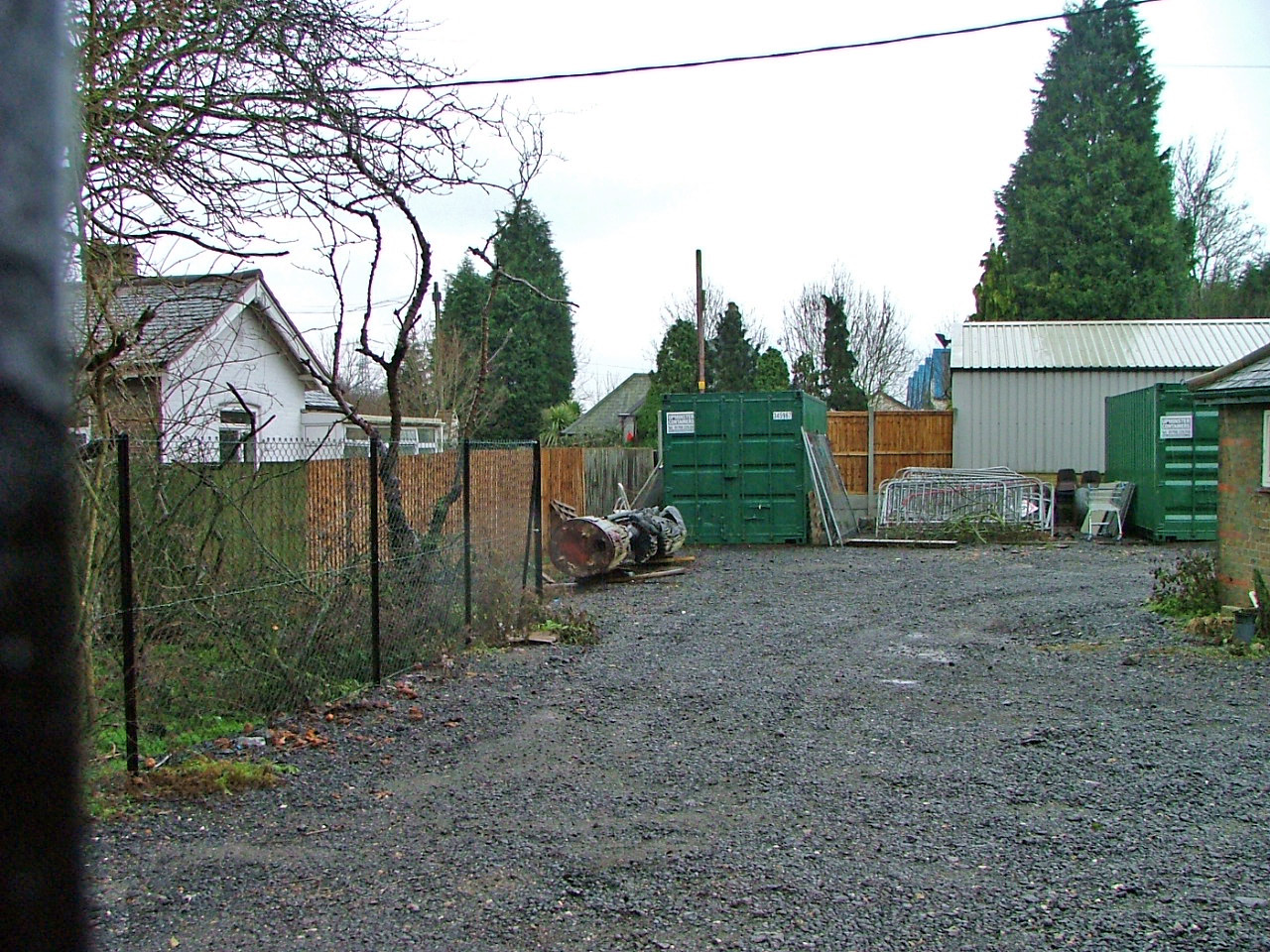
I hope the pictures below shock you as much as they shocked me when I found them waiting in my inbox.

They were taken yesterday afternoon.

They show how Basildon District Council stores “The Woodsman”, that “well loved piece of public art” which Cllr Horgan believes will be appreciated by “hundreds of thousands” in Wat Tyler Country Park – a piece of art that in the Council’s own words “was never meant to be outside for long periods” and needed “extensive treatment”:

It is nothing short of vandalism.  Cllr Michael Mowe is a Conservative councillor who condemns “brainless vandalism” – and very rightly so. I wonder what questions he will now be asking of his own Conservative administration? (Incidentally, vandalism can be reported to Basildon District Council on its website and even by mobile phone. Perhaps the Council’s own acts of vandalism should be reported?)

To my mind, though, questions and emails and letters are useless. This Conservative administration has determined its priorities – and this is how it treats a “well loved piece of public art”.

Contrast that with £38 million for a Sporting Village.

Pathetic.

Add to FacebookAdd to DiggAdd to Del.icio.usAdd to StumbleuponAdd to RedditAdd to BlinklistAdd to TwitterAdd to TechnoratiAdd to Yahoo BuzzAdd to Newsvine

“The Woodsman” – the Chapple family’s bitterness at Council decision #fb

The Echo today reports on the bitterness of the Chapple family at the way the Council has handled the relocation of “The Woodsman”. What is so desperately sad is that this is a local Basildon artist, who created this sculpture for the town, from materials originating in the town. In that sense it was truly a piece for local people and, as I’ve written previously, made important connections between the present day, the past and Basildon’s natural environment.

For local Tory politicians to have moved so quickly to get rid of this landmark carving smacks of an indifference to our local heritage – and a callous disregard for the feelings of Dave Chapple’s family.

Read the full story in the Echo.

Add to FacebookAdd to DiggAdd to Del.icio.usAdd to StumbleuponAdd to RedditAdd to BlinklistAdd to TwitterAdd to TechnoratiAdd to Yahoo BuzzAdd to Newsvine

“The Woodsman” – Then and Now

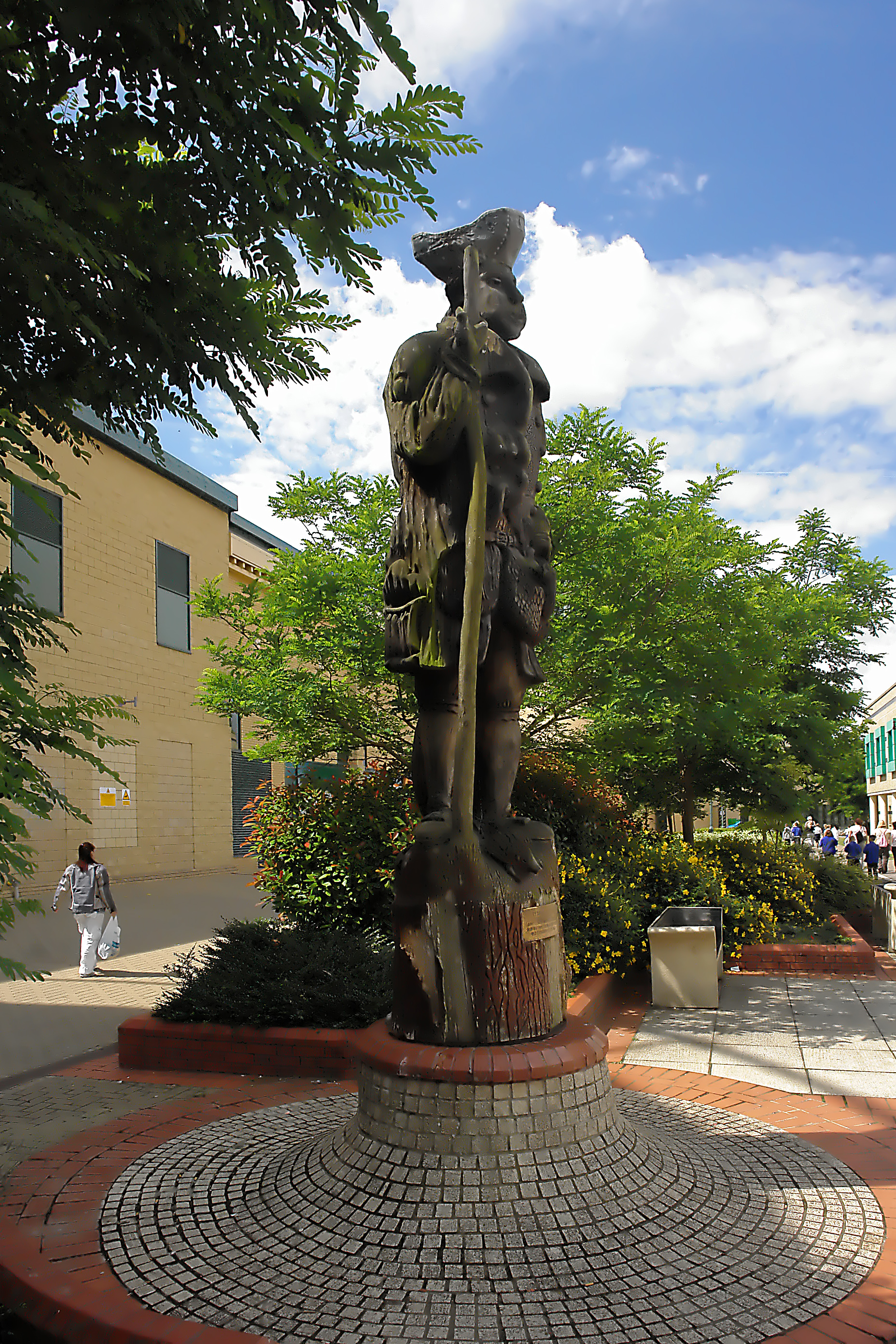
Then…

“The Woodsman” - Eddie Gunn

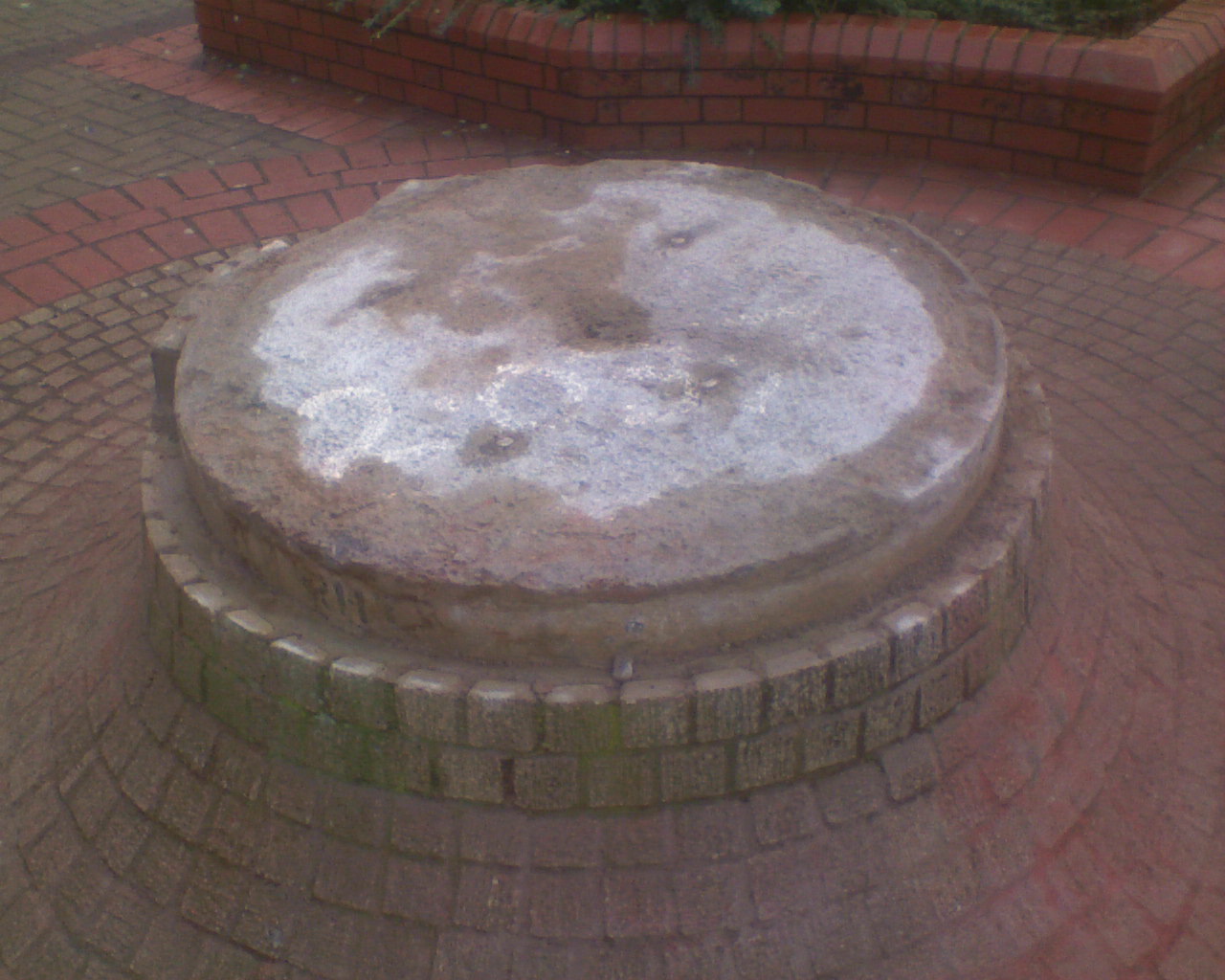
And now…

The empty plinth - Steve Waters

The empty plinth speaks for itself. Please give us “The Woodsman” back.

Add to FacebookAdd to DiggAdd to Del.icio.usAdd to StumbleuponAdd to RedditAdd to BlinklistAdd to TwitterAdd to TechnoratiAdd to Yahoo BuzzAdd to Newsvine

“The Woodsman”, The Town and The Politicians #basildon #toryfail

“The Woodsman” by Dave Chapple - unattributed

Yesterday, on my email, I received an email from Conservative-controlled Basildon District Council, linking to a press release on the future of Dave Chapple’s “Woodsman” sculpture. The Council has decided to remove the statue permanently (it is currently in storage) and replace it with the original town clock. As you can see, it says:

“A location for the statue is currently being found within the Park, and the woodsman will remain in storage until then.

Cllr Stephen Horgan, deputy leader of the Council, says: “The woodsman is a well loved piece of public art, and we believe that a new home at Wat Tyler Country Park is more suitable and appropriate, where he will be appreciated by the hundreds of thousands of people that visit the park each year.””

I am all for putting the clock back on display (where it can be properly seen from all four sides!). I am also for ensuring that hundreds of thousands of people get the opportunity to enjoy the unique and other-worldly charm of “The Woodsman”. However, in an act tantamount to municipal vandalism, Conservative councillors intend to remove the sculpture from the urban space for which it was created and place it in a country park – changing its context, function and form entirely.

There is no explanation as to why it is to be moved. We are left to speculate why Cllr Horgan advises that Wat Tyler Country Park will be “more suitable and appropriate”. Perhaps reinstating it so close to the Council’s offices would be a potent reminder of how  successive administrations – including the current Conservative administration – have failed to take care of this significant contribution to Basildon’s artistic heritage?

For me, “The Woodsman” isn’t just a quirky carving. Wood is a unique medium to work with. Unlike sculpting in bronze, from a cast, every single wooden carving, even if it appears the same, is very different. Each piece of wood has a different grain. Each piece of wood will have different knots to tax the skills of the carver. Hewn from local timber, from a tree felled in the Great Storm of 1987, “The Woodsman” is a unique piece of art designed to provoke thought and comment in the centre of a busy urban environment. In its original position, it broke up the concrete lines of the town and prompted a pause for thought, even if only a few seconds, to reflect on something that somehow managed to be both incongruous and perfectly situated at the same time.

“The Woodsman” was also a reminder of Basildon’s past. We’ve recently celebrated 60 years as a town. Prior to its construction, much of the area was fields and woodlands. Even now, Basildon is a place that contains areas of incredible natural beauty. It’s not without reason that Arthur Young, in his A Six Weeks’ Tour through the Southern Counties of England and Wales, wrote the following about Langdon Hills:

“I forgot to tell you, that near Horndon, on the summit of a vast hill, the most astonishing prospect that ever was beheld by human eyes, breaks almost at once upon one of the dark lanes. Such a prodigious valley, every where painted with the finest verdure, and intersected with numberless hedges and woods, appears beneath you, that it is past description; the Thames winding through it, full of ships, and bounded by the hills of Kent. Nothing can exceed this amazing prospect, unless it be that which Hannibal exhibited to his disconsolate troops, where he bade them behold the glories of the Italian plains! If ever a turnpike should lead through this country, I beg you will go and view this enchanting prospect, though a journey of 40 miles is necessary for it. I never beheld any thing equal to it in the West of England, that region of landscape.”

24 June 1767, King’s-Head, Tilbury

“The Woodsman” provided a connection to our history and that natural environment right in the middle of our town, where it could be enjoyed by those shopping, working, visiting the Council or passing through. We didn’t have to make a special trip to see it.

Finally, it also stood as a testament to the talents of Dave Chapple, who passed away on Friday 6th November 2009. Dave had even proposed a sculpture for the Millennium Dome when the Government was seeking ideas for what to put inside. To my mind it was a stunning challenge to the material assumptions that have overtaken us, putting Christ at the centre of the building commissioned to mark the new millennium.

Dave Chapple with “The Woodsman” - Picture Esk, Flickr

Beautiful detail at the base of “The Woodsman” - Vin Harrop

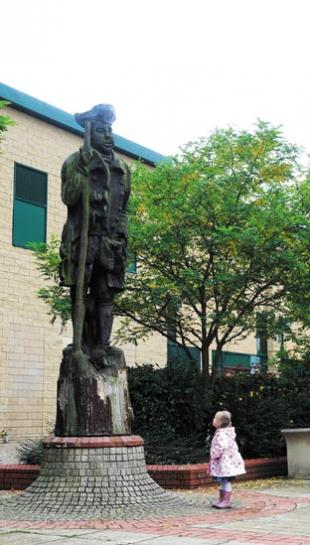
“The Woodsman” in its rightful place - Vin Harrop

To my mind, we have lost something as a community when politicians are prepared to spend £38 million on a sporting complex, but those same politicians are not prepared to find the money, time or motivation to ensure that “The Woodsman” – created in Basildon, for Basildon – can be enjoyed by thousands in the space it was created for.

“The Woodsman” is a thing of beauty that tells a story far greater than many imagine.

The Town needs to remember its roots – and the people of the town want to know its history and be reminded how beautiful parts of our district truly are.

And The Politicians need to remember who they represent. They also need to remember the heritage – cultural and natural – that is entrusted to them.

If you are interested in seeing some of Dave Chapple’s other work, please see this online gallery.

Add to FacebookAdd to DiggAdd to Del.icio.usAdd to StumbleuponAdd to RedditAdd to BlinklistAdd to TwitterAdd to TechnoratiAdd to Yahoo BuzzAdd to Newsvine

Arrogance and disregard for the taxpayer: Hanningfield’s latest wheeze as Essex freezes #toryfail #snow

The sheer arrogance of Lord Hanningfield is unbelievable.

The leader of Essex County Council clearly thinks he is running his own version of Essex Bank, rather than leading an elected local authority. The latest venture from the Bank of Essex – surely the greatest testament to personal ego of any initiative in local government in recent years – is to offer a £100,000 overdraft facility to eligible businesses.

Excuse me?

Admitting you are no longer capable of running public services and handing them wholesale to IBM is one thing, but doing so as you extend the commercial operations of a bank that only exists because of your elected mandate is something entirely different. At no point do I recall my local successful candidate at the County Council Election, Cllr John Schofield, informing voters that he intended to be a party to such speculation with public funds: public funds provided by hard-working Council Tax payers.

According to the Frequently Asked Questions on the Banking on Essex website, all profits from the venture will be used to cover potential losses and protect taxpayers’ funds.

Where has Lord Hanningfield been for the last eighteen months?

Banks with a hundred-year tradition of providing commercial services haven’t been able to get this right in the current economic climate. How on earth can taxpayers have any confidence that self-aggrandising politicians will succeed where self-aggrandising bankers failed? More importantly, how can politicians, with little or no experience at running a bank, guarantee that the profits will cover the losses? I am not sure that assuring voters that you are working in partnership with a large banking organisation gives much confidence these days…

I suppose you could have a little more confidence if some care was taken with the presentation. However, that is clearly no concern for this commercial operation. Here is how the guarantee appears in the Banking on Essex FAQs (Frequently Asked Questions) at the time of writing:

“Will the initiative put tax payers’ money at risk?
The County Council is using all additional income earned to cover potential loses [sic] and protect tax payers’ funds.”

The italics are mine.

Essex is the Education Authority.

Essex is also attempting to generate a sense of commercial confidence.

The example above demonstrates why politicians should put their determination to write themselves into history to one side and stick to what they were elected to do: represent the interests of the people who put them in office.

Here is a reminder for Conservative councillors  John Schofield and Lord Hanningfield of matters that should be the priority for Essex County Council over the next few weeks:

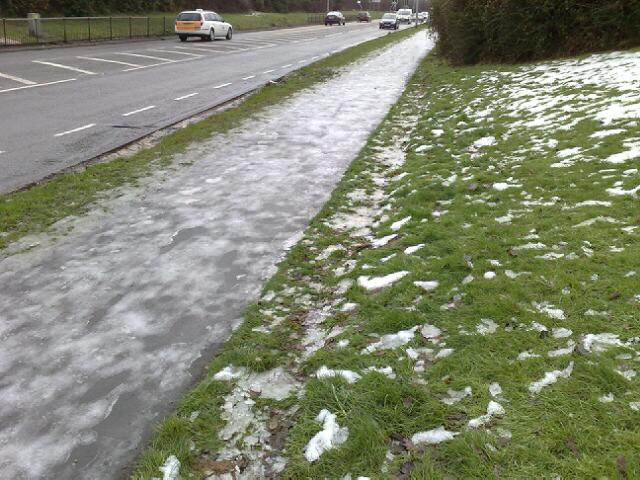
Path to hospital at junction of Nethermayne and the Knares, 24 December 2009

Path to hospital, 24 December 2009

These two pictures were taken of the main footpath to the principal site of Basildon and Thurrock University Hospitals on Christmas Eve 2009 – exactly one week after the heavy snow falls that caused chaos in South Essex. It was still iced over even when the snow on surrounding banks had melted and the roads had been gritted.

In the NHS Foundation Trust’s own words:

[We] primarily serve the almost 400,000 population of Basildon and Thurrock in South West Essex, plus some residents of the neighbouring districts of Brentwood (for whom we are the main provider of cardiology services) and Castle Point.

With a annual budget of £250 million, the Trust treats 63,000 inpatients and day cases, provides 270,000 outpatients consultations and attends to more than 90,000 Accident and Emergency (A&E) patients.

And pictured just above is the path people had to walk to reach that hospital, should they not be fortunate enough to drive a car.

I met an elderly constituent of mine as I walked to town that Thursday. He was incandescent. He is usually a charming conversationalist, but that day he had only three words for me as he gestured unsteadily with his walking stick at the ice: “It is wicked”.

The Basildon Recorder was forced by Essex County Council to issue an apology when it ran a story criticising the county for inadequate salt supplies. Apparently, there is no shortage:

“The county council would like to assure residents that Essex County Council continues to be fully prepared for icy winter conditions with more than sufficient supplies of gritting salt for the bad weather.”

So if there was no shortage, I can only assume that Essex County Council simply doesn’t care about pedestrian access to the major health facility in the south of the county. Surely, if there was salt, and it gave a stuff, Essex would have taken the time to grit this major pedestrian route? Winter 2008/2009 saw the highest excess winter mortality rates for ten years. It is hard to believe that figure will be lower for 2009/2010 if this Winter is harsher. Respiratory illnesses are just one set of conditions that are exacerbated by conditions in the winter months. (If you are really interested, there is a superb paper on the website of of the Centre for Public Health at the Liverpool John Moores University entitled Weather forecasting as a Public Health Tool). People need to be able to get to hospital – and that includes by foot.

This is the Met Office weather warning for the East of England, for Tuesday 5th January, issued on Monday 4th January:

“There is a moderate risk of severe weather affecting east and southeast England.

Outbreaks of sleet and snow will become heavier during Tuesday afternoon and evening, with an increasing risk of disruption to transport networks.

Issued at: 1124 Mon 4 Jan”

Sky News is warning Heavy Snow Set to Bring More Travel Chaos.

The question I have is: will Essex County Council heed the warnings and make an effort to ensure that key footpaths are snow and ice free this time around?

To finish, three simple things:

Stop throwing the taxes of hard-working local people at self-indulgent, speculative schemes.

Stop criticising the press for reflecting local concerns.

Start delivering a basic level of service: grit our roads and footpaths, especially where they provide access to major facilities such as hospitals.

Add to FacebookAdd to DiggAdd to Del.icio.usAdd to StumbleuponAdd to RedditAdd to BlinklistAdd to TwitterAdd to TechnoratiAdd to Yahoo BuzzAdd to Newsvine

Tories and IT procurement: headline-grabbing opportunism

Francis Maude has made the bold statement that the Tories will ban IT projects that cost over £100m. It looks good in the headlines. He said:

“Labour’s IT procurement process has been marked by a catalogue of failures, late deliveries and cost overruns.

“We need a freeze on signing up to yet more failed projects.”

You can read the full story in the Telegraph by following this link.

A week is clearly a long time in Tory politics.

On December 22  I blogged about the £5bn proposal by Lord Hanningfield‘s Tory administration in Essex to hand over the running of services it is unable to provide effectively itself to IBM. You can remind yourself of the story here.

Contrast the Tories’ willingness to talk tough on cash limits on  IT projects at the centre (probably quite sensible knowing how badly some of them have failed), with their example in local government in Essex. Unlike other local authorities, Essex are off-loading services that they clearly believe they are no longer capable of delivering. It strikes me as a comprehensive admission of political failure to deliver. If Maude’s boast is to have any credibility, the sheer untested lunacy of Hanningfield’s project demands robust intervention from Cameron et al.

Just as irresponsible spending on projects in Whitehall needs clamping down on, so local authorities, including Tory Essex, should not receive carte blanche to experiment with innovative IT projects at vast public expense.

Headline-grabbing opportunism is one thing. Dealing with your own IT cowboys is something entirely different.

Add to FacebookAdd to DiggAdd to Del.icio.usAdd to StumbleuponAdd to RedditAdd to BlinklistAdd to TwitterAdd to TechnoratiAdd to Yahoo BuzzAdd to Newsvine