Eva Sajovic’s “Be-Longing: Travellers’ Stories, Travellers’ Lives” opens Thursday #sajovic #travellers

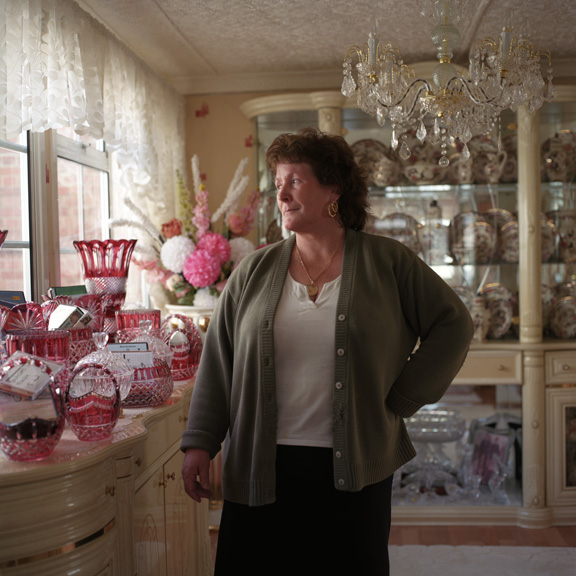
Photo by Eva SajovicTen days ago I blogged about the exciting upcoming exhibition from Eva Sajovic, the Slovenian photographer who has worked extensively with Gypsies, Roma and Travellers, including Traveller families from Basildon, for the past two years.

The exhibition opens on Thursday (4 February) and runs until Saturday 20 March. Throughout both months there are various events associated with her exhibition:

Sat 13th Feb 2010
12-5pm
Workshop with Romany artist Delaine Le Bas
Weds 17th Feb 2010
6-9pm
Seminar exploring the role of photography and other artistic media in challenging stereotypes and prejudice.
Tues 9th March 2010
10.30am-4pm
Seminar:  The Future of Travelling Communities
Thurs 18th March 2010
7-9pm
Film Screening of Romano Hip Hop by R Point
Sat 20th March 2010
1-5pm Gallery Open & Closing Event with music
6-9pm

Spaces at these events are limited so please contact the Brixton arts space 198 to reserve yours: info@198.org.uk

For more details please read the full text of her press release.

Add to FacebookAdd to DiggAdd to Del.icio.usAdd to StumbleuponAdd to RedditAdd to BlinklistAdd to TwitterAdd to TechnoratiAdd to Yahoo BuzzAdd to Newsvine

“The Woodsman”: When being free is still not cheap enough #basildon #woodsman

I’ve spent some time reflecting on Cllr Tony Ball’s statement that he made regarding “Progression” (see my earlier post “Progression” and “The Woodsman”: A Tale of Two Sculptures):

“We are not against the art – but the cash should be from private sponsorship.”

I realised I didn’t know anything regarding the financial provenance of “The Woodsman” and whether or not Basildon Council had commissioned it, assisted with transportation costs, paid for its installation etc. I decided to email Vin Harrop, heritage director of Our Basildon, and ask that question. His response was fascinating:

“Dave Chapple on behalf of the then Basildon Arts and Design Initiative (BADI)  gifted the finished work to the people of Basildon.  It took him 5 months to complete, working for nothing from June 1995. He was 63 years old at the time and wanted to work on that scale before he got too old. Dave spent three days a week and never missed a day, each day he was surrounded by scores of people inquisitive to know what he was doing, if he had cut down the tree and how much it was costing. Dave always replied “not one penny”.  People were visiting Dave on a regular basis offering gifts in particular food, so you can see he built up quite a rapport with all those using St Martin’s Square. This is why we use the term ‘People’s Artist’, for he was a man of the people (born in Vange) who created his art for the people of Basildon.

Basildon Council gave permission to install scaffolding in front of the Basildon Centre and covered the hire of a lorry to transport the fallen tree from Langdon Hills, and Dave’s public liability- about £300 in total. The scaffolding was provided as part of a sponsorship deal- other funds were sought but they (BADI) were unsuccessful.”

So here we have it. Unlike “Progression”, which was paid for from public funds, “The Woodsman” cost nothing except the £300 for transport and liability insurance. I have since been told that BADI may have actually raised that £300 also.

It would seem that even when a work is sponsored from private funds, the Conservative administration is not interested in maintaining “the art”. I don’t know if that makes Cllr Ball “against the art” – it does, however, leave a bad taste in the mouth to see the landmark carving of a local artist mouldering on its side in Wat Tyler (I understand it now has a tarpaulin over it).

“Hardcore Carvers” are a group of independent artists and entertainers who specialise in making large wooden carvings (often with chainsaws). They treat their external oak sculptures yearly with teak oil.

B&Q’s cheapest teak oil is currently £5.16 a litre.

The Sporting Village is costing £38 million.

It makes you think about the balance of priorities.

Add to FacebookAdd to DiggAdd to Del.icio.usAdd to StumbleuponAdd to RedditAdd to BlinklistAdd to TwitterAdd to TechnoratiAdd to Yahoo BuzzAdd to Newsvine

Eco-catastrophe, Apocalypse, a matricidal teen prophet and psycho-babble galore: a rapturous read

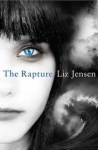
It’s rare for me these days to be gripped so completely by a book that I can’t put it down.  I’ve just finished Liz Jensen’s The Rapture.

It is simply, chillingly brilliant.

Set in the near future, Jensen draws you right inside the head of her main protagonist, Gabrielle Fox, carefully weaving the breathy pace of a thriller with the considered reflections of a psychological drama. She baffled this layman convincingly with her climate science and caused me to reflect on my faith in this age of disaster chaos and economic uncertainty. More importantly, she eschews the typically shallow exploration of character that you find in most thrillers and instead delves deep into the psyche of each of her main characters.

To exquisite effect she toys with your recollection of recent events, mixing up recent landmark events, imprinted by a thousand television reports, with fictional facsimiles. It is a confident trick for a first novel and one that has you wondering if you’ve managed to miss a significant news story at some point that really should have fixed itself in the memory. To sustain the intense descriptions of oppressive weather, constrained phsyical circumstance and the unhinged lunacy of Fox’s teen patient until the last pages is a real achievement.

If you are ready for some brutal characterisation, a different sort of heroine, some occasionally lurid story-telling and are confident enough in your faith – if you have any – to read a convincing and ferocious challenge to its presumptions, then I commend this as a very exciting read.

If you don’t mind a spoiler or two, there are some worthwhile reviews in The Guardian (Irvine Welsh), The Telegraph (Helen Brown) and The Independent (Marianne Brace).

Add to FacebookAdd to DiggAdd to Del.icio.usAdd to StumbleuponAdd to RedditAdd to BlinklistAdd to TwitterAdd to TechnoratiAdd to Yahoo BuzzAdd to Newsvine

New petition to restore and reinstate The Woodsman in St Martin’s Square #woodsman #basildon

For those who have been following the story of “The Woodsman” there is now a petition running on ipetitions to show support for its restoration and reinstatement in St Martin’s Square, Basildon. Signing it only takes a few moments. There is also a drop-down question box on whether or not you live in Basildon or are simply concerned about “The Woodsman”/public art.

Sign the petition on “The Woodsman” now!

Add to FacebookAdd to DiggAdd to Del.icio.usAdd to StumbleuponAdd to RedditAdd to BlinklistAdd to TwitterAdd to TechnoratiAdd to Yahoo BuzzAdd to Newsvine

“Progression” and “The Woodsman”: A Tale of Two Sculptures (Or: Basildon’s Tories and Public Art)

"Progression" - Michael Condron

“Progression” – Michael Condron

It is sobering to realise how quickly things fade from the memory.

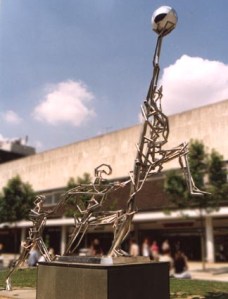
The controversy surrounding “The Woodsman” and an emailed comment from a friend in Basildon Choral Society has reminded me of the fate of “Progression”, the sculpture created by another exciting Essex artist. Ten years ago, Rochford-born sculptor Michael Condron was commissioned by the Council to create a piece of work to celebrate Basildon’s journey into the new Millennium. The general nature of Condron’s work  is summarised well on the website of Chelmsford Borough Council:

“Michael Condron is a sculptor whose principal aim is to make artwork that belongs to its place. A common theme running throughout his work is a sense of fun and discovery. His sculptures can be interactive, responding to the viewer’s presence with sound, movement, light and even bubbles!”

From even that brief description it is clear that his creations are intended to be touched not just looked at. His installations are almost performance pieces, challenging young and old to explore their physicality as well as admire their lines and designs. That this was intended for “Progression” is borne out by the detailed design information that is available on Condron’s website:

“The sculpture will require little maintenance beyond routine inspection, being robust enough to withstand vandalism, people climbing, etc. Any dirt/graffiti can easily be cleaned by Basildon District Council’s normal maintenance contractors. As the sculptures are set at ground level, the surrounding grass will need to be cut with care. A nylon cord strimmer should be used close to the sculpture to prevent damage.”

Interestingly, the issue of health and safety, the reason so often cited for its removal, was addressed throughout:

“The Artist liaised with Basildon District Council to ensure that any Health and Safety concerns over the design were addressed, including edges, projecting parts, trip and slip hazards.”

The biggest controversy surrounding “Progression” centred on its cost. The Conservative opposition said that spending £25,000 of public money on public art was a waste of money. Instead, Cllr Tony Ball said that the money should be spent on Wickford Citizen’s Advice Bureau and Billericay Citizen’s Advice Bureau who, at the time, faced a cash funding crisis.

Thankfully, they are both still there doing a very important job.

“Progression” is not.

In the story linked above, Cllr Ball makes the following comment:

“We are not against the art – but the cash should be from private sponsorship.”

Personally, I disagree. I believe that public art fulfils an important purpose, in the same way other facilities do. Public art makes the places we live in less severe, breaking up their harsh anonymous lines. It helps create a unique sense of identity.

Other places have been far more welcoming of publicly-commissioned art installed in public spaces. Sticking with Condron, in Woking, his “Martian” has been hailed by visitors as a masterpiece and draws on the local heritage of H. G. Wells. In Slough, he worked with Beechwood School to mark its relocation, creating “Moving On” from pieces of steel cut according to outline drawings of pupils’ feet.

Elsewhere in Essex, his “Timeline” was the result of a commission from the Essex Records Office. The Colchester and Tendering Hospital Arts Project commissioned him to create “Tube Figures”, a series of sculpted figures installed around their hospital sites.  Even the County Council commissioned Condron – after “Progression” was installed.

Elsewhere, the importance of public art is recognised in law. In New York, that bastion of socialism, there is a 1% rule:

“In 1982, the Percent for Art law was initiated by Mayor Edward I. Koch and passed by the Council of the City of New York requiring that one percent of the budget for eligible City-funded construction projects be spent on artwork for City facilities.”

In Norway, which also has statutory funding requirements in respect of public buildings, the government has a professional body for public art (KORO) with a clear statement of purpose:

“Art expresses human creativity and originality. Through art, reality is adapted in order to convey new experiences, new understandings and new insights. Producing art for public spaces is a way of expressing a democratic idea that upholds the right of every person to experience art.”

In the course of my professional work I have had reason to visit Norway and have held discussions with senior public figures regarding the role of public art in promoting health and well-being. I had the good fortune to be shown around a new hospital being built, in which each room was carefully decorated and the communal spaces were filled with beautiful works of public art. The feeling of peaceful recuperation was palpable. (There was even a piano, regularly tuned and maintained, for patients, visitors or staff to play.)

In its own small way, “The Woodsman” did just that. It broke up the harsh lines of the commercial space around it and reminded us of softer, greener and older places – and reminded us that we each have the right to experience art. Experience is an important word, too. It is not about ‘liking’, though many of us loved “The Woodsman”. ‘Dislike’ is important in creating a discussion, getting us engaged in the debate about how our environment should look.

Where is that discussion in Basildon?

Ten years’ on from “Progression”, public art produced in Basildon, for Basildon, by a Basildon artist, is now rotting in an anonymous yard.

£38 million can be spent furthering the sporting interests of the district, but the Council is not even prepared to spend the few thousand necessary to restore “The Woodsman” to the space it was made for (and made in).

And whilst “The Woodsman” lies open to the elements, but closed to the public, what of Condron’s “Progression”? This piece, a work that was designed to “withstand climbing, swinging, vandalism or the elements”, is also in Wat Tyler Country Park, fenced off from the public like some museum piece.

This tale of two sculptures is also the story of the diminution of Wat Tyler Country Park. Wat Tyler has its own identity, its own story to tell of struggles ancient and modern.  It shouldn’t become the repository of Basildon District Council’s public art – where you have to make a visit to see it and admire it from afar.

The more I think about it, the more Friday’s symbolic funeral wreath, which could have been mocked for its mawkishness and sentimentality, captures a vital idea – the sad passing away of public art in Basildon.

I would challenge those who are “not against the art” to say otherwise.

For those who are interested in Condron’s work, I have pulled together a gallery on Flickr from publicly available pictures. It is predominantly made up of shots of his three-piece “War of the Worlds” installation in Woking – you can find examples of his other work on the links above.

If you want to find out more about public art in general, Wikipedia has a very good entry which should serve as a useful starting point. Public art online is a leading UK website which covers information from across the country as well as internationally. Artquest has a very interesting section entitled Government Policies and the Arts which looks at the statutory framework regarding public art in different countries. It also contains a free library of legal information for artists on its Artlaw subsite. There is also a directory of public art which contains news of new installations as well as a growing collection of public art from around the globe.

Add to FacebookAdd to DiggAdd to Del.icio.usAdd to StumbleuponAdd to RedditAdd to BlinklistAdd to TwitterAdd to TechnoratiAdd to Yahoo BuzzAdd to Newsvine

The Woodsman Facebook Group: the significance of public art

There is now a Facebook Group Save The Woodsman that has been set up by members of Basildon’s artistic community. If you are a Facebook user, please take the opportunity to have a look. Attitudes to public art – and the conduct of local authorities – is not just a local issue. The precedents set by councils in different local areas helps shape and define national policy and guidance. Public art makes a valuable contribution to the health and well-being of our communities.

Your support for The Woodsman will help send a message to local government about the communities we all live in.

Add to FacebookAdd to DiggAdd to Del.icio.usAdd to StumbleuponAdd to RedditAdd to BlinklistAdd to TwitterAdd to TechnoratiAdd to Yahoo BuzzAdd to Newsvine

A Mike Leigh gem – going “Nuts in May”

“Nuts in May” - from the BBC

I’ve just spent a very happy hour and a bit slumped on a sofa in front of a roaring fire, Em on one side,  a mug of tea on the other – and “Nuts in May” by Mike Leigh on the television. As with all his films, it is a perfect study of the quirks and imperfections of human nature – and the little obsessions that drive us all. If you can laugh at yourself, and you’ve not seen it, try and get hold of a copy. Better still, if you like character-driven cinema, that examines the way we complicate even the simplest things with our hang-ups, routines and prejudices, get hold of a copy of “Mike Leigh: The BBC Collection”, which contains all his surviving films, plays and shorts for the BBC:

If you want to read some reviews of “Nuts in May”, BFI Screenonline has a very good synopsis by Darren Rea. For a transatlantic view, RVA News has a very good review by Scott Burton. There is also an interesting piece by Ray Carney, excerpted from his book The Films of Mike Leigh.

Add to FacebookAdd to DiggAdd to Del.icio.usAdd to StumbleuponAdd to RedditAdd to BlinklistAdd to TwitterAdd to TechnoratiAdd to Yahoo BuzzAdd to Newsvine

“The Woodsman” – Dissembling officialdom and a Council’s municipal vandalism

Waking this morning I didn’t expect to open my inbox to discover something to make me literally shake with rage.

In recent days I have blogged on “The Woodsman”, Dave Chapple’s carved sculpture that he gave to the people of Basildon. Yesterday, members of Basildon’s arts community celebrated his work – and mourned the Council’s decision to remove “The Woodsman”.

Back in 2008, Basildon District Council decided to consult on the future of “The Woodsman”. In the original press release , unattributed assertions are made that “it was never meant to be outside for long periods” and that “to keep it outside will require extensive treatment and could cost thousands of pounds”. No officer or councillor puts their name to the quote – it stands there as a nugget of wisdom dispensed on high from people who clearly want to give the impression that they know what they are doing and that they understand how to care for such fragile works of art (the press release later makes clear that treatment would mean it could stand for a further ten years before more treatment).

Cllr Stephen Horgan reinforces that understanding when he states that “the “woodsman” sculpture is in need of repair, or removal to an indoor location.”

Notice: the implication of repair is that it could stay outside. Otherwise – “or” – it needed putting inside. So it remaining on display was a possibility. (If it were removed, there was even the prospect of a new piece of art for the square, suggesting that King Edgar’s Head by Dave Chapple might be a possibility.)

In October 2008 a further press release was issued which requested design ideas for the lighting column to replace “The Woodsman”. Cllr Kevin Blake is quoted saying: “We asked the public whether they wanted to see the woodsman replaced, and it seems only right that we now give people the opportunity to send in their ideas of what they think a new lighting column should look like.”

It is an interestingly constructed sentence – a PR professional’s top piece of spin.

See how the second part of the sentence implies the result of the first, but without saying what the response to the survey actually showed? The survey probably did show the result they reported. However, details of it are nowhere to be found on either Basildon District Council’s website or Basildon Renaissance  Partnership’s website. I have written to the Council and requested a copy just so we can see how many people took part and exactly what it showed. I will of course share it here when it is forthcoming.

As you can see, public art is out the window now. Lighting columns are in. (Later still, in April 2009, I voted at Cabinet to accept the new money from the Government for new lighting in the Town Centre and St Martin’s Square. The Government wanting to invest in Basildon seemed a good thing. Seeing the insensitivity of the design in relation to the views of the Bell Tower, I regret how it is turning out. I wish I had also made the connection between the competition for new lighting columns, the future of “The Woodsman” and this money. I didn’t.)

Finally, in Basildon District Council’s most recent press release on “The Woodsman”, Cllr Horgan describes “The Woodsman” as “a well loved piece of public art.”

And the lighting column is now the Town Clock.

I hope the pictures below shock you as much as they shocked me when I found them waiting in my inbox.

They were taken yesterday afternoon.

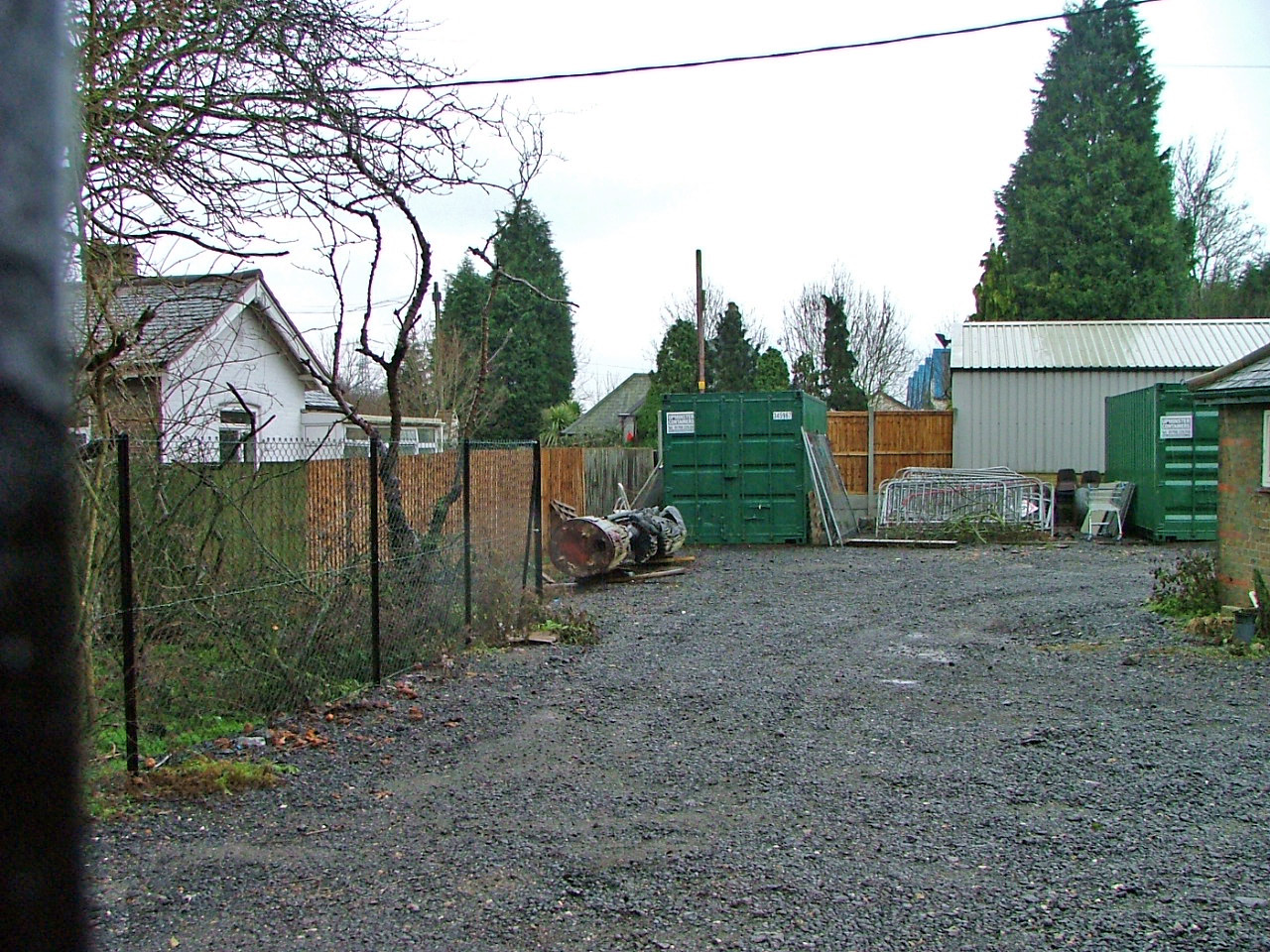
They show how Basildon District Council stores “The Woodsman”, that “well loved piece of public art” which Cllr Horgan believes will be appreciated by “hundreds of thousands” in Wat Tyler Country Park – a piece of art that in the Council’s own words “was never meant to be outside for long periods” and needed “extensive treatment”:

It is nothing short of vandalism.  Cllr Michael Mowe is a Conservative councillor who condemns “brainless vandalism” – and very rightly so. I wonder what questions he will now be asking of his own Conservative administration? (Incidentally, vandalism can be reported to Basildon District Council on its website and even by mobile phone. Perhaps the Council’s own acts of vandalism should be reported?)

To my mind, though, questions and emails and letters are useless. This Conservative administration has determined its priorities – and this is how it treats a “well loved piece of public art”.

Contrast that with £38 million for a Sporting Village.

Pathetic.

Add to FacebookAdd to DiggAdd to Del.icio.usAdd to StumbleuponAdd to RedditAdd to BlinklistAdd to TwitterAdd to TechnoratiAdd to Yahoo BuzzAdd to Newsvine

“The Woodsman” – the Chapple family’s bitterness at Council decision #fb

The Echo today reports on the bitterness of the Chapple family at the way the Council has handled the relocation of “The Woodsman”. What is so desperately sad is that this is a local Basildon artist, who created this sculpture for the town, from materials originating in the town. In that sense it was truly a piece for local people and, as I’ve written previously, made important connections between the present day, the past and Basildon’s natural environment.

For local Tory politicians to have moved so quickly to get rid of this landmark carving smacks of an indifference to our local heritage – and a callous disregard for the feelings of Dave Chapple’s family.

Read the full story in the Echo.

Add to FacebookAdd to DiggAdd to Del.icio.usAdd to StumbleuponAdd to RedditAdd to BlinklistAdd to TwitterAdd to TechnoratiAdd to Yahoo BuzzAdd to Newsvine

Work with Basildon’s Traveller community to feature in award-winning artist’s London exhibition #sajovic

Eva Sajovic, the award-winning artist who is both photographer and former illustrator, is mounting an exciting new exhibition entitled “Be-Longing: Travellers’ Stories, Travellers’ Lives” from 4 February -20 March 2010 at 198 Contemporary Arts and Learning. Amongst the pieces exhibited by the lawyer-turned-photographer will be art featuring her work with Basildon’s traveller community. Many readers will be very familiar with the threat of forced eviction which hangs over the established but unlawful traveller community at Crays Hill and the complex and emotional arguments that are not yet resolved peaceably or satisfactorily.

You can read more about the exhibition by taking a look at the official press release:

If you would like to know more about Eva, there is a great profile piece on the F2 Freelance Photographer website which describes her journey into photography and the issues that inspire and motivate her.

In February 2008, Eva mounted an exhibition in the European Commission’s 12 Star Gallery, organised by the Slovenian Embassy in London to mark Slovenia’s presidency of the European Union.

June 2009 was recognised as Gypsy Roma Traveller History Month (GRTHM) and Eva was commissioned by Southwark Council to produce a booklet to mark it. The resulting publication was Pavee Widden: Travellers Talking an astonishing and eye-opening collection of first-hand accounts of the lives of Gypsies, Roma and Travellers. It is not long – and is worth reading.

The Gypsy, Roma and Traveller communities are are among the most misunderstood in the United Kingdom. Events such as Eva’s exhibition are vital if we are to foster a constructive dialogue that builds trust, co-operation and an understanding of mutual needs.

I hope I am able to get there. I hope you are too.

Add to FacebookAdd to DiggAdd to Del.icio.usAdd to StumbleuponAdd to RedditAdd to BlinklistAdd to TwitterAdd to TechnoratiAdd to Yahoo BuzzAdd to Newsvine