White House reassures Jedi with no to Death Star

death-star-660x448According to the last census (2011), there were still 176, 632 Jedi Knights in the United Kingdom.  As the Guardian reported, that represented a significant decline on 2001 when around 300,000 Jedi Knights were keeping us safe from The Empire (coincidentally, George Bush was US President from 2001 to 2009), but they are still a force to be reckoned with. And thankfully, we are not in Star Wars: Episode IV “A New Hope” territory yet.

Hopefully, the ranks of aspiring Luke Skywalkers will be emboldened by the latest announcement from the White House. In responding officially to a petition on the White House website calling for America to build a Death Star, Paul Shawcross, Chief of the Science and Space Branch at the White House Office of Management and Budget, offered this formal response:

“The Administration shares your desire for job creation and a strong national defense, but a Death Star isn’t on the horizon. Here are a few reasons:

  • The construction of the Death Star has been estimated to cost more than $850,000,000,000,000,000. We’re working hard to reduce the deficit, not expand it.
  • The Administration does not support blowing up planets.
  • Why would we spend countless taxpayer dollars on a Death Star with a fundamental flaw that can be exploited by a one-man starship?”

The geopolitical ramifications of building a Death Star aside, Shawcross is quite right to remind folks that actually it wasn’t exactly a masterpiece of robust design. Perhaps a little more worryingly it shows just how deeply imprinted Star Wars is on the American psyche. But let’s not go there!

Anyone wanting a little light relief and some reassurance that, just occasionally, government officials do have a sense of humour, should read his full response.

Remote-controlled quadcopter – I want one (please)

This has to be the ultimate gadget junky’s toy!

Flight control specialists DJI-Innovations have released a consumer toy version of their radio-controlled flight platforms – and it looks like a hell of a lot of fun.

The Phantom quadcopter is a technological mini-marvel. It can hit 6m/s vertically and 10m/s horizontally, has a range of 300m, built-in GPS for fly-home programming (i.e. if it goes out of range, it’ll fly home and land itself if the GPS signal is strong enough) and a flying time of between 10 and 15 minutes. It can also automatically land itself if the battery is low.

It also comes with a mount for the phenomenal GoPro range of video cameras. Beyond the geeky fun value, the potential for amateur film-makers wanting a different perspective, or the likes of conservationists, gardeners etc. who want to see how things appear from the air looks immense.

Tech blog gizmag has an extended review.

So if anyone is feeling generous, I’ll have one of each, please.

Man attaches camera to trombone: funny and fascinating

The GoPro is marketed as the world’s most versatile camera.

It’s certainly led me to put five words together in a sentence that, until today, had never occurred to me could possibly belong together: man attaches camera to trombone.

Go on. Take a look.

And I want one, please. A GoPro, that is. Not a trombone. Not that I have the foggiest idea what I would do with it.

Attach it to the cat and see where he disappears to in the day? Now there’s an idea…


A mobile life

I’ve always been a techno-junky, at least as long as I can remember. It’s taken the rest of the world a long time to catch up, but thankfully Sheldon, Leonard, Howard and Rajesh are showing the world just how cool us über-nerds are. (That’s The Big Bang Theory for anyone who spent 2012 living on Mars.)

It was Star Trek that did it, I think. Between the communicator, the tricorder and the universal translator there was never much chance for an inquisitive sort like me, who was convinced that aliens were waiting to land, if not here already. (I never bought the theory that the planet was being run by giant lizards. That seemed a little silly. Like David Icke – who I foggily remember for his sports commentary on Grandstand, not the Illuminati.) And for interest, How Stuff Works has a a fascinating article on the 100 Star Trek technologies that have come into being

I remember the first mobile phone I had.

It was Dad’s phone that he passed over to me when I started work. It was a Nokia, a 2140 on the Orange network – the only phone available on Orange when the network launched in 1994. Those of you who had one may remember the retractable antenna. I remember how cool it felt when several  people, a lot older than me, and a lot more important, needed to make phone calls whilst we were stuck in a meeting. Their surprise when I pulled out a cell phone (!) was very gratifying in a geeky, nerdy kind of way.

After that there was no stopping me. Mobile phones and mini-computing became technological areas of fascination and over the years I acquired a series of mobile phones, mini-computers and tablets.

This morning, in the cab on the way to church, a guy on Radio 5 was talking about wearable computers the size of a stud earring that he thinks will be the norm by 2040, which will contain more computing power than every device in the average home today. He was saying, quite straight-forwardly, than in 15-20 years we will have electronic circuitry printed directly onto our skin and that transaction by reading this circuitry will be quite normal. The stud earrings will create local networks to allow off-grid information exchange, ostensibly to protect privacy.

If that sounds insane, you should know that the EES (Electrical Epidermal System) is already here, designed two years ago by engineers John Rogers  and Todd Coleman to collect information on your vital organs and transmit it back wirelessly to a computer.

I wonder if the sense of incredulity I felt was anything like that of those who shook their heads and wondered why on earth I thought I needed a phone in my pocket? Perhaps such imprints and implants will indeed be the norm, even in my lifetime, and we will dispense with our mobiles and games consoles.

In the meantime, here is a gallery of the phones and associated gizmos that, over the years, have led to technology becoming hard-wired into my social and professional life.

Oh… And a small legacy of one of my favourite phones, the Nokia N70 – the picture of Portreath at the top of the blog was taken on it, a good few years ago now.

This slideshow requires JavaScript.


Cold calling, Bockwurst and dying manners (mine)

It happens at least three times a day, according to my telephone’s log. Sometimes it can be three times an hour.

Someone I don’t know, in a place I have never been to, places a call through a robot dialler and attempts to convince me that, despite a suspiciously subcontinental accent, they are called Belinda – or jauntily assures me with a pleasant Scottish twang that I signed up to receive marketing calls from their clients (what sort of imbecile would knowingly do that?!).

Who are these people who make these calls – and how has it become socially acceptable to force yourself on someone’s time like some irresistible cyber-pedlar? When did it become okay to ignore the pitifully ineffective Telephone Preference Service system so that a student in Glasgow or a housewife in Bangalore can drag you out of the loo, only for you to hear the ghost in the machine click and the line fall dead, your tormentor waiting until you resume your thronely duties to try again?

Sometimes, in my more conspiratorial moments, I wonder if TPS sells lists of numbers just to piss us off.

It is yet another mark of the slow and painful death of manners in the modern age (see Kino rage: the death of cinema etiquette (or… Be quiet!)). It strikes me as quite ironic, really, that while political parties – generally not the most popular of organisations – go to great lengths and expense to ensure their phone lists are TPS-compliant, following the guidance of the Information Commissioner’s Office, it is companies, sales canvassers and charities – yes, even sodding charities – that regularly show a maverick disregard for the law.

So, in an act of defiance which makes me feel a little more like Han Solo (assisting rather than leading the Rebellion), I have taken to rarely answering my land-line unless I recognise the number – or I want a little sport.

Callers for my ex-wife, who left ten years ago, or my ex-partner, who left a year and a half ago, are met with a stunned silence and a stifled sob, before being angrily told they have just dredged up the most painful of memories that I have spent many years trying to bury. (Just to be clear, for anyone who might be concerned I am suffering relationship-related PTSD, this is not true.) In the wrong moment, callers for “Is that Mr Williams?” may simply encounter the version of me that has suspended all rules of civility and receive a stream of epithets worthy of the bluest sergeant major. More mischievously, I might assent to their request to speak to him if they provide the right password. That can be a source of some bafflement.

Or asking extremely technical and detailed questions, before declining.

Or simply answering “yes” to every question.

And finally, those concerned people from Windows (yeah, right) who are at pains to tell me that there is a problem with my computer and that I need their very expensive computer services are usually flummoxed if I request details of the IP address they logged for my computer. Or better still, if I deny the existence of the computer at all and express my concern that there is clearly one planted in the house and operating without my knowledge and request their assistance locating it.

I don’t buy this crap about them “just doing their job”. Of course they are – but their job is intrusive and bloody annoying. If I were being paid to walk around behind people in the street in a giant sausage suit and stick Bockwurst in their ears I would be rightly pilloried for being an annoying arse. “Just doing my job” is not a defence that would get me very far – particularly if those people had paid for a service in all good faith that expressly prohibited people from following them around in giant sausage suits and sticking Bockwurst in their ears. Therefore, when you interrupt the film I am watching, or the book I am reading in the bathroom (currently the rather brilliant collection of short stories by William Trevor), or the long-range sniper shot I am just about to take on the Operation Firestorm map, you’ll have to forgive me if my reaction abandons socially acceptable norms.

In responding like this, I realise that the last laugh is probably on me. I am adopting behaviours that further erode the Blyton-esque values of trust and politeness and goodwill and friendliness that were the bedrock of my growing-up and which seem increasingly absent in many of today’s social transactions.

But they started it. They broke the rules first. Not me.

So. Game on.

Other tips for dealing with cold callers greatly appreciated.

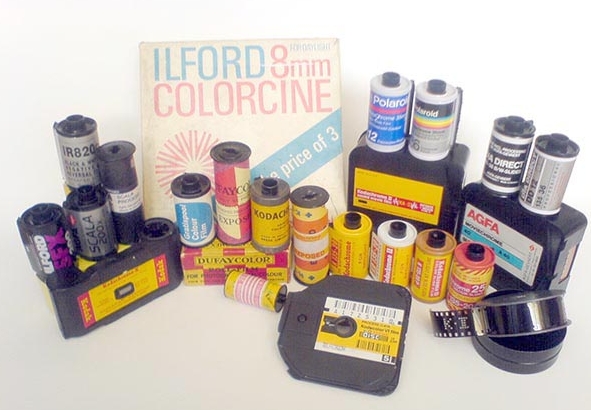
Kodak: harking back to a golden – or rather silvered – era

It is sometimes shocking to sit and think how quickly technology has come on in just a few short years. Photography is something I have always enjoyed, being brought up on Dad’s slides and even his own attempts to create a dark room in the attic.

I remember my first Kodak camera with its stacked, one-use-per-bulb flash, and how proud I was to finally be able to take my own pictures. It had no zoom, no focus and used what I regarded as proper film. (Funny how whatever it is you start with you regard as proper film, at least until you grow up and start using standard 35mm.) I remember, too, getting my first Olympus, sadly rarely used, and the pictures I took with it on my honeymoon less than ten years ago, when there was no imminent prospect of digital superseding plastics and silver salts.

Now, most of us have phones that can take better pictures than even the most expensive digital cameras of ten years ago, with top-end digital cameras such as the Canon EOS 7D or EOS 5D Mk II being so sophisticated that they can replace movie cameras, opening up the world of movie-making to amateurs the world over.

The Light Farm are an enthusiast co-operative “dedicated to the renaissance of handcrafted silver gelatin emulsions”.  They have got their hands on a historic film by Kodak, which details the process of making film.

Enjoy.

Vodpod videos no longer available.

For those that don’t like iPhones… Blend it!

You may or may not be familiar with the amusingly odd website Will It Blend? Basically, the website’s title says it all.

You may also remember that I have previously blogged about my irrational dislike of all things Apple. Such a cathartic moment, then, to discover that the folks at Will It Blend? have decided to apply themselves to the iPhone.

Enjoy!

Vodpod videos no longer available.

Rage Against The Election: how the web has turned this election upside down #gonick #iagreewithnick #libdems

This is an election that analysts, experts and historians will pore over for decades.

The confluence of mobile technology, media influence, information democracy on the web and voter alienation has created a serendipitous moment for the Liberal Democrats as a voice for fundamental change of a political system that is rotten to its core. From the way we pay for our politics and politicians, to the way government agencies manage information about us, to the way politics is run by two old parties who, as gigantic corporate spin operations, have lost their connection with real people and their every day concerns, people are bewildered and angry.

Paxman’s interview with Nick Clegg was telling in one particular regard: he sought to dismiss the value of £700, the average benefit of the Liberal Democrats’ income tax policy of raising the threshold to £10,000.  Even the BBC, in the person  of Jeremy Paxman, fail to understand that £700 is a colossal amount of money.

I was talking to a family friend at the weekend who, as someone who struggled to keep his small gardening business going, told me that £700 was a fortune. For BBC board member Ashley Highfield, that is less than the £773 he claimed for a single dinner on 4th February 2008 (see BBC expenses). It is difficult to imagine that such expenses are not available to their star presenters, so it is no wonder that Paxman is so out of touch with how hard it is in the real world.

But nowhere is this anti-politics more evident than on the Facebook Group Rage Against the Election. To the astonishment of new media watchers and seasoned party hacks alike, people are taking back their politics and using the democratic nature of the web to make their anger known. Elizabeth Eisenstein’s exhaustive work  The Printing Press as an Agent of Change documents the extraordinary impact of the a technical revolution on the democratisation of information. Academics and lofty historians might scoff, but their should be no doubting the impact of the likes of Facebook on the way people want to take ownership of information and use corporate tools for non-corporate purposes.

The Rage Against the Election Facebook Group is a phenomenon.

Set-up entirely independently of the Liberal Democrats, it has a single objective: to secure one million members in support of the Liberal Democrats and propel them into office.

Read that again: it has been set-up entirely independently of the Liberal Democrats. People out there, angry at their politicians, see the Liberal Democrats as a vehicle for change.

Checking in at 8.20am its membership stood at a staggering 110,847.

That is 110,847 individuals who are confident enough to attach their name to a public statement saying that they want to see the Liberal Democrats in office.

If you wonder what that means, try these figures for comparison, each checked just after 8.30am:

  • Official Conservative Facebook page 50,794
  • Official Lib Dem Facebook page 45,189
  • Official Labour Facebook page 25,658

There is nothing quite so rewarding as seeing people speaking up and refusing to be told what to think and what to believe. With 16 days until polling day, who knows how many will end up joining the Rage Against the Election?

http://www.libdem2010.com/

What is certain is that you would need to be very naive indeed to underestimate the role played by new media and internet technology in this election.

Add to FacebookAdd to DiggAdd to Del.icio.usAdd to StumbleuponAdd to RedditAdd to BlinklistAdd to TwitterAdd to TechnoratiAdd to Yahoo BuzzAdd to Newsvine

Creative printing – art meets advertising

Bit like when I blogged about Ukrainian sand artist Kseniya Simonova, I am way behind the popular curve on this one. (Not surprising really as I have never been trendy exactly!)

However, like all good things it deserves a reprise…

British Design and Art Direction was founded in 1962 by artists including David Bailey and Terence Donovan. These days it is known simply as D&AD. Since 1963 it has made annual awards, its purpose “dedicated to celebrating creative communication, rewarding its practitioners, and raising standards across the industry”.

Last year, two students responded to a D&AD design brief from Hewlett Packard, the company that makes printers: “Present an idea which promotes HP Workstations ability to bring to life anything the creative mind can conceive.”

This is how Matt Robinson and Tom Wrigglesworth of Kingston University responded:

Add to FacebookAdd to DiggAdd to Del.icio.usAdd to StumbleuponAdd to RedditAdd to BlinklistAdd to TwitterAdd to TechnoratiAdd to Yahoo BuzzAdd to Newsvine

A familiar ache… And so a ranger prepares to return to Norrath #eq2

“He is as Autumn shadows, stealing soundlessly beneath the vaulted arches of the Moon-burnt sky, the deadly promise of a winter’s blade in the dark watches of the night. Relentlessly he pursues Her. Defiantly he loves Her.”

Keredh Windryder, Ranger

Gaming is either something you get or something you don’t.

For some of us, the prospect of immersing ourselves in the LCD glow of a world constructed from bits and bytes sets our pulses racing. Our imaginations can spend all day rehearsing the moment we turn the lights off and sit down to lead our friends and guild-mates into battle.

For the rest, the prospect leaves them cold. The world of the geek gamer is a dark and alien place, strewn with the detritus of a life lived online:  cans of coke, empty coffee mugs with a crusted sediment deep inside, discarded crisp packets and sweet wrappers – and the musty – occasionally rancid – smell of immobile, sleepless concentration.

I suspect most of my family, friends and colleagues fall into this latter category, bemused at the hours of life that Em and I can spend in these virtual worlds, each with its own lexicon, politics and social mores.

Computer gaming, though, has been a huge part of my life for almost thirty years.

As technology has developed, so the boundaries between real life and virtual life have shifted and blurred. Sometimes this has had catastrophic personal consequences – and on other occasions it has resulted in moments of sheer serendipity. I can honestly say that gaming, specifically the two incarnations of Everquest, has impacted my life in far more significant ways than I could have ever envisaged.

More on that another time, perhaps.

So it was today, sitting at work, that I felt a familiar ache. A longing for a place I know better than the back of my hand. A place that most script kiddies and World of Warcraft fanbois have never known – but a place that makes Azeroth look as exciting as Tellytubby land.

Norrath.

Sony’s Everquest is the Great Granddaddy of Massively Multiplayer Online Roleplaying Games (MMORPGs). Everquest 2 is its electrifying reinvention.

On and off for the last seven years, Everquest (Everquest 2 for me these days) has been a way of escaping from the stresses and strains of an exhausting day. But how did I reach a point in life where I can see a point to investing hours in the development, customisation and manipulation of a virtual avatar, a wood-elf ranger that specialises in striking down his enemies with a blow from the shadows or a bow-strike inflicting massive damage from afar? (And believe me,  I can!)

That is a story that takes me from Mazogs on the ZX-81 in 1982, to Sentinel of Fate, the latest EQ2 expansion, in 2010. In an occasional series of pieces in the coming weeks I will explore that story. I want to reflect on the friendships forged in huddled hours around the screen – and remember the computers and the games that have given me so many fond memories.

In the meantime, take a look at where it started in 1982:

And see where that story is now in 2010:

Add to FacebookAdd to DiggAdd to Del.icio.usAdd to StumbleuponAdd to RedditAdd to BlinklistAdd to TwitterAdd to TechnoratiAdd to Yahoo BuzzAdd to Newsvine