And yet more pointless municipal vandalism…

Sometimes a picture says all that can be said. For some reason, Conservative-controlled Basildon Council has decided to rip out the relatively recently constructed features that distinguish St Martin’s Square. When the bid to the Government for money for new lighting was discussed, this wasn’t. (Nor were the design and placement of the lights, but that’s another story.)

When Em’s family visited for the first time they commented on how pleasant and unusual that part of St Martin’s Square looked. How sad that this is the last picture I took of it.

Demolishing St Martin's Square

Demolishing St Martin's Square

I can’t help feeling that these Conservative councillors care less and less about the area and more and more about building some lasting concrete (!) legacy. Exactly the criticism they made of previous Labour councillors. Is it any wonder that people give up in despair?

Rooting around on the Council’s website I found the notice to tender for the contract. Strangely, there is no information in the appropriate section to say who got the contract. To that end, concerned residents might wish to be aware that the tender has just closed for further works to Compass Square (I believe Compass Square is the area immediately in front of the Bascentre). I wonder if the Council will say who has secured that?

Add to FacebookAdd to DiggAdd to Del.icio.usAdd to StumbleuponAdd to RedditAdd to BlinklistAdd to TwitterAdd to TechnoratiAdd to Yahoo BuzzAdd to Newsvine

Welsh poet laureate Gillian Clarke: a poem for Haiti

Sometimes poetry can bring home the reality of a situation like nothing else. Walking through Coombe Woods last weekend, listening to the Today programme, they had a feature on the live poetry reading being held in aid of Haiti. The Welsh poet laureate Gillian Clarke read a poem she had written specifically for the event.

You can hear it on the BBC website.

The post of Welsh national poet is very recent, created in 2005. Gillian Clarke is only the third poet to hold the post and her work is a potent reminder of the power of poetry to capture the raw essence of an event or situation, even in this technology-obsessed age.

Add to FacebookAdd to DiggAdd to Del.icio.usAdd to StumbleuponAdd to RedditAdd to BlinklistAdd to TwitterAdd to TechnoratiAdd to Yahoo BuzzAdd to Newsvine

What do Tesco and China have in common? Honest…

With China’s most recent Internet crackdown, and privacy campaigners periodically rumbling about Tesco’s ‘Big Brother’ Clubcard arrangements, you could be forgiven for thinking the answer is something hyper-linked.

However, this time it’s not.

I don’t know what is stirring in the heavenly ether but, with curious synchronicity, it would seem that in both Tesco and China there has been an outbreak of public pyjama-wearing.

I must confess that it has never occurred to me to head to either the supermarket or Shanghai in my pyjamas, even though there is a 24 hour garage at the Roundacre roundabout with a neat little M&S attached.

Anyway, from what I can deduce, it would seem that when the pyjamas are in latitudinal alignment, the prognosis for ex-pig farmers and errant footballers is uncomfortable…

For more on the Tesco story take a look at the BBC.

Fore more on the Shanghai story see this Boing Boing post.

Add to FacebookAdd to DiggAdd to Del.icio.usAdd to StumbleuponAdd to RedditAdd to BlinklistAdd to TwitterAdd to TechnoratiAdd to Yahoo BuzzAdd to Newsvine

Lord Hanningfield: suspended from Conservative Party; resigns as Leader of Essex County Council; faces criminal charges #essex #conservatives #hanningfield

Paul White, known to most as Lord Hanningfield and leader of Essex County Council, is to face six criminal charges under Section 17 of the Theft Act 1968 (Section 17 is the part of the Act that relates to “false accounting”).

He, along with three Labour MPs (Elliot Morely MP, David Chaytor MP and Jim Devine MP), have been summonsed to appear at the City of Westminster Magistrates’ Court at 2pm on 11 March 2010. The maximum sentence that could be applied under Section 17 is seven years’ imprisonment.

As these cases have been investigated by the police, the authority responsible for prosecuting is the Crown Prosecution Service (CPS). Interestingly, although defence lawyers for those charged have raised the issue of Parliamentary privilege, the Director of Public Prosecutions Keir Starmer QC is clear in his statement that “the applicability and extent of any Parliamentary privilege claimed should be tested in court”.

Parliamentary privilege is an ancient privilege granted to parliamentarians, however the extent of its protection is both widely misunderstood and fiercely contested. When the Speaker made a statement to the House of Commons on 3 December 2008, regarding the arrest of Damian Green MP and entry into his offices, he reminded Members of Parliament  that, according to Erskine May (Parliament’s authoritative companion guide to procedure), parliamentary privilege has never prevented the operation of the criminal law. He also restated the position of the Joint Committee on Parliamentary Privilege in its 1999 report that “the precincts of the House are not and should not be ‘a haven from the law’”.

In respect of the specific charges against Paul White (Lord Hanningfield), Keir Starmer QC said:

“The charges allege that between March 2006 and May 2009, Paul White dishonestly submitted claims for expenses to which he knew he was not entitled, including numerous claims for overnight expenses for staying in London when records show that he was driven home and did not stay overnight in London.”

According to the BBC, Lord Hanningfield has resigned his front bench position as Conservative business spokesman and stood down as leader of Essex County Council. David Cameron also requested that Lord Strathclyde, the leader of the Conservative opposition in the Lords, suspend the Conservative whip with immediate effect.

Keir Starmer QC’s closed his statement with the following:

“Can I remind all concerned that the four individuals now stand charged of criminal offences and they each have the right to a fair trial. It is extremely important that nothing should be reported which could prejudice any of these trials.”

Add to FacebookAdd to DiggAdd to Del.icio.usAdd to StumbleuponAdd to RedditAdd to BlinklistAdd to TwitterAdd to TechnoratiAdd to Yahoo BuzzAdd to Newsvine

“Be-Longing”: Eva Sajovic’s exhibition opens at the 198 #sajovic #gypsies #travellers #roma

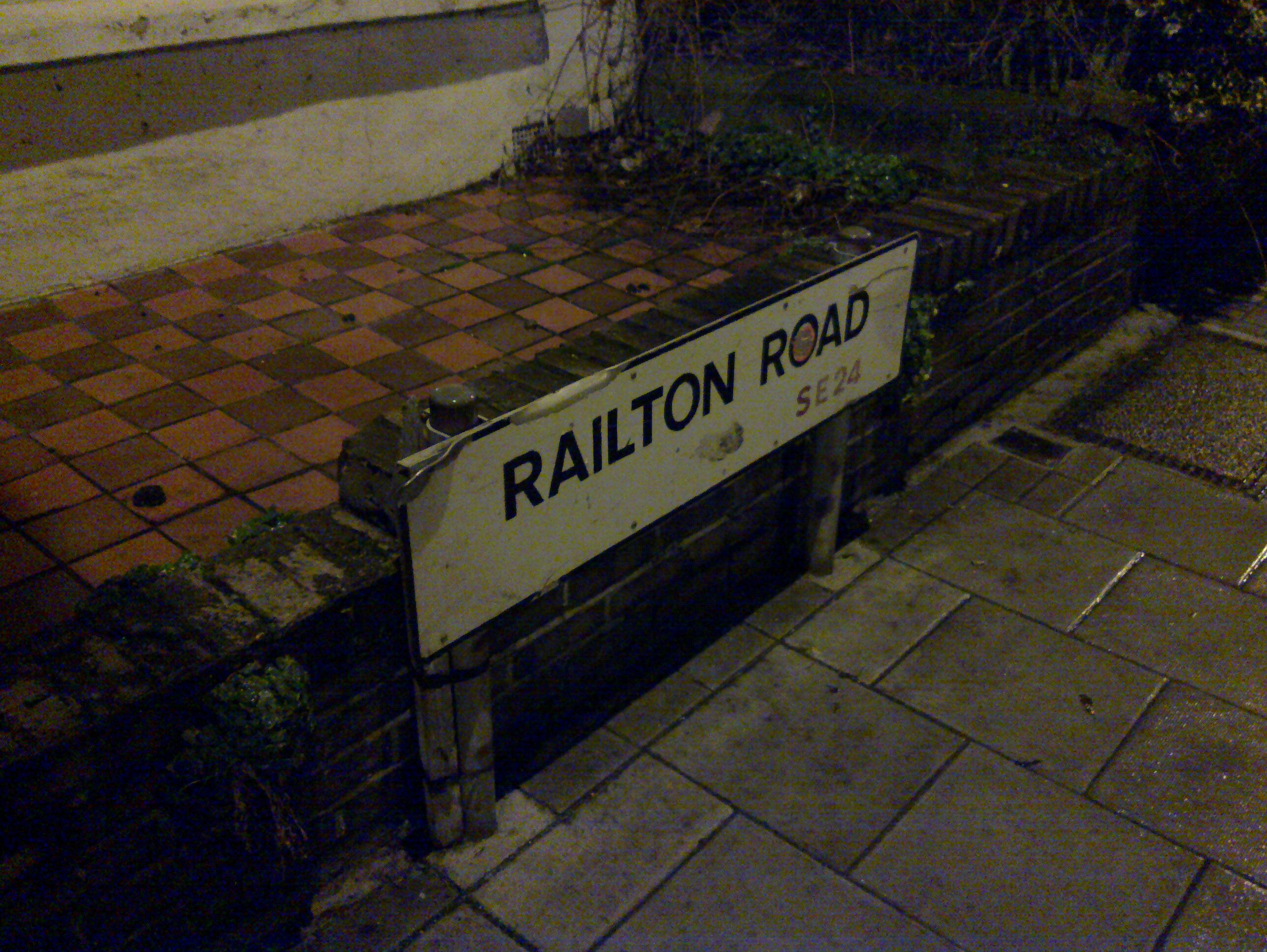
Wednesday evening, after work, I took a taxi to 198 Railton Road, home to 198 Contemporary Arts and Learning. A few days earlier I had received an invitation to the preview of its new exhibition of photographs by Eva Sajovic, the Slovenian artist I have blogged about previously.

To call 198 a gallery is to do it a disservice. Rather, it describes itself in the following way:

“198 is a pre-eminent cultural space in Brixton, which explores the rich diversity of artistic practices informed by globalisation and emerging cultural identities.”

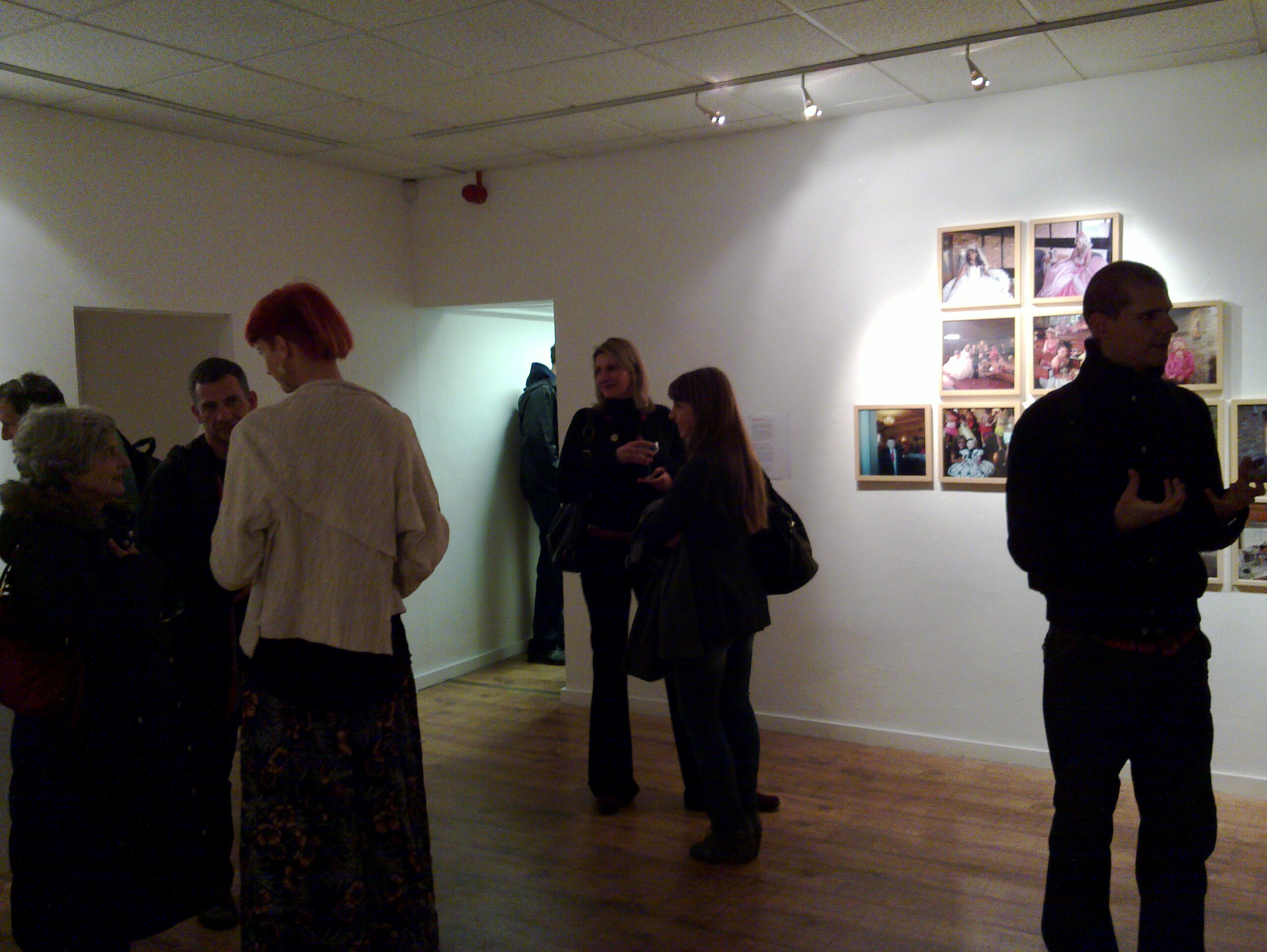
Sajovic’s exhibition, focused as it is on the experiences of Gypsies, Roma and Travellers in the United Kingdom, Italy and Slovenia, could not find a more appropriate home. The minimalist, white-washed lines of the 198 are the perfect contrast with Sajovic’s vibrant pictures that capture the raw and sometimes confused emotions that arise at the intersection of diverse migratory cultures and the settled community. Perhaps most humbling is the sheer force of will required by Gypsies, Roma and Travellers to maintain their traditions and social structures in the face of overwhelming hostility, mistrust and misrepresentation. As Sajovic’s pictures, and their accompanying stories remind us, the persecution of difference is as great today as ever it was – the UK, Italy and Slovenia representative of European societies where society appears to deem it acceptable to discriminate against travelling communities in a way that it would not contemplate with those from other minorities.

Eva Sajovic's “Be-Longing” at the 198

Eva Sajovic's “Be-Longing” at the 198

For me, talking to two Travellers living in Southwark, the greatest irony is that the value that drives them to maintain their traditions above any other is the same as that of their fiercest conservative critics: family. It is the belief in inter-generational support, of the transmission of knowledge and tradition from one generation to another, that creates the tremendous familial bonds in travelling communities. How sad it is that as the settled community laments the loss of that ideal, the communities that are the object of so much of its hatred earn that ire as a consequence of living out that same ideal. Sajovic spoke movingly of the warmth and generosity with which she was received upon gaining the trust of the communities she worked with. For me it all gives Matthew 7 a very modern context:

“Do not judge others, and you will not be judged. For you will be treated as you treat others. The standard you use in judging is the standard by which you will be judged. And why worry about a speck in your friend’s eye when you have a log in your own? How can you think of saying to your friend, ‘Let me help you get rid of that speck in your eye,’ when you can’t see past the log in your own eye? Hypocrite! First get rid of the log in your own eye; then you will see well enough to deal with the speck in your friend’s eye.”

Matthew 7, 1-5, New Living Translation

An exhibition of photographers of travelling communities may not be the first thing that comes to mind when thinking how to spend a couple of hours of an evening. However, this initiative represents another small but very important step in helping to foster understanding between settled and travelling traditions that are steeped in a mutual suspicion that is centuries-old. Be adventurous and give it a go – and see something special from an exciting new talent.

And enjoy Brixton and the 198.

Add to FacebookAdd to DiggAdd to Del.icio.usAdd to StumbleuponAdd to RedditAdd to BlinklistAdd to TwitterAdd to TechnoratiAdd to Yahoo BuzzAdd to Newsvine

“The Power of Creativity”: Lib Dems launch arts vision paper #libdems #arts

On December 15 2008 Nick Clegg delivered a speech to the think tank Demos entitled “Why I am a Liberal”. It was both passionate and philosophical, a very personal evocation of liberalism that captures the essence of political empowerment:

“A Liberal believes in the raucous, unpredictable capacity of people to take decisions about their own lives… A Liberal believes a progressive society is distinguished by aspiration, creativity and non-conformity.”

Today, Don Foster MP, the Liberal Democrats Shadow Secretary of State for Culture, Media and Sport, launched “The Power of Creativity” – a vision document for the arts that translates Liberal ideals into political commitments, policies and aspirations.

As the document highlights, the first Chairman of the Arts Council was John Maynard Keynes, the noted economist and lifelong member of the Liberal Party. He set out a clear mission for the Arts Council:

“The purpose of the Arts Council of Great Britain is to create an environment, to breed a spirit, to cultivate an opinion, to offer a stimulus to such purpose that the artist and the public can each sustain and live on the other in that union which has occasionally existed in the past at the great ages of a communal civilised life.”

In the current political and economic climate, funding, innovation, local support and creative risk-taking are all in jeopardy.  Our own experience in Basildon, with “The Woodsman”, “Progression” and The Wat Tyler Sculpture Trail are testimony to the low priority that the arts receive in terms of support from local government, particularly where politicans are obsessed with enormous capital projects to cement their political legacy. Foster’s paper seeks to sustain Keyne’s original and Liberal vision for the arts in these more uncertain times.

Add to FacebookAdd to DiggAdd to Del.icio.usAdd to StumbleuponAdd to RedditAdd to BlinklistAdd to TwitterAdd to TechnoratiAdd to Yahoo BuzzAdd to Newsvine

“The Woodsman” – Basildon Community Video Club’s video story (now on DVD) #woodsman

A reader has been in touch to explain that the “Basildon Community Video Club” produced a video recording the story of the tree which was used by Dave Chapple to produce his sculpture “The Woodsman”. Filmed during 1995, the 20 minute documentary shows Dave Chapple at work creating the statue of “The Woodsman” from the trunk of a fallen tree from Langdon Hills.

The Essex Media Workshop based in Parkside, Pitsea, has now transferred the original VHS tape onto DVD. I have been in touch with them and those who would like to see the story of how “The Woodsman” was made can purchase a copy. The Essex Media Workshop are a registered charity in England and Wales that specialises in helping charity groups and disabled organisations realise their video projects. Any proceeds from the DVD will help them continue the valuable work they do with all manner of vountary groups.

The video of “The Woodsman” being carved is available from: Essex Media Workshop, Parkside, Basildon, SS13 1NL.

The price is £4 (or £5 inclusive of post and packing).

Please order via Andy Alexander at the Essex Media Workshop, Tel. 01268 555 771 or via e-mail at andy@essexmediaworkshop.co.uk

“Progression”: ‘extraordinary attitudes’ that did for “The Woodsman”? #woodsman

Following my post on “Progression” and “The Woodsman” I made contact with the artist Michael Condron, the sculptor commissioned by Basildon Council to make “Progression”. I thought it courteous to draw his attention to the fact I was blogging about his work. His response – which he is happy for me to share – is an extraordinary and depressing indictment of the lack of courtesy and general ignorance of Basildon Council (and by extension its Conservative administration) in its dealings with artists and issues of public art:

“The attitude Basildon DC has shown towards it’s public art is pretty extraordinary, and fortunately not the kind of behaviour I’ve come across elsewhere.

The relocation of my Progression sculpture was not something I was consulted on.  Whilst I’m not entirely happy with the new situation, it is better than the artwork rotting in a storage yard somewhere.

You mentioned NYC’s percent for art programme in the blog, and I wonder if you’re aware that Essex County Council also has a percent for art policy.  Many commissions have been funded by developers through “section 106” planning requirements, including my recent Life Cycle installation at Hanningfield reservoir.

Generally speaking public art is vibrant in Essex!”

What is particularly depressing is that, whilst Basildon’s Conservatives neglect and rip out our public art, the record of Essex County Council, another Conservative administration, is a national leader when it comes to supporting public art. As Condron notes, Essex does indeed operate a percent policy for art. Art in the Open singles out Essex as its case study for best practice in “embedding public art within Council-led capital projects”. The page on commissioning guidance states:

“Essex County Council (ECC) has been commissioning art in the public realm as part of its Capital Development Programme and Essex Design Initiative for many years.  It was the first County Council to develop and adopt the principle of a public art policy in the late 1980s.  In 2002 it adopted a Percent for Art policy and, more recently, has developed a central budgeting process to create a new fund, the Public Art Common Fund, that draws money directly from ECC’s capital programmes budget, enabling the public arts team to plan longer term.  This has lead to the development of a three-year programme of more substantial commissions under the banner of ‘Genius Loci’ (‘Spirit of Place’).  These commissions are predominantly permanent but also include some temporary work to help highlight and pave the way for the permanent.”

What’s more, Essex demonstrates that it truly understands the purpose of public art:

“ECC seeks to commission art in the public realm to:

  • Improve the aesthetics of the built environment
  • Enhance a sense of community and place
  • Foster community pride and ownership
  • Celebrate artistic achievement
  • Reflect a ‘spirit of place’”

To demonstrate how serious Essex is about supporting public art, Art in the Open explains how the County Council organises the staff that support public art:

“ECC believes in an embedded and informed approach to commissioning art in the public realm.  It runs workshops and organises study trips to support internal development and understanding; the public art team sits within the built environment department, ensuring a close working relationship across planning and development teams; a Public Art Strategy Group, chaired by a cabinet member and including officers from across the council, helps keep an informed overview; occasionally, external organisations are brought in to provide additional commissioning support.”

And the big question in local government is always the money:

“Funding streams:

  • Percent for Art: up to 1 per cent of almost all capital builds across the council. This has been consolidated for 2007-2010 as the Public Art Common Fund where 0.74 per cent, £2.14 million, has been designate for Genius Loci. The continuation of the Common Fund beyond 2010 is subject to approval by the Council and is depended on a successful bid from the Public Art Team.
  • Money can also be brought in through section 106 (however, this mechanism is dependent on the policy of the local planning authority not the County Council).”

To be honest, it is a pretty extraordinary commitment from a local authority and I applaud Essex’s seriousness in making public art accessible and relevant – not shoved away in corners as museum pieces to be visited.

So why is it, with such a leading example so politically and geographically close to home, that Basildon’s Conservative Party acts like a Neanderthal collective when it comes to  public art? I can’t answer that. However, I can only think that the “pretty extraordinary” attitude identified by Condron was a principal contributing factor to the appalling ruin of “The Woodsman”.

Add to FacebookAdd to DiggAdd to Del.icio.usAdd to StumbleuponAdd to RedditAdd to BlinklistAdd to TwitterAdd to TechnoratiAdd to Yahoo BuzzAdd to Newsvine

Cultural vandals: Basildon’s Tories tear up the national motorboat collection as the Motorboat Museum is closed #toryfail #basildon

In yet another display of cultural vandalism, Basildon’s Tories have torn up the national motorboat collection, following their closure of the nation’s Motorboat Museum so it can be converted into a “green” centre. To give you an idea of the collection’s significance, here is an excerpt from the note on the website about it:

“The Motorboat Museum has been Britain’s leading authority on sporting and leisure motorboats since its creation in 1986.

Many record breakers and rare examples of boats, inboard and outboard motors are housed in the Museum. There is also an extensive collection of historic replica models and memorabilia.

The comprehensive library holds books, magazines and plans dating back to the 1890s. The library is open for use by researchers by appointment only. Enquiries can also be made through the post.”

The museum’s website says the following:

“We’re sorry to announce that the Motorboat Museum is closing down as of 4th December 2009.

Due to large scale refurbishment of the building housing the Motorboat Museum, it is necessary to close the Motorboat Museum and repatriate the collection.”

Back in November, The Echo ran a story on with the headline £1m green centre to open on site of boat museum. In that article, there is a reference to the Council’s postition:

“It would see half of the existing motorboat museum transformed into the new green museum by Spring 2011.

The other half will go out to lease, but could still remain as a venue for powerboat enthusiasts if an interested party comes forward to take over the running from Basildon Council.

Although planning is still in the early stages, it could also house historical artefacts and other items of interest.”

The article concludes:

“The council stressed all options were still open regarding the remainder of the motorboat museum, which is now only visited by about 10 per cent of visitors to the park annually.”

On the 12th November, Cabinet met and agreed to take further funding from the Department for Communities and Local Government under its Parklands Initiative. (I sit on Cabinet but, detained at work, missed the first items on the agenda, including this one. You can see from the voting record at the back of the minutes.) The report to Cabinet states:

“The second phase of funding will develop part of the Motorboat Museum to create a new community facility that provides education on the environment and the reduction of carbon.”

As this was an extensive redevelopment, you would expect it to close to the public for some time – and for the collection to be temporarily relocated.

So to recap…

On 9 November The Echo runs a story saying it could close.

On 12 November Cabinet meets and paves the way for the museum’s closure to permit the works at Wat Tyler.

On 4 December or before, the  Motorboat Museum posts a story on its website saying that as of 4 December the Motorboat Museum is to be closed and its collection repatriated.

Look again at that press comment. It is written in the clever spin-speak you come to expect of politicians and bureaucrats who want you to reach their conclusion: “now only visited by about 10 per cent of visitors to the park annually”. It is the language of minimisation, when you want to make something less significant.

But remember what Councillor Horgan said of “The Woodsman” and Wat Tyler Park? It bears repeating:

“The woodsman is a well loved piece of public art, and we believe that a new home at Wat Tyler Country Park is more suitable and appropriate, where he will be appreciated by the hundreds of thousands of people that visit the park each year.”

Note the figure: hundreds of thousands. Ten percent of hundreds of thousands means that the Motorboat Museum was being visited by tens of thousands of people annually. A rather more impressive figure than we are led to believe by the figure of ten percent. Indeed, the Cabinet report of 12 November is very specific about Wat Tyler’s projected visitors: numbers are projected to increase to 450,000 in two years. That means that the Council are acknowledging that the museum would receive 45,000 visitors a year in the next two years.

I don’t think 45,000 visitors is an insignificant number for a museum that I doubt has been widely promoted in recent years. (If you have time, the Cabinet report is worth a read – it is riddled with contradictions which it has been suggested to me is the product of repeated redrafting and editing.)

The Motorboat Museum is a registered museum with the Museums, Libraries and Archives Council. As such, upon closure, certain protocols have to be followed to ensure that the collection is properly dispersed (I am not certain, but I presume that this is so that items in the collection can be traced). I have seen correspondence which reassures me that those protocols are being followed. However, the fact remains that the collection as was is no longer intact and a sizeable number of the boats have already been relocated.

Personally, I don’t believe the Council has invested any serious effort in maintaining the integrity of the collection. I have nothing against taking funding from Government for a new green education centre. However, if the Council were bothered enough, they could have sought to preserve this nationally significant collection. I think that when the meeting was held on 12 November, the decision had already been taken privately by administration councillors that they were no longer interested in the Motorboat Museum. They wanted to be rid of it – and the “hassle” of looking after its collection. If I am wrong, and I hope I am, then we will see plans coming forward to preserve and display the remaining boats. After all, all options are still open. Or were.

For once, Basildon was able to lay claim to providing a home to a nationally significant collection (if you Google “”motorboat museum” basildon” you get over 8,000 hits). The Motorboat Museum was a landmark institution – and I don’t recall Basildon Council Tax payers being consulted as to whether Basildon should continue to provide that home.

Irrespective of local people’s views, the fact is Basildon no longer is.

Once again, the Tories have demonstrated their complete contempt for our local and national heritage – and taken us all for suckers.

Add to FacebookAdd to DiggAdd to Del.icio.usAdd to StumbleuponAdd to RedditAdd to BlinklistAdd to TwitterAdd to TechnoratiAdd to Yahoo BuzzAdd to Newsvine

Mozes on Syria’s policy of “resistance”: regional politics from a Syrian perspective #syria #labwani #maleh #bunni #aqil

Winston Churchill made an elaborate but astute observation regarding Russia in a radio broadcast in October 1939:

“I cannot forecast to you the action of Russia. It is a riddle, wrapped in a mystery, inside an enigma; but perhaps there is a key. That key is Russian national interest.”

Step forward seventy years and it’s not too great a leap of the imagination to make the same observation of Syria – though you might argue that the Syrian national interest bears a close correlation to the interests of Bashar al-Assad.

N. Mozes of the Middle East Media Research Institute (MEMRI) has compiled a comprehensive series of media reports that quote Syrian politicians and officials on Syria’s evolving regional and global political relations. The article, “Syria Regains Pivotal Regional, Int’l Role – The Triumph of the ‘Course of Resistance’”, reveals a Syria that has grown immeasurably in confidence, with a determination to resist what it sees as Western interference in its regional politics.

If you are interested in the politics of the Middle East, I urge you to read it.

Syria’s diplomatic bravura is understandable in terms of the politics of local alliances and attempting to forge a distinct and US-independent stabilising force in the region, along Islamic lines.

It is also entirely in keeping with the egoistical nature of Bashar’s regime. Hitherto, Damascus has been regarded by many as Ba’athist in name rather than principle. However, Syria’s posturing and tightened grip on matters of internal security (in obvious violation of its civil and political rights obligations in international law) has provided Syria, as the only regional power run by the Ba’ath Party, with a beacon status with which to lead a foreign policy that is based on revitalised Ba’athist ideals of pan-Arab nationalism.

In my view, domestic suppression is part of the code of that diplomatic flexing, demonstrating in its publicly loud prevarication over the EU-Syria Mediterranean Agreement that it will not see its economic interests subordinated to Western ideals of civil society.  The careful switch of language regarding the US that Mozes identifies, from enemy to adversary, shows Bashar understanding that the West are desperate to engage Syria but that, at the same time, by maintaining a measure of distance he can enhance his credibility as the emerging leader of the region.

This, to my mind, can only have worrying consequences for those like Kamal al-Labwani who advocate peaceful and democratic reform of Syria’s politics. He and others would appear to be exemplars of Bashar’s policy of resistance. If Bashar’s goal is consolidation of his regional status, he will be in no hurry to release those detained for democratic politics redolent of the West (and Israel), except maybe on an exceptional basis to titillate those European politicians determined to spot reformist intentions in the Syrian regime whatever the regional political weather (and cost to their own diplomatic credibility). If this is the case, maintaining the international spotlight on their plight is even more important.

The fact that the EU are so ready to embrace the EU-Syria Mediterranean Agreement suggest that Bashar’s ploy of deft belligerence is working and the diplomatic pressures that those of us concerned about the fate of Kamal al-Labwani, Anwar al-Bunni, Hatham al-Maleh and Ma’an Aqil wish to see exerted will not emerge. The UK, like its EU partners, is in danger of being suckered.

I hope I am very wrong.

Add to FacebookAdd to DiggAdd to Del.icio.usAdd to StumbleuponAdd to RedditAdd to BlinklistAdd to TwitterAdd to TechnoratiAdd to Yahoo BuzzAdd to Newsvine