Vision thing: the 3D Star Trek technology that eliminates computer displays

“Electronic junk narrows our life space…”

Maxim Kamanin

Sometimes it feels like Hollywood is running to catch up with real life. And sometimes, real life seems even less believable than Hollywood’s penchant for technological exaggeration.

From the middle of nowhere comes an invention that might just revolutionise the way we interact with technology – in pretty much every way. Maxim Kamanin, a youngster from a remote village in southern Russia, is the inventor of a new form of display that may eliminate the need for computer screens entirely, freeing us up to work far more creatively with technology.

Displair literally puts digital images into the air, creating fully penetrable 3D images which can be viewed and manipulated. It is completely astonishing – like something out of Star Trek. It uses a cloud-inspired technology (and not cloud as it is usually thought of in computer tech terms) which somehow remains remarkably stable across varying temperatures. The Displair wiki entry goes into more detail.

From artists, architects and designers, to teachers, surgeons and inventors, the creative ways in which it could be used are immense.

The web-film site Focus Forward Films has a video of this astonishing invention in operation:

Mushrooms to save the planet?

It may sound like Day of the Triffids in reverse, but it might just be that mushrooms are about to save the planet.

Bloomberg Business Week reports on the work of Eben Bayer and Gavin McIntyre and the innovative work on plastic substitutes that they have been doing with mushroom fibres:

It starts with a mash of corn stalks and vegetable husks impregnated with mushroom spores. The fungus eats the plant nutrients, then grows a complex root network that fills the shapes of the molds. The final product is a foam that looks something like a big wafer of nougat candy. It is placed in an oven to stop the spores from growing and to give the material the proper texture, hardness, and elasticity.

“The products literally grow themselves. In the dark. With little to no human contact,” says McIntyre. Each mold can be treated to create a material with different qualities. Home insulation must be fire-retardant and energy efficient; cabinets have to be sturdy; a car dashboard or bumper has to be strong but with give.”

And to get rid of it?

Simply throw it on the compost heap and it is gone in weeks.

The reason this is so important?

Polystyrene.

Polystyrene is non-biodegradable and so takes hundreds of years to disappear. The blowing agents that are used to expand it can be highly flammable. Some versions of it are made with hydrofluorocarbons that are over a thousand times more potent in terms of global warming potential than carbon dioxide. It is also regularly excluded from recycling services as it is uneconomical to collect and compact (due to its lack of density versus the space it occupies).

The company behind the mushroom fibre revolution, Ecovative Design, has just signed a deal with the packaging behemoth Sealed Air, the company responsible for Bubble Wrap and Cryovac. Both Dell and Steelcase are already using the material for packaging and it promises a biodegradable revolution in how we ship stuff.

I wonder if this is something that the impressive Centre for Process Innovation should pick up here in the UK? They are the increasingly impressive outfit based in Redcar. In their own words:

“CPI helps companies to prove and scale up processes to manufacture new products and create more sustainable, efficient and economic industries of the future.”

There is some real talent out there in the British economy, particularly in the emerging green and high-tech industries. A UK angle on this would help boost manufacturing, jobs and the wider economy, whilst at the same time helping to tackle the huge waste problem there is with packaging.

The perils of GPS… In Belgium

I don’t drive but am fairly confident that, if I did, I would avoid this particular mistake. Even with a GPS…

Flanders News reports the rather amusing/alarming/entertaining case of a Belgian who, wanting to drive to Brussels, programmed her GPS and ended up in Zagreb:

The woman identified by Het Nieuwsblad as the 67-year-old Sabine Moureau told the paper: “I was absent-minded so I kept on putting my foot down.”

Sabine started her journey in Erquelinnes on the morning of last Saturday week. “I was going to pick up my friend in the Brussels North Station” she told the paper.

The journey should have taken just over an hour, but she ended up 1,450 km from her starting point.

Sabine continues her tale: “I switched on the GPS and punched in the address. Then I started out. My GPS seemed a bit wonky. It sent me on several diversions and that’s where it must have gone wrong.”

“I saw tons of different signposts, first in French, later in German, but I kept on driving.”

Sabine had to fill up twice and slept a few hours by the wayside, but claims she never really caught on to the fact that she might be on the wrong track.

“It was only when I ended up in Zagreb that I realised I was no longer in Belgium.”

Oops!

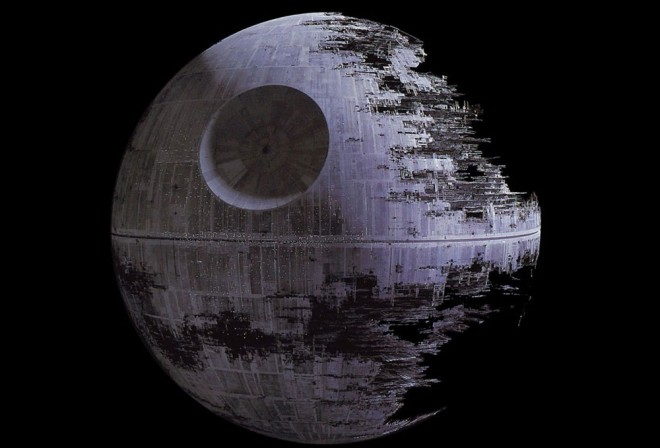
White House reassures Jedi with no to Death Star

death-star-660x448According to the last census (2011), there were still 176, 632 Jedi Knights in the United Kingdom.  As the Guardian reported, that represented a significant decline on 2001 when around 300,000 Jedi Knights were keeping us safe from The Empire (coincidentally, George Bush was US President from 2001 to 2009), but they are still a force to be reckoned with. And thankfully, we are not in Star Wars: Episode IV “A New Hope” territory yet.

Hopefully, the ranks of aspiring Luke Skywalkers will be emboldened by the latest announcement from the White House. In responding officially to a petition on the White House website calling for America to build a Death Star, Paul Shawcross, Chief of the Science and Space Branch at the White House Office of Management and Budget, offered this formal response:

“The Administration shares your desire for job creation and a strong national defense, but a Death Star isn’t on the horizon. Here are a few reasons:

  • The construction of the Death Star has been estimated to cost more than $850,000,000,000,000,000. We’re working hard to reduce the deficit, not expand it.
  • The Administration does not support blowing up planets.
  • Why would we spend countless taxpayer dollars on a Death Star with a fundamental flaw that can be exploited by a one-man starship?”

The geopolitical ramifications of building a Death Star aside, Shawcross is quite right to remind folks that actually it wasn’t exactly a masterpiece of robust design. Perhaps a little more worryingly it shows just how deeply imprinted Star Wars is on the American psyche. But let’s not go there!

Anyone wanting a little light relief and some reassurance that, just occasionally, government officials do have a sense of humour, should read his full response.

Remote-controlled quadcopter – I want one (please)

This has to be the ultimate gadget junky’s toy!

Flight control specialists DJI-Innovations have released a consumer toy version of their radio-controlled flight platforms – and it looks like a hell of a lot of fun.

The Phantom quadcopter is a technological mini-marvel. It can hit 6m/s vertically and 10m/s horizontally, has a range of 300m, built-in GPS for fly-home programming (i.e. if it goes out of range, it’ll fly home and land itself if the GPS signal is strong enough) and a flying time of between 10 and 15 minutes. It can also automatically land itself if the battery is low.

It also comes with a mount for the phenomenal GoPro range of video cameras. Beyond the geeky fun value, the potential for amateur film-makers wanting a different perspective, or the likes of conservationists, gardeners etc. who want to see how things appear from the air looks immense.

Tech blog gizmag has an extended review.

So if anyone is feeling generous, I’ll have one of each, please.

A tale of three astronauts – and Soichi Noguchi’s photographs

Once upon a time in a galaxy far, far away…

Or something like that.

It was actually 1983 and Langdon Hills, Essex – and two friends, Bob and Ben, dreamed of becoming astronauts.

They used to sneak off to the school library in Lincewood Junior School  to look at space books. They wrote to NASA. They wrote space stories and they made space project books.

Then one day reality bit, as it tends to, and the dream died. One got embroiled in politics and the other joined the army (no prizes for guessing which I didn’t do!).

However, just at the time that Ben and Bob were dreaming space, Soichi Noguchi was in his penultimate year at Chigasaki-Hokuryo High School, about to study Aeronautical Engineering at Tokyo University.  In 1996, while Ben was stepping into Parliament for the first time, Noguchi was selected to train as an astronaut.

Noguchi was later lucky enough to travel to the International Space Station. His official NASA biography  is enough to make a Ben or a Bob green with envy:

SPACE FLIGHT EXPERIENCE: STS-114 Discovery (July 26-August 9, 2005) was the Return to Flight mission during which the Shuttle docked with the International Space Station and the crew tested and evaluated new procedures for flight safety and Shuttle inspection and repair techniques.  Noguchi served as MS-1 and EV-1 and performed 3 EVAs (spacewalks) totaling 20 hours and 5 minutes.  After a 2-week, 5.8 million mile journey in space, the orbiter and its crew of seven astronauts returned to land at Edwards Air Force Base, California.

Noguchi next launched aboard a Soyuz TMA-17 spacecraft on December 21, 2009, from the Baikonur Cosmodrome in Kazakhstan, docking with the International Space Station two days later to join Expedition 22 crew.  He became the first Japanese to fly on Soyuz as left-seat Flight Engineer.  For the next 161 days, Noguchi lived and worked aboard the International Space Station as a Flight Engineer on Expedition 22/23, accomplishing Kibo full configuration assembly complete.  The Expedition 23 crew returned to a safe landing in central Kazakhstan on June 2, 2010.  In completing this long duration mission, Noguchi logged 163 days in space.

Whilst in space, Noguchi took a series of amazing pictures which he tweeted from the ISS. Below is a selection of some of my favourites.

In the mean time, neither Bob nor Ben have lost their interest in space. Bob assures Ben that he is delaying his visit to Jodrell Bank until Ben can get up there.

And both can take heart from the fact that Soichi Noguchi is at least seven years older than either of them and so there’s time yet for them to get their butts up to the ISS.

This slideshow requires JavaScript.

Man attaches camera to trombone: funny and fascinating

The GoPro is marketed as the world’s most versatile camera.

It’s certainly led me to put five words together in a sentence that, until today, had never occurred to me could possibly belong together: man attaches camera to trombone.

Go on. Take a look.

And I want one, please. A GoPro, that is. Not a trombone. Not that I have the foggiest idea what I would do with it.

Attach it to the cat and see where he disappears to in the day? Now there’s an idea…


A mobile life

I’ve always been a techno-junky, at least as long as I can remember. It’s taken the rest of the world a long time to catch up, but thankfully Sheldon, Leonard, Howard and Rajesh are showing the world just how cool us über-nerds are. (That’s The Big Bang Theory for anyone who spent 2012 living on Mars.)

It was Star Trek that did it, I think. Between the communicator, the tricorder and the universal translator there was never much chance for an inquisitive sort like me, who was convinced that aliens were waiting to land, if not here already. (I never bought the theory that the planet was being run by giant lizards. That seemed a little silly. Like David Icke – who I foggily remember for his sports commentary on Grandstand, not the Illuminati.) And for interest, How Stuff Works has a a fascinating article on the 100 Star Trek technologies that have come into being

I remember the first mobile phone I had.

It was Dad’s phone that he passed over to me when I started work. It was a Nokia, a 2140 on the Orange network – the only phone available on Orange when the network launched in 1994. Those of you who had one may remember the retractable antenna. I remember how cool it felt when several  people, a lot older than me, and a lot more important, needed to make phone calls whilst we were stuck in a meeting. Their surprise when I pulled out a cell phone (!) was very gratifying in a geeky, nerdy kind of way.

After that there was no stopping me. Mobile phones and mini-computing became technological areas of fascination and over the years I acquired a series of mobile phones, mini-computers and tablets.

This morning, in the cab on the way to church, a guy on Radio 5 was talking about wearable computers the size of a stud earring that he thinks will be the norm by 2040, which will contain more computing power than every device in the average home today. He was saying, quite straight-forwardly, than in 15-20 years we will have electronic circuitry printed directly onto our skin and that transaction by reading this circuitry will be quite normal. The stud earrings will create local networks to allow off-grid information exchange, ostensibly to protect privacy.

If that sounds insane, you should know that the EES (Electrical Epidermal System) is already here, designed two years ago by engineers John Rogers  and Todd Coleman to collect information on your vital organs and transmit it back wirelessly to a computer.

I wonder if the sense of incredulity I felt was anything like that of those who shook their heads and wondered why on earth I thought I needed a phone in my pocket? Perhaps such imprints and implants will indeed be the norm, even in my lifetime, and we will dispense with our mobiles and games consoles.

In the meantime, here is a gallery of the phones and associated gizmos that, over the years, have led to technology becoming hard-wired into my social and professional life.

Oh… And a small legacy of one of my favourite phones, the Nokia N70 – the picture of Portreath at the top of the blog was taken on it, a good few years ago now.

This slideshow requires JavaScript.


When gaming and amateur film-making cross over

I’ve long been a gamer, ever since I first laid my sticky mitts on a ZX81 and dived into Mazogs:

My favourite games these days are MMOs, usually fantasy-based, like EQ and EQ2. I have also had a sneaking fondness for FPS games, like Unreal Tournament. The game I am playing most at the moment is Battlefield 3. Up to 32 players on each side, from across the world, play as either US or Russian forces in various forms of battle on various maps, small and large. My liking for this sort of thing is probably a throwback to watching films like Where Eagles Dare as a kid, though there is also a real and peculiar sense of camaraderie when four of you are locked down in the same squad, all communicating by Team Speak, buildings blowing up around you and ammo running low. It is also remarkably cathartic after a frustrating day.

We are so used to seeing computer graphics in films these days, like the magnificent CGI tiger in Life Of Pi, that we can barely distinguish them from the real thing. Conversely, the graphics in many modern games, like BF3, are so realistic, and the models so controllable, that artistic sorts around the world are creating films using exclusively in-game footage.

This effort from Fierce Eagles, a team of gamers in Pakistan, and ultra-violent as it is being based on BF3, is quite something else.

Take a look at Mazogs above.

And then check out the video below to see how scarily gaming technology has advanced in the thirty years since Mazogs was published by Bug Byte in 1982. (Warning: there is a lot of shooting and killing.)

Where will full-immersion 3D, more powerful processors and even higher definitions take us in the next thirty years?

Cold calling, Bockwurst and dying manners (mine)

It happens at least three times a day, according to my telephone’s log. Sometimes it can be three times an hour.

Someone I don’t know, in a place I have never been to, places a call through a robot dialler and attempts to convince me that, despite a suspiciously subcontinental accent, they are called Belinda – or jauntily assures me with a pleasant Scottish twang that I signed up to receive marketing calls from their clients (what sort of imbecile would knowingly do that?!).

Who are these people who make these calls – and how has it become socially acceptable to force yourself on someone’s time like some irresistible cyber-pedlar? When did it become okay to ignore the pitifully ineffective Telephone Preference Service system so that a student in Glasgow or a housewife in Bangalore can drag you out of the loo, only for you to hear the ghost in the machine click and the line fall dead, your tormentor waiting until you resume your thronely duties to try again?

Sometimes, in my more conspiratorial moments, I wonder if TPS sells lists of numbers just to piss us off.

It is yet another mark of the slow and painful death of manners in the modern age (see Kino rage: the death of cinema etiquette (or… Be quiet!)). It strikes me as quite ironic, really, that while political parties – generally not the most popular of organisations – go to great lengths and expense to ensure their phone lists are TPS-compliant, following the guidance of the Information Commissioner’s Office, it is companies, sales canvassers and charities – yes, even sodding charities – that regularly show a maverick disregard for the law.

So, in an act of defiance which makes me feel a little more like Han Solo (assisting rather than leading the Rebellion), I have taken to rarely answering my land-line unless I recognise the number – or I want a little sport.

Callers for my ex-wife, who left ten years ago, or my ex-partner, who left a year and a half ago, are met with a stunned silence and a stifled sob, before being angrily told they have just dredged up the most painful of memories that I have spent many years trying to bury. (Just to be clear, for anyone who might be concerned I am suffering relationship-related PTSD, this is not true.) In the wrong moment, callers for “Is that Mr Williams?” may simply encounter the version of me that has suspended all rules of civility and receive a stream of epithets worthy of the bluest sergeant major. More mischievously, I might assent to their request to speak to him if they provide the right password. That can be a source of some bafflement.

Or asking extremely technical and detailed questions, before declining.

Or simply answering “yes” to every question.

And finally, those concerned people from Windows (yeah, right) who are at pains to tell me that there is a problem with my computer and that I need their very expensive computer services are usually flummoxed if I request details of the IP address they logged for my computer. Or better still, if I deny the existence of the computer at all and express my concern that there is clearly one planted in the house and operating without my knowledge and request their assistance locating it.

I don’t buy this crap about them “just doing their job”. Of course they are – but their job is intrusive and bloody annoying. If I were being paid to walk around behind people in the street in a giant sausage suit and stick Bockwurst in their ears I would be rightly pilloried for being an annoying arse. “Just doing my job” is not a defence that would get me very far – particularly if those people had paid for a service in all good faith that expressly prohibited people from following them around in giant sausage suits and sticking Bockwurst in their ears. Therefore, when you interrupt the film I am watching, or the book I am reading in the bathroom (currently the rather brilliant collection of short stories by William Trevor), or the long-range sniper shot I am just about to take on the Operation Firestorm map, you’ll have to forgive me if my reaction abandons socially acceptable norms.

In responding like this, I realise that the last laugh is probably on me. I am adopting behaviours that further erode the Blyton-esque values of trust and politeness and goodwill and friendliness that were the bedrock of my growing-up and which seem increasingly absent in many of today’s social transactions.

But they started it. They broke the rules first. Not me.

So. Game on.

Other tips for dealing with cold callers greatly appreciated.