Delusion, denial and diabetes

It seems so counter-intuitive. That the food you eat is killing you, more or less quickly.

How is that?

How is it that the bread I make, very simply, from a basic recipe handed down in the family, each of us varying it a little over the years, and which fills the house with such an amazing smell as it bakes, is actually shortening my life, even as it sustains me? I celebrated that bread-making in one of my earliest blog posts. Surely it’s mad to think of it as effectively a poison, especially when people have eaten bread for millennia?

The last few days, recognising that this chest infection is still clinging on five weeks after I first had it, have been something of a wake-up call. Ironically, it may even be unrelated to my condition.

It should have come before now, really. There were plenty of moments when I could have woken up and “got it”.

The unquenchable thirst that plagued me in Germany back in 2008 (was it then that I was diagnosed?) which I tried to sate with pints of real Coca-Cola should have given it away. (Yes I know, I was a bloody idiot, but I didn’t suspect diabetes at the time, even though a year earlier I’d had a close shave with 7.0 in a blood test). The lactic acid build-up on that same holiday, which brought me literally to my knees in a Franconian valley, out of range of mobile signal (and beer) and with several hundred metres of steep valley to climb after a twelve mile hike. The tiredness. The diagnosis of Type 2 diabetes. The nurse encouraging me to cope with understanding the implications. The doctor telling me that if I didn’t make drastic changes to my lifestyle the condition will kill me.

All should have prompted me to action.

And yet. And yet. It is like living every day in a beautiful house and not noticing the deterioration and decay because, to you, every day the house still looks the same. You don’t notice the minor changes in you, so slight, so subtle, so insubstantial as to be dismissed as merely a blip – a very minor wrong that will right itself soon enough.

Such is the capacity for denial and self-delusion.

But then there are things that start to gnaw away at you in quieter moments. The cut that takes longer to heal, the blood not coagulating quite as it used to. The skin taking longer to heal. The sudden tiredness that can descend from nowhere. The peculiar light-headedness after a fresh croissant.

But can it really be that what I eat is doing this?

So many of our personal stories are written around food. The dinner party with friends. The Sunday roast with family. The romantic meal with a lover. The quick bite at the late night van after a gig. The fish and chips on the sea front. The snatched sandwich in a meeting. The wedding breakfast. The thrill of tasting strange cuisine in new, exotic places. The popcorn and sweets munched at the cinema. The microwave meal cooked alone after a long day.

The list is endless but it is often the people and events and places that are recalled, not the food that graced plate and table. The food may enhance or detract from the experience, but it is rarely the thing talked of, except in passing. Yet in the making of the moment its role is central and it is enjoyed with surprise and delight, a treat for the senses to be enjoyed not meditated upon.

And perhaps in the thoughtlessness of it lie the seeds of what has happened since.

Perhaps if I had been more aware of what I was eating, the quantity of foods that I know now are fast carbohydrates, if I was less concerned with taste and the immediacy of the desire to sate hunger, but rather more concerned with what that food was really doing to me, I might have a different tale to tell. Perhaps if I had been less in denial about what I already knew about those foods then that tale might have been different.

I think now on the meals I enjoyed, thinking at the time I was writing different stories, and can see that each was a line in this particular story. My eighteenth birthday. My boozy dinners at work and Conference. The way I gave up cooking when I was alone again. The lazy detours via the chip shop or the garage. The Sunday teas with grandparents. The bread cooked optimistically on a Saturday morning, uplifted by the smell and the prospect of sharing it with friends.

All have helped lead me here.

Type 2 diabetes is estimated to be present in 2.9 million people – or 4.5% of the population. Diabetes UK predict that this number will rise to 4 million by 2025.

I am, in theory, on at least three doses of two different medications for the rest of my life, assuming, optimistically, that it doesn’t deteriorate. That is estimated to cost £300 to £370 per year. yes, I have paid my taxes and far more than that. But is that really what I was paying them for?

Diabetes UK report that the total cost of Type 2 care to the NHS in 2010 was estimated to be £11.718 billion. That doesn’t account for the costs of treating complications arising from diabetes medication:

The cost of diabetes to the NHS is over £1.5m an hour or 10% of the NHS budget for England and Wales. This equates to over £25,000 being spent on diabetes every minute.

In total, an estimated £14 billion pounds is spent a year on treating diabetes and its complications, with the cost of treating complications representing the much higher cost.

What’s more, its prevalence can lead to a casualness which denies the severity of Type 2 if it is not treated properly. To talk of the severest consequences is to sound melodramatic and so we tend to roll our eyes and shrug and say “Yeah, I’m diabetic”, a certain resignation in the way we say it, as if it is a condition of society that is beyond our control, an inevitable consequence of our 24/7, hurly-burly existence.

I had taken a cavalier pride in the knowledge that whilst my blood sugars seemed to remain out of control, the other symptoms – blood pressure, tiredness, nerve and organ damage – were absent. I thought perhaps somehow I was different, like I was defying the usual trajectory of this condition. I felt a measure of defiance – which fed the capacity for delusion. And denial. Then last year’s optical check, which had been clear for two years, showed I had suffered very minor retinal damage. Nothing to be concerned about, nothing that would affect my vision, but something that, untreated, could lead to considerable damage to my sight and potentially blindness.

No-one else is responsible for making the necessary changes other than me. I need to eat more of some things and less of others. I need to do more, physically, and give myself the best chance of living as long as possible without becoming a burden.

And if I don’t? The reality of Type 2, not properly managed, are potential health consequences and associated complications:

Body and Organs

  • Diabetic Nephropathy
  • Diabetic Neuropathy
  • Autonomic Neuropathy
  • Motor Neuropathy
  • Sensory Neuropathy
  • Diabetic Nerve Pain
  • Fatty Liver Disease
  • Gastroparesis
  • Heart Disease
  • Hypertension
  • Irritable Bowel Disease
  • Ketonuria
  • Mental Health
  • Proteinuria
  • Stroke
  • Urinary Incontinence

Complications

  • Alzheimer’s Disease
  • Coeliac Disease
  • Constipation
  • High Cholesterol
  • Cushing’s Syndrome
  • Diarrhoea
  • Deep Vein Thrombosis
  • Erectile Dysfunction
  • Fibromyalgia
  • Memory Loss
  • Nocturia
  • Peripheral Arterial Disease
  • Polycystic Ovary Syndrome
  • Urinary Tract Infections
  • Yeast Infections

Short Term Complications

  • Dead in Bed Syndrome
  • Diabetic Coma
  • Diabetic Ketoacidosis
  • Hyperglycemic Hyperosmolar Nonketotic Coma
  • Hyperosmolar Hyperglycemic Nonketotic Syndrome

Cancer

  • Bladder Cancer
  • Colon Cancer

Eating Disorders

  • Binge Eating
  • Diabulimia

Eyes and Vision

  • Diabetic Retinopathy
  • Diabetic Retinopathy Symptoms
  • Diabetic Retinopathy Treatment
  • Diabetic Maculopathy
  • Cataracts
  • Eye Disease
  • Glaucoma
  • Visual Impairment

Foot, Bone and Skin Care

  • Acanthosis Nigricans
  • Amputation
  • Charcot Foot

A cheery list, but one I have been too dismissive of to date. I still believe I am invincible. And I am not.

The fact that I cannot even recall the year I was diagnosed shows you something has been wrong in my attitude towards my diabetes.

Red, in the film Shawshank Redemption, makes an observation in the closing moments: “Get busy living, or get busy dying.” It’s really not that hard. As my friend Lou posted on her Facebook, in one of those nuggets of wisdom that are shared worldwide and are often trite but occasionally to the point: “Are you happy? Yes? Keep going. No? Change something.” We really do over-complicate things sometimes.

I won’t give up bread – or making it. But I should eat much less of it.

And generally eat very differently. And exercise more.

I can’t keep pretending I don’t need to make a choice.
Poem: Hands, Fingers and Seasons

I wrote this a couple of years ago in memory of my Grandfather, a farmer. I used to spend a lot of time at the farm, seeing the land change from the barren dark of fallow fields to heaving with its bounty of grain, roots and grass, cattle trooping into the parlour for milking. Something reminded me of him today and I thought to dig this out.

Hands, Fingers and Seasons

Thick, strong hands, they were, that lifted me to

The battlements of my straw castles,

Roughened by the scratch of twine and scrape of Summer’s bale.


A worker’s loyal touch it was, that raised the song of Harvest home,

Fingers thick with bean soot and the dusty flours of wheat and barley grain.


Worn, safe hands, they were, that made a man of me

In black-earth fields of buried treasure, and

Toughened by the bite of frost and soak of Autumn’s mists.


A lover’s gentle touch it was, that held a wife and the bounty of a quiet faith,

Fingers rich with tenderness and friendship’s honest clasp.


Torn, scarred hands they were, that told the story of his days,

Shaped by tractor’s diesel roar and

Sweet-spiced carolling of Winter’s lamp-lit song.


A servant’s kindly clasp it was, that welcomed friend and stranger,

Fingers which turned both page and slide, and, in deeper reverence, praised.


Wise, weathered hands they were, that counted out our seasons,

Ploughing fields and scattering seed, and

Carefully coaxing out Spring’s calf to startled breaths.


A musician’s chords of Eventide it was, the easier, ebony press of old, familiar hymns,

Fingers that broke Heaven’s morning in gentle smiles of knowing kindness.


Yearly sown –

All now safely gathered in.

Poem: January

January

I dislike you, January, with your
Mornings veiled in wet mist and your
Sodden fields that have stolen
The cracked and frozen earth that should
Lie in frost under crisp, blue skies.

I resent you,  January, with your
Mornings steeped in damp gloom and your
Dragging hours that will bury
The well-intended hopes of New Year’s
Revels in bleak and cloying days.

I disown you, January, with your
Mornings lost in sad thought and your
Hungering for Summer’s laze –
And my feint of a single, red-stemmed glass
Filled with evening’s bold ambition.

Poem: A Dead Bird On A Coastal Footpath

It seems that some of you liked my New Year’s Day poem, so here’s another. January is always a gloomy month and it’s good to look ahead to the warmer months of Spring and Summer and this poem was written whilst walking one of my favourite coastal footpaths. It’s not particularly well-crafted, but for me at least it is evocative of the place (Cornwall) and warmer days.

A Dead Bird On A Coastal Footpath

The songstress lies with her

garland of flies,

her mouth pressed to dirt,

her coppered breast still,

still like the Sheep’s-bit

that mourns her passing.


A glass eye gazes at

the gilded skies,

where arias were sung,

where she used to dance,

dance on the apron

of her topaz stage.


She could only dream

the sweetest verses,

dying as we passed,

dying with her songs,

songs we’ve forgotten

of dusk and berries.

Poem: New Year’s Day

Inspired by my walk at Mucking on January 1st 2013. Photos and a brief account are a few posts below this.

New Year’s Day

I walked alone beneath
the cavern skies,
purple clouds hung in
mourning of the Old Year,
long shadows cast on
wet green fields that
hid the silent rot of
myriad ordinary lives.

I watched alone across
the salted marsh,
startled birds in flight
over slate grey waters,
endless eddies of the
river ebbing out a
tide that drowned the rust of
long lost anchors.

I listened alone above
a sea-fresh wind,
words and songs lost in
Nature’s restless murmur,
and recalled the plans
of those yesteryears
that once burned bright and fierce
on New Year’s Day.

Effervescent Theatre’s dark magic… And my future brother-in-law’s film-acting debut!

“Heed now the tale of Rapunzel and Thyme,

Tick tock tick tock,

Whose lives were bound by a pocketwatch,

Tick tock tick tock…”

Effervescent Theatre have a new production opening in Plymouth on 13th February. It’s called The Fish Hearted Bride and is a dark and twisted story that mixes in elements of well-known fairy tales to create a show for all the family.

As part of the promo, my ultra-cool future brother-in-law was asked to star in their promotional film trailer. Check it out below and tell me he shouldn’t be in the next Tolkien movie, swinging a bloody great sword!

A bracing New Year’s Day walk… Welcome 2013

There is something quite bleakly beautiful about the countryside that lies against the Essex coast. The vast skies over flat scrub and grassland, the silhouettes of trees against the horizon as the sun sets, and the cold reaches of the Thames, snaking its way past Southend, Mucking and Tilbury, can conjure feelings of a romantic loneliness. It was the perfect surrounding for a New Year Day’s walk, a chance to walk and think and take in the beauty of the countryside I am lucky to live so close to.

At Mucking, the Mucking Marshes Landfill provided one of the largest landfill sites in Western Europe. Until very recently, the barges floating down the Thames, carrying London’s municipal waste in bright yellow containers, were a familiar sight. At the end of 2010, with the expiration of its extension on its waste license, Mucking Tip stopped taking waste. Now, the site has been capped and the amazing Essex Wildlife Trust has established its largest and most ambitious project yet, Thurrock Thameside Nature Park, creating a safe haven for dozens of birds and other wildlife, both common and rare. With a visitor centre providing stunning views over the Thames estuary and a café with welcome refreshments, EWT have  created something really quite special on this stretch of the Essex coastline.

Some photos from today’s excursion below.

This slideshow requires JavaScript.

A Spring morning’s walk

Life has its way of providing food for thought – sometimes more than it is reasonable to expect a person to digest. And much as a good walk can provide suitable repair after a heavy dinner, so a walk is often the best way to get one’s head around the various challenges that life throws up. Between national and local politics, happenings to friends, and other personal events, a long walk was long overdue.

I have a favoured route.

I walk along Nethermayne and past the hospital, turning into Dry Street. I head past the farm where I spent so much of my childhood, past my church and on to One Tree Hill Country Park. From there I walk through Northlands Woods, around Sutton Woods and in to Coombe Woods. Finally, I arrive back on to Dry Street, before ending up at Hillcroft for coffee.

On the way you can’t help but be moved by the beauty and serenity of the countryside. I think I have reflected previously that you could never imagine that you are just twenty-five miles from London. The sounds of traffic on the A13 is blocked out by trees and hills and fields. The sun was glorious this morning, and the sky blue. The rape fields were bright with their yellow crop. The bluebells are at their height, though they seem fewer in number than in previous years. A lack of sun, perhaps, or sustenance for the elusive muntjac deer that live in the woods?

Between Northlands and Sutton lie ancient administrative boundaries with interesting purposes and delineations. Thankfully, there are still a few people about the hills who know the stories of the past. Local social histories are fragile things and there seems less and less time for them in this increasingly busy and technologically-demanding world. With so much emphasis on the future, we often forget that there is a rich seam of learning to be had in investigating the history of the places about us.

Anyway, I thought I would share this morning’s walk in pictures.

This slideshow requires JavaScript.

Animals, boats, magic, adventures – and lashings of ginger beer

I always wanted to be Barney. Or Jack. Or even Rory.

I think I was probably Julian. At best Philip.  And sometimes I may have been just a bit of a Dick.

Growing up in the countryside, with my imagination and a ready-made gang of four (brother and two cousins), I was never far from an Enid Blyton book.

For reasons best kept to myself, I have been encouraged to revisit those childhood reads. All of a sudden, at the tender age of 39, I have found myself rediscovering thrilling worlds of hidden islands, secret castles, creepy circuses, and mysterious fairs, not to mention fairies, pixies, magic trees and magic chairs. I have also discovered that, thankfully, I am not alone and that there are a whole bunch of people who pretend to be all “growed up”, but who secretly hanker after the adventures of Blyton’s masterful story-telling. EnidBlyton.net offers a fun, fan-run alternative to the more staid, though still impressive Enid Blyton Society website.

For me, the experience was not just about the story. My first books were hand-me-downs, secret treasure troves of exciting tales, passed on like family treasures. I remember clearly the first time I read one of the “Adventure” series – the Valley of Adventure. After the Sunday service one day, round at the farm, Nan delved into the huge cupboard of books and plucked out a huge weighty tome. The foxed pages and the damp, musty smell of old books has drawn me to second-hand bookshops ever since.

I was hooked.

These were terrific stories of derring-do, with people of my own age taking on the baddies and winning! At the same time, the fantasist in me was always hopeful that the mushroom ring in the garden (and yes, we really did have mushroom rings) might prove to be a moonlit meeting place for fairies. And of course there was always a plethora of boats, befriended animals, secret caves and ruined castles to fuel my cheese-addled dreams.

For me, Enid Blyton books could be broken down into three genres – fairy stories, adventure stories and farm stories. Some, I know, will find that heretical, but, as a young boy, there seemed to be something decidedly too girly about reading Malory Towers – the series set in a girl’s boarding school – so I basically discounted those.  (I have since been severely admonished and told that I am not a true Blyton fan until I have read them. Thank goodness for Kindle, is all I can say, or I might be getting some very odd looks on the morning train. I’ve also realised that the Malory Towers series is set in Cornwall, which of course means I can justify reading them on that basis alone!)

I remember hiding under the covers with a torch, gripped by whichever book I was immersed in, whether it was The Wishing Chair, or The Magic Faraway Tree, or the exploits of Bill Smugs with Jack, Kiki and company – or the Famous Five, escaping to Kirrin Island to hunt for treasure. Somehow  or other, Blyton managed to create appealing, exciting worlds, even with templated characters and plots that are not exactly rivals for a John Le Carré Smiley novel. Holidays in Cornwall were made even more thrilling by the prospect of smugglers, wreckers, escaped monkeys that might need a home – and even German submarines. (My grasp of history was pretty good, but, let’s face it, a ten year-old with a cap gun is going to struggle to fit his imagination to historical reality, particularly when he might be about to save Cadgwith from a U-boat invasion!)

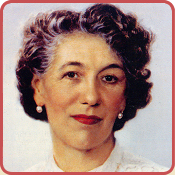
Blyton seems to divide readers. She is either loved or loathed, with households either banning her books or buying them in droves. The dislike of Blyton’s writing was institutionalised in the BBC’s efforts over 30 years to keep her and her works off the air-waves, despite her global success. Michael Hann, writing in the Guardian, suggests an almost ironic reverse snobbery, where her books were regarded as too simple and too middle-class aspirational. It would seem that Blyton was perhaps a less than pleasant person, also, with BBC4’s Enid, starring Helena Bonham-Carter, revealing a darker side to the writer (bullying parenting, a cruel divorce, ruthless business sense, affairs etc).

With all that in mind, it is refreshing to discover that Blyton has some unlikely fans. Laura Canning, whose hard hitting prose in the critically-acclaimed Taste The Bright Lights seems several universes away from the cosy, conservative world of Uncle Quentin and Aunt Fanny, confesses to enjoying Blyton as a guilty pleasure, even now. More interestingly, her essay on themes and plot devices in Malory Towers is genuinely illuminating, revealing subtle character writing which would escape most boring Blyton-deniers.

Sadly, though, some of Blyton’s character archetypes do not lend themselves well to today’s brutish, cynical and dangerous world. It’s hard to imagine writers of today’s gritty children’s fiction being able realise a character like Tammylan, the wild man who children befriend in the countryside, without raising an eyebrow. Or even Bill Smugs, who, as a policeman, should really know better than to be taking a bunch of kids along to catch the baddies. Such characters seen incongruous today and would likely be dismissed knowingly as being appropriate to “more innocent times” . I wonder about that. If we are honest, Blyton’s times were far from innocent, bearing witness to the horrors of the likes of Auschwitz and Belsen. Perhaps it says more about our own fears and lack of confidence in who we are, uncomfortable with heroes in a world where there are so many obvious villains (I don’t see Bill sitting idly by whilst city drunks puke and fight on the last train out of Fenchurch Street!).

I’d thought about recounting the Blyton books I’ve read, but the reality is that there are dozens and I would feel guilty about those I missed out. So instead, some of my favourites:

The Adventurous Four

The Children of Cherry Tree Farm

Five Runaway Together 

The Magic Faraway Tree

The Mystery Of Tally-Ho Cottage

The Ring O’Bells Mystery

The Sea Of Adventure

In the end though, perhaps I am over-complicating things. Let’s face it, I simply liked a darn good yarn and Blyton new how to tell those. Besides, she also knew how to make a young lad wanting adventure to feel good about himself:

“Well, silly, you’ll hop into it, if you find that I haven’t been able to manage the man, and you’ll get out to sea,” said Jack. “And there you’ll stay till it begins to get dark, when you can creep in and see if you can find us and take us off. But you needn’t worry – I shall get that fellow all right. I shall tackle him just like I tackle chaps at rugger, at school.”

Lucy-Ann gazed at Jack in admiration. What it was to be a boy!

From The Sea of Adventure

See you at the next Enid Blyton Day?

Hair, leather, rock and metal – another guilty pleasure

Raking over the embers of last night’s bonfire I was blasting Alice Cooper’s Hey Stoopid at full volume. I suddenly realised how much I still love that totemic rock metal. Bombastic tunes, cheesy lyrics and shock rock videos, that whole rock and metal scene was as significant a part of my growing up as video gaming and roaming round Langdon Hills pretending to be a secret agent. Or cowboy. Or ranger.

I’ve taken to hiding behind the leylandii that shield the bees to do my Wembley Stadium gigs (sod the Arena, aim high, I say),  belting out the lyrics to Snakebite or Might As Well Be On Mars as I put on my bravura combined air-guitar and vocalist performance.

So here are some of my favourites.

Guns N’Roses are the band that blew me away as a kid. I couldn’t believe I was buying a record that was so damn daring, with its shock art cover and warning stickers. I bought it in Woolworths of all places and legged it home like I was carrying contraband. In 1991 I got to saw them live on their Use Your Illusion tour, 31st August 1991 at Wembley Stadium, just before the UK release of the double album. Nothing’s touched it since and the thrill of hearing Welcome To The Jungle live still makes me tingle when I think about it. Now… What about that reunion tour?

Vodpod videos no longer available.

I was first introduced to Alice Cooper by an old Liberal I used to nip round to see after school. He was the sort of guy that had the broken carcasses of electronic items from CD players to TVs and old computers stacked around the room. I remember how, one day when I turned up to play the latest Amiga releases, he had a flickering old VHS playing: Alice Cooper’s 1976 Welcome To My Nightmare concert film. It wasn’t until Trash and Hey Stoopid that I really got him. Feed My Frankenstein, which was featured in the 1992 film Wayne’s World, has one of the sleaziest guitar breaks in the world ever.

Vodpod videos no longer available.

Cycling down to see my mate Jon, there was only one song to be listening to: Whitesnake’s Still Of The Night. For a pair of hormonal teenagers, there really was nothing quite like David Coverdale, owner of the biggest double entendre in rock, rasping out “In the still of the night, I hear the wolf howl, honey, sniffing around your door…”

Vodpod videos no longer available.

I don’t mind admitting that Iron Maiden scared the life out of me. Eddie, their giant skeletal mannequin used to creep me out. But as is the way with rebellious teenagers, even politely rebellious ones like me, the sheer cool of wearing t-shirts with a grinning cadaver on the front won out over the potential for scary dreams. From Paul Di’Anno’s spikey howl on tracks like Phantom Of The Opera and Murders In The Rue Morgue, to Bruce Dickinson’s wail on Number Of The Beast, Aces High and Seventh Son Of A Seventh Son, and even Blaze Bayley’s brief interlude (formerly of Wolfsbane), Maiden are iconic metallers capable of blasting out fist-pumping anthems year after year. Fear Of The Dark is a particular favourite…

Vodpod videos no longer available.

Waiting back stage for a school production in 1988, covered in pancake and eyeliner, Pete, the dodgy aloof rocker type, came up and slipped me a tape: “Listen to that. It’ll blow you away.” That was my introduction to arguably one of the best metal records of all time: Operation: Mindcrime by Queensrÿche. After the wired-to-the-moon bombast of the likes of Hawkwind, concept albums were on a bit of a downer amid the likes of Poison, Bon Jovi etc. Mindcrime was different. A visceral, stark story of madness, revolution, drugs, sex and death it was the most exciting thing I’d heard (since the last most exciting thing I’d heard). Seeing them live at the Hammy O (Hammersmith Odeon) was one of the high points of my 1980s rock metal epiphany.

Vodpod videos no longer available.

There was another band who was rarely far from my Aiwa Walkman in the 1980s and 1990s. I can’t begin to tell you how disappointed I was when I learned that Def Leppard were from Sheffield in the UK (!). They should have been American as far as I was concerned. It’s only with hindsight that I realised it was a badge of honour to have a British band that could sound like a seriously big-ticket US stadium band. I only ever bothered with Pyromania and Hysteria. Perhaps someone will tell me if I missed out…

Vodpod videos no longer available.

So that’s it for now. When I am feeling braver, perhaps I’ll post my favourite tracks from W.A.S.P., Zodiac Mindwarp And The Love Reaction and Manowar.

But not today!