New petition to restore and reinstate The Woodsman in St Martin’s Square #woodsman #basildon

For those who have been following the story of “The Woodsman” there is now a petition running on ipetitions to show support for its restoration and reinstatement in St Martin’s Square, Basildon. Signing it only takes a few moments. There is also a drop-down question box on whether or not you live in Basildon or are simply concerned about “The Woodsman”/public art.

Sign the petition on “The Woodsman” now!

Add to FacebookAdd to DiggAdd to Del.icio.usAdd to StumbleuponAdd to RedditAdd to BlinklistAdd to TwitterAdd to TechnoratiAdd to Yahoo BuzzAdd to Newsvine

“Progression” and “The Woodsman”: A Tale of Two Sculptures (Or: Basildon’s Tories and Public Art)

"Progression" - Michael Condron

“Progression” – Michael Condron

It is sobering to realise how quickly things fade from the memory.

The controversy surrounding “The Woodsman” and an emailed comment from a friend in Basildon Choral Society has reminded me of the fate of “Progression”, the sculpture created by another exciting Essex artist. Ten years ago, Rochford-born sculptor Michael Condron was commissioned by the Council to create a piece of work to celebrate Basildon’s journey into the new Millennium. The general nature of Condron’s work  is summarised well on the website of Chelmsford Borough Council:

“Michael Condron is a sculptor whose principal aim is to make artwork that belongs to its place. A common theme running throughout his work is a sense of fun and discovery. His sculptures can be interactive, responding to the viewer’s presence with sound, movement, light and even bubbles!”

From even that brief description it is clear that his creations are intended to be touched not just looked at. His installations are almost performance pieces, challenging young and old to explore their physicality as well as admire their lines and designs. That this was intended for “Progression” is borne out by the detailed design information that is available on Condron’s website:

“The sculpture will require little maintenance beyond routine inspection, being robust enough to withstand vandalism, people climbing, etc. Any dirt/graffiti can easily be cleaned by Basildon District Council’s normal maintenance contractors. As the sculptures are set at ground level, the surrounding grass will need to be cut with care. A nylon cord strimmer should be used close to the sculpture to prevent damage.”

Interestingly, the issue of health and safety, the reason so often cited for its removal, was addressed throughout:

“The Artist liaised with Basildon District Council to ensure that any Health and Safety concerns over the design were addressed, including edges, projecting parts, trip and slip hazards.”

The biggest controversy surrounding “Progression” centred on its cost. The Conservative opposition said that spending £25,000 of public money on public art was a waste of money. Instead, Cllr Tony Ball said that the money should be spent on Wickford Citizen’s Advice Bureau and Billericay Citizen’s Advice Bureau who, at the time, faced a cash funding crisis.

Thankfully, they are both still there doing a very important job.

“Progression” is not.

In the story linked above, Cllr Ball makes the following comment:

“We are not against the art – but the cash should be from private sponsorship.”

Personally, I disagree. I believe that public art fulfils an important purpose, in the same way other facilities do. Public art makes the places we live in less severe, breaking up their harsh anonymous lines. It helps create a unique sense of identity.

Other places have been far more welcoming of publicly-commissioned art installed in public spaces. Sticking with Condron, in Woking, his “Martian” has been hailed by visitors as a masterpiece and draws on the local heritage of H. G. Wells. In Slough, he worked with Beechwood School to mark its relocation, creating “Moving On” from pieces of steel cut according to outline drawings of pupils’ feet.

Elsewhere in Essex, his “Timeline” was the result of a commission from the Essex Records Office. The Colchester and Tendering Hospital Arts Project commissioned him to create “Tube Figures”, a series of sculpted figures installed around their hospital sites.  Even the County Council commissioned Condron – after “Progression” was installed.

Elsewhere, the importance of public art is recognised in law. In New York, that bastion of socialism, there is a 1% rule:

“In 1982, the Percent for Art law was initiated by Mayor Edward I. Koch and passed by the Council of the City of New York requiring that one percent of the budget for eligible City-funded construction projects be spent on artwork for City facilities.”

In Norway, which also has statutory funding requirements in respect of public buildings, the government has a professional body for public art (KORO) with a clear statement of purpose:

“Art expresses human creativity and originality. Through art, reality is adapted in order to convey new experiences, new understandings and new insights. Producing art for public spaces is a way of expressing a democratic idea that upholds the right of every person to experience art.”

In the course of my professional work I have had reason to visit Norway and have held discussions with senior public figures regarding the role of public art in promoting health and well-being. I had the good fortune to be shown around a new hospital being built, in which each room was carefully decorated and the communal spaces were filled with beautiful works of public art. The feeling of peaceful recuperation was palpable. (There was even a piano, regularly tuned and maintained, for patients, visitors or staff to play.)

In its own small way, “The Woodsman” did just that. It broke up the harsh lines of the commercial space around it and reminded us of softer, greener and older places – and reminded us that we each have the right to experience art. Experience is an important word, too. It is not about ‘liking’, though many of us loved “The Woodsman”. ‘Dislike’ is important in creating a discussion, getting us engaged in the debate about how our environment should look.

Where is that discussion in Basildon?

Ten years’ on from “Progression”, public art produced in Basildon, for Basildon, by a Basildon artist, is now rotting in an anonymous yard.

£38 million can be spent furthering the sporting interests of the district, but the Council is not even prepared to spend the few thousand necessary to restore “The Woodsman” to the space it was made for (and made in).

And whilst “The Woodsman” lies open to the elements, but closed to the public, what of Condron’s “Progression”? This piece, a work that was designed to “withstand climbing, swinging, vandalism or the elements”, is also in Wat Tyler Country Park, fenced off from the public like some museum piece.

This tale of two sculptures is also the story of the diminution of Wat Tyler Country Park. Wat Tyler has its own identity, its own story to tell of struggles ancient and modern.  It shouldn’t become the repository of Basildon District Council’s public art – where you have to make a visit to see it and admire it from afar.

The more I think about it, the more Friday’s symbolic funeral wreath, which could have been mocked for its mawkishness and sentimentality, captures a vital idea – the sad passing away of public art in Basildon.

I would challenge those who are “not against the art” to say otherwise.

For those who are interested in Condron’s work, I have pulled together a gallery on Flickr from publicly available pictures. It is predominantly made up of shots of his three-piece “War of the Worlds” installation in Woking – you can find examples of his other work on the links above.

If you want to find out more about public art in general, Wikipedia has a very good entry which should serve as a useful starting point. Public art online is a leading UK website which covers information from across the country as well as internationally. Artquest has a very interesting section entitled Government Policies and the Arts which looks at the statutory framework regarding public art in different countries. It also contains a free library of legal information for artists on its Artlaw subsite. There is also a directory of public art which contains news of new installations as well as a growing collection of public art from around the globe.

Add to FacebookAdd to DiggAdd to Del.icio.usAdd to StumbleuponAdd to RedditAdd to BlinklistAdd to TwitterAdd to TechnoratiAdd to Yahoo BuzzAdd to Newsvine

BBC World Service on Syria

Haytham al-Maleh was arrested after an interview with opposition TV

Thank you to Maureen Thomas for drawing my attention to two important internet broadcasts by the BBC World Service. The first is with Iyas Maleh, whose father Haytham al-Maleh was imprisoned by the Syrian regime last year. He talks here about the circumstances that led to his arrest and the character of one of Syria’s greatest defenders of human rights.

The second is with Joshua Landis, the American Middle East expert who gives an expert analysis of the situation in Syria.

You can find both interviews on the BBC page Syria: The Prospects for Political Change.

Joshua Landis blogs frequently on Syria and  in 2005 carried an interview with Kamal al-Labwani from 2005, conducted by Joe Pace. It is well worth reading.

Add to FacebookAdd to DiggAdd to Del.icio.usAdd to StumbleuponAdd to RedditAdd to BlinklistAdd to TwitterAdd to TechnoratiAdd to Yahoo BuzzAdd to Newsvine

Local champion Geoff Williams selected to fight South Basildon and East Thurrock for the Lib Dems #basildon

Local activist and campaigner Geoff Williams has been selected to fight the seat of South Basildon and East Thurrock for the Liberal Democrats at the next General Election.

Geoff, who has been a local champion, successful campaigner and district councillor for many years, spoke to supporters this evening in the Allpress Hall at Dry Street Memorial Church. He made clear that this was a crucial election for Nick Clegg and the Liberal Democrats, the party’s gut instinct for fairness giving local people in South Basildon and East Thurrock a chance for real change at the election.

In response to questions, he said he was keen to get the Liberal Democrat message out across the towns and villages that comprise the new seat, pointing out that places such as Bulphan, Fobbing and Horndon-on-the-Hill are often overlooked by politicians.

More in the days to come…

In the meantime, congratulations Dad!

Geoff Williams following his selection as Lib Dem PPC for Basildon

Add to FacebookAdd to DiggAdd to Del.icio.usAdd to StumbleuponAdd to RedditAdd to BlinklistAdd to TwitterAdd to TechnoratiAdd to Yahoo BuzzAdd to Newsvine

Syrian repression of free speech continues as two more journalists are “disappeared” #syria #freespeech #humanrights

Reporters sans Frontières is reporting that journalist Ali Taha and cameraman Ali Ahmed have been detained since since 2 January (as usual, the Syrian authorities are providing no information on the arrests):

“The continuing arbitrary arrests of journalists in Syria are disturbing,” Reporters Without Borders said. “The authorities provide no information about the legal grounds for these arrests and or the subsequent place of detention. This complete lack of transparency does not bode well.”

Click here to read the full report.

These are the latest in a wave of arbitrary arrests that the Syrian security services have been carrying out for months.

Add to FacebookAdd to DiggAdd to Del.icio.usAdd to StumbleuponAdd to RedditAdd to BlinklistAdd to TwitterAdd to TechnoratiAdd to Yahoo BuzzAdd to Newsvine

Wikileaks – free speech needs YOU now #wikileaks #freespeech #amnesty

If you’ve not already noticed, Wikileaks is currently closed for business, facing a funding crisis. Wikileaks (different link which goes into the background of Wikileaks) has been a crucial tool for liberals and free speech campaigners in the battle against state censorship and corporate bullying.  In 2008, it won The Economist New Media Award. In 2009, it shared the Amnesty International New Media Award.

YOU have the chance to make a difference. Don’t leave it to other people.

Make a donation. Let’s face it: $25 is a small price to pay to help turn the tide against corruption and secrecy.

Add to FacebookAdd to DiggAdd to Del.icio.usAdd to StumbleuponAdd to RedditAdd to BlinklistAdd to TwitterAdd to TechnoratiAdd to Yahoo BuzzAdd to Newsvine

Google redeems its reputation – and throws down the gauntlet to China #china #freespeech

In a shock announcement, Google, the internet search giant, has thrown down the gauntlet to the Chinese authorities by announcing that it is going to end the censorship of its Chinese operations. In an announcement on its official blog, the search engine giant cites specifically the attacks that have been made by cyber terrorists on human rights advocates.

Google earned condemnation from politicians and internet users around the world for its decision to self-censor its Chinese operations on Tuesday 24 January 2006. Critics pointed out the glaring contradiction between what it was doing – silencing the voices of those who had not earned the approval of Beijing’s regime – and its ten-point philosophy of operations, specifically points 6 and 8:

6. You can make money without doing evil

8. The need for information crosses all borders

Google’s decision is not just a challenge to Beijing. It is a challenge to those other corporate giants that hitherto have put profit before principle. Internet leaders Microsoft and Yahoo, as well as  Cisco, one of the world’s leading manufacturer of networking equipment, have all been the subject of criticism for the way they have been prepared to satisfy the censorial instincts of the Chinese government, notably by members of the Congressional Human Rights Caucus in February 2006. Disturbingly, Reporters Sans Frontières claim Yahoo was responsible for passing personal information to the Chinese authorities, resulting in the jailing of journalist, poet and blogger Shi Tao. You can read some of Shi Tao’s writings on press freedom here. Please click the thumbnail below to be taken to his page on the website of Human Rights in China, founded by students and academics to promote universal human rights and advance their institutional protection in China:

We seem to have developed a tendency, misguided I think, to measure a country disproportionately by its economic reforms. China is no exception – and it certainly has reformed its economy out of all recognition in the past thirty years. The CIA World Fact Book makes the following observation on China’s economy (I still find it odd that the CIA put their World Fact Book online):

“China’s economy during the past 30 years has changed from a centrally planned system that was largely closed to international trade to a more market-oriented economy that has a rapidly growing private sector and is a major player in the global economy. Reforms started in the late 1970s with the phasing out of collectivized agriculture, and expanded to include the gradual liberalization of prices, fiscal decentralization, increased autonomy for state enterprises, the foundation of a diversified banking system, the development of stock markets, the rapid growth of the non-state sector, and the opening to foreign trade and investment. Annual inflows of foreign direct investment rose to nearly $84 billion in 2007. China has generally implemented reforms in a gradualist or piecemeal fashion. In recent years, China has re-invigorated its support for leading state-owned enterprises in sectors it considers important to “economic security,” explicitly looking to foster globally competitive national champions.”

I can’t help feeling that attributing a country some nebulous value of “standing”, based predominantly on perceptions of the sophistication and liberality of its domestic market,  risks eclipsing other considerations which are intrinsic to properly understanding a state and the country it governs. With China having 30 years of reform behind it, and with the current uncertainties dogging established Western free market economies  in the current global economy, we are in danger of forgetting that the expression of Communism in state form has always been accompanied by instruments and policies of the state that are unacceptable in terms of human rights, free speech and human dignity. Akmal Shaikh becomes a footnote in the continuing evolution of economic relations as we establish trade missions for our benefit, regardless of China’s record on human rights and the treatment of those, like  Guo Quan, who risk their life for the free expression we take for granted.

I cannot believe that it is without cost to our own humanity if we decide to subordinate principle to profit.

So from this Liberal – who is an ardent supporter of the basic principles of the free market – well done Google for at the very least giving us pause for thought.

Add to FacebookAdd to DiggAdd to Del.icio.usAdd to StumbleuponAdd to RedditAdd to BlinklistAdd to TwitterAdd to TechnoratiAdd to Yahoo BuzzAdd to Newsvine

Anwar Al-Bunni: Smiling and with his head held high… #albunni #allabwani #amnesty #syria

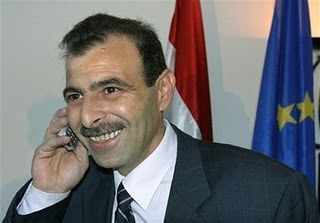
Anwar al-Bunni - photo released by family

On Wednesday I blogged about the German Association of Judges awarding Anwar al-Bunni their prestigious human rights prize. On that page is a link to an article by Peter Franck und Ruth Jüttner of Amnesty International Berlin. My German is just about passable enough for me to be able to recognise that their words merited a fuller, more accurate translation. Thankfully, as a professional linguist, Dad’s German is better than mine…

Peter and Ruth paint a picture in words of a dignified and noble man, and his extraordinary family, who have peaceably defied authority to defend the human rights of their Syrian countrymen – much like Anwar’s friend and colleague, Kamal al-Labwani. I have tried to contact the authors to ask if I might post a translation, but so far to no avail. I hope they will forgive me my eagerness to post their words in English, that more might read about the efforts of Anwar al-Bunni.

Please click the picture below to be taken to the German original:
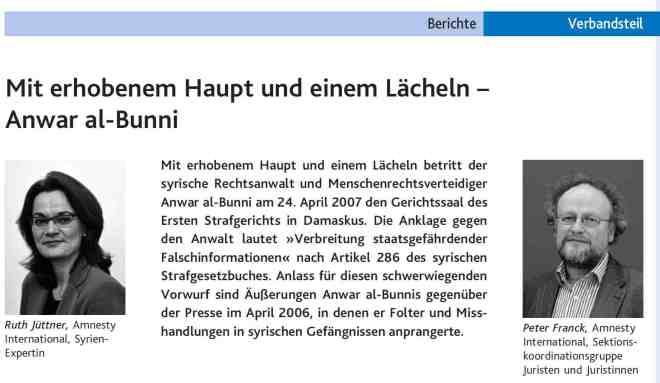
The translation which follows is a direct text translation, with only very slight editing for form. I have taken the liberty of inserting some links if you wish to find out more information. Thanks Dad for performing the translation so quickly and so effectively. I hope you all find Peter and Ruth’s words as inspiring and humbling a read as I did.
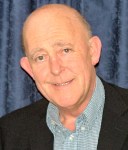
Translator Geoff Williams

Smiling and with his head held high…

Peter Franck und Ruth Jüttner, translated by Geoff Williams

On 24 April 2007, smiling, and with his head held high, the Syrian lawyer and human rights defender Anwar al-Bunni entered the courtroom of the No.1 Criminal Court in Damascus. In accordance with Article 286 of the Syrian Criminal Code he was charged with the “promulgation of false information likely to endanger the state.” The reason for this serious allegation were statements made to the press by Anwar al-Bunni in April 2006 in which he denounced torture and maltreatment in Syrian prisons.

In concrete terms, the lawyer had demanded to know the causes for the death of 26 yr old Mohammed Schaher Haysa. This young man was detained for several months at an unknown location. In April 2006 the authorities had handed over his body, which showed traces of torture, to his family. During his trial Anwar al-Bunni demanded that the Syrian authorities should investigate the death of Mohammed Shaher Haysa.  The court did not, however, pursue the allegations of serious mistreatment and instead sentenced Anwar al-Bunni to five years’ imprisonment.

This draconian sentence provoked consternation amongst the family, supporters and defenders of al-Bunni, being far more severe than the three-year sentence usually imposed in similarly staged trials. Anwar al-Bunni accepted the judgement with composure and described the trial and verdict as a “politically motivated and blatant contravention of the right to freedom of expression, aimed at terrorising and intimidating the Syrian public and politically active citizens.”

It was not the first time that Anwar al-Bunni had demanded that the courts should investigate maltreatment and torture. In June  2002 he had defended the non-violent  political activist Aref Dalilah before the Supreme Court for State Security in Damascus. This court  was established five years after the imposition of the state of emergency in March 1968 and deals solely with cases of a political nature or which have a relevance to state security.

Proceedings before this court fall far short of the international standards for fair trials.  There is no appeal against decisions of the court, defendants have limited access to legal support and judges at the court have wide ranging discretion with regard to the format of the proceedings. This was also clear in the trial of Aref Dalilah. When Anwar al Bunni insisted that his client’s accusations of maltreatment should be recorded  and investigated he was forcibly removed from the courtroom by security officers. The presiding judge subsequently withdrew from him his accreditation to appear as a lawyer before the Supreme Court for State Security.

A month later Aref Dalilah, former Dean of the Faculty of Economics at the University of Aleppo, was sentenced to 10 years imprisonment for his support for political reform. In August 2008, after 7 years largely spent in solitary confinement, the 65 year-old was released as part of a presidential amnesty.

When still a young man within his family, Anwar al-Bunni, the second youngest of seven brothers and sisters, suffered persecution and years of incarceration because of his political activity. Since the late 1970’s four of his siblings have been imprisoned time and again for political reasons in various Syrian prisons and under appalling conditions.

Until the 1990’s the conditions in Syrian prisons were so degrading, humiliating and brutal that they amounted to systematic torture. According to later press statements from his older brother Akram, there were times when Anwar al-Bunni and their mother were the only members of the family not in prison and divided up visits to family members imprisoned in different prisons in different places between themselves.

When Anwar al-Bunni commenced his law studies in 1979 at the University of Damascus three of his brothers and one sister were in prison on political grounds. After a few years practice as a lawyer he undertook the defence of political prisoners in the courts and founded a committee to press for the release of political prisoners.

After the death of President Hafez al-Hassad and the succession of his son Bashar in June 2000, there was something of a political thaw, which has come to be known as the “Damascus Spring”. A sense of new horizons, inspired by the young president’s promise to drive reform forward, spread across the country. Numerous discussion circles developed amongst the populace where members of the opposition and intellectual debated the routes to political change, democracy and the achievement of human rights. During this period, together with other prominent human rights lawyers, Anwar al-Bunni founded in 2001 one of the first human rights organisations, the “Human Rights Association in Syria” (HRAS) which sought official recognition from the authorities.

Despite the regime’s return to an authoritarian style of leadership and massive suppression of dissent, Anwar al-Bunni continued his determined and courageous support for the victims of indiscriminate state violence. He was unflinching in his criticism of the 40 year-old state of emergency which aided and abetted the abuse of human rights on a huge scale. He remained in contact with journalists, foreign diplomats and with international human rights organisations. He informed the world public about the politically motivated trials of  activists campaigning peacefully for democratic change and about the conditions of his clients’ imprisonment.

The authorities reacted with sanctions intended to intimidate him. He was repeatedly brought before the Damascus bar association, was disciplined and temporarily barred from practising. He was harassed, intimated, threatened and kept under surveillance by the security services. In December 2003, intending to travel to Weimar to receive the city’s human rights prize on behalf of the reformist politician Riad Seif, at that time  and still today imprisoned, he was refused permission to trav el. An EU funded Human Rights Centre under his directorship was closed down by the authorities  in March 2006 only days after opening. Not only Anwar al-Bunni but his family also has been subject to punitive measures. In May 2007, just one month after he received his sentence, his wife Ragheda Issa Rafiki was deprived, with no reason given, of her civil servant post by order of Prime Minister Muhammed Naji al-Otri.

The 50 year-old lawyer has been in prison for three-and-a-half years in atrocious conditions. He shares a cell with thirty others, all convicted criminals. Both other prisoners as well as prison officers have physically brutalised and humiliated him. And yet his spirit is not broken. On behalf of a number of non-violent political prisoners he has repeatedly addressed open letters to the UN High Commission for Human Rights and the Syrian president, drawing attention to the conditions of their imprisonment. Anwar al-Bunni himself suffers from arthritis, a condition made worse by lack of movement and the dampness of the cells.

Add to FacebookAdd to DiggAdd to Del.icio.usAdd to StumbleuponAdd to RedditAdd to BlinklistAdd to TwitterAdd to TechnoratiAdd to Yahoo BuzzAdd to Newsvine

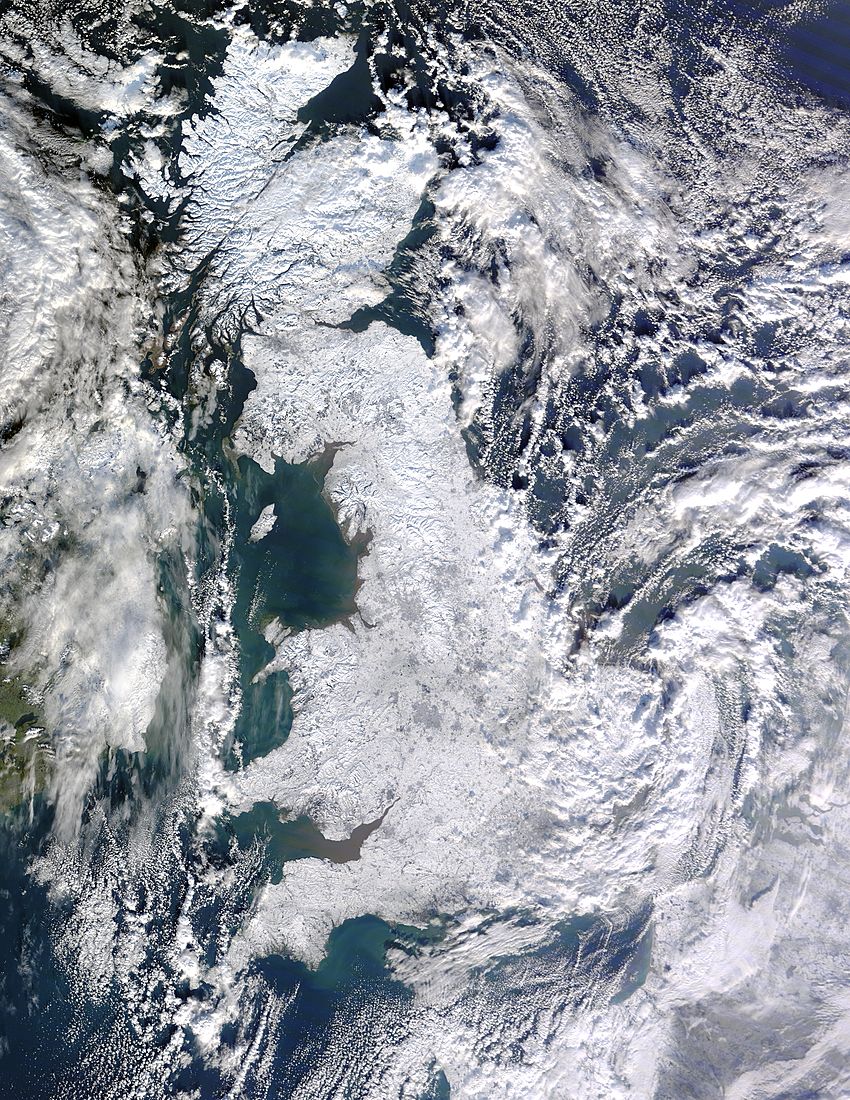
Beautiful Nature: Frozen Britain

Words can’t do it justice…

Click and wonder at the marvel of human inventiveness – and the beauty of our planet.

Frozen Britain - NASA

Add to FacebookAdd to DiggAdd to Del.icio.usAdd to StumbleuponAdd to RedditAdd to BlinklistAdd to TwitterAdd to TechnoratiAdd to Yahoo BuzzAdd to Newsvine

Kamal Labwani and the West’s appalling indifference #eu #syria #labwani

Last October, I wrote to over a hundred senior officials and politicians, many of whom are based in Brussels. I wanted to draw attention to Syria’s continual violation of human rights and  flagrant disregard for the UN’s International Covenant on Civil and Political Rights as the European Union was intending to sign an Association Agreement with Syria. I wrote very directly about the situation of Kamal al-Labwani.

You can read my text here:

Email r.e. EU Association Agreement and Kamal

The only person who could be bothered to respond was Liz Lynne, the Liberal Democrat MEP, who wrote back to me on the 6th November to say she was taking my concerns up with Benita Ferrero-Waldner, European Commissioner for External Relations and European Neighbourhood Policy (if it wasn’t a distraction I would ask who the hell the rest of the elected politicians I wrote to think they are, disregarding correspondence as they enjoy the salaries and expenses I am part-paying for). You can read that email in full below:

Response from Liz Lynne MEP r.e. EU Association Agreement and Kamal

Yesterday, and demonstrating impressive commitment, I received a further email from Liz Lynne to which she attached a letter from Baroness Catherine Ashton, the new High Representative of the European Union for Foreign Affairs and Security Policy. Read it – and be angry:

Ashton response to Liz Lynne

If you clicked the link to Ashton’s official page above you will have seen it is headed up with the following quote:

“I am looking forward to working closely with colleagues in the Council, the Commission, the European Parliament and the Member States to strengthen Europe’s foreign policy. We will do this with determination and with full respect for the values that the European Union stands for, above all peace and prosperity, freedom and democracy, the rule of law and the universality and indivisibility of human rights.”

What pointless drivel from a pointless politician.

The total press comment on her official site consists of two statements of congratulations following appointments and a statement of shock following the Lakki Marwat bombing.

No action.

No condemnation.

No statements of stiff resolve.

Instead, her words are the grey, empty platitudes we fear from out-of-touch politicians – politicians we still hope might be moved to action by the personalisation of the problems they otherwise put behind them at the end of the day. If this is what being “the best person for the job” means, as Baroness Ashton claims she is, then the words in her email are a damning indictment of the impotency of this newly-created position. Ashton points out in that report that EU leaders were “comfortable” with her appointment. I am sure they were: Ashton is clearly not someone for rocking the boat, but rather is happy to continue a policy of engagement that talks tough on human rights and political freedom, but achieves nothing:  maintain the status quo of holding our collective noses as we conduct business as usual.

I am glad she is at least “worried”. I am also worried.

This was Kamal in Basildon in 2005, standing proudly by his artwork with Chris Hyde and his great friend and supporter Maureen Thomas:

Kamal, Chris Hyde (L) and Maureen Thomas (R)

This was Kamal in 2006, peering from a prison cell:

Kamal behind bars

I am worried.

I am shocked.

I am bloody furious that my friend, who shares our values of freedom of expression, freedom of thought and peaceful dissent, languishes in a Syrian hell-hole whilst supposedly powerful politicians like Baroness Cathy Ashton appear to think that his incarceration is incidental to a “comprehensive political dialogue and longer term relationship that can build trust and ensure progress on human rights issues.”

What possesses these people to write such coded cant? She doesn’t even mention the fact that once signed, the agreement can be suspended if human rights violations are evidenced. Too embarrassing perhaps as people might question why it was being signed in the first place?

Look at those two pictures.

Think about them and what they represent.

Think of the gentle family man, the artist, the doctor, who is imprisoned because he wants his family, friends, colleagues and countrymen to enjoy the chance to talk freely, to believe and think what they want, to worship as they choose (or not) and to associate socially and politically without interference from state-sponsored goons.

If you are involved in politics, whichever party or none, ask yourself why you got involved – and if you could write the words of Baroness Ashton? (And don’t give me patronising rubbish about “a complex situation”,  “difficult discussions” and “diplomatic sensitivities” – you know I’ve heard them all.)

And if those pictures anger you, if the complacency of politicians and officials who are charged with representing our values as a country abroad frustrates you, if you abhor the political double-speak that expresses concern whilst the ink dries, then click one of the links below and take action:

Familiarise yourself with Kamal, his experiences and his beautiful, moving paintings

Write to Gordon Brown, our Prime Minister

If you are a UK national, sign the petition r.e. Kamal and the EU Trade Association Agreement

If you are on Twitter, Tweet the link to the petiton by cut and pasting the following: http://bit.ly/TZ4R7

Join Kamal’s facebook page

Thank you Liz Lynne for being interested – and for acting.

And shame on the rest of you, Liberals and non-Liberals alike, for your indifference.

You know who you are.

Show us why we should continue to even consider you worth our confidence.

Add to FacebookAdd to DiggAdd to Del.icio.usAdd to StumbleuponAdd to RedditAdd to BlinklistAdd to TwitterAdd to TechnoratiAdd to Yahoo BuzzAdd to Newsvine