Eco-catastrophe, Apocalypse, a matricidal teen prophet and psycho-babble galore: a rapturous read

It’s rare for me these days to be gripped so completely by a book that I can’t put it down.  I’ve just finished Liz Jensen’s The Rapture.

It is simply, chillingly brilliant.

Set in the near future, Jensen draws you right inside the head of her main protagonist, Gabrielle Fox, carefully weaving the breathy pace of a thriller with the considered reflections of a psychological drama. She baffled this layman convincingly with her climate science and caused me to reflect on my faith in this age of disaster chaos and economic uncertainty. More importantly, she eschews the typically shallow exploration of character that you find in most thrillers and instead delves deep into the psyche of each of her main characters.

To exquisite effect she toys with your recollection of recent events, mixing up recent landmark events, imprinted by a thousand television reports, with fictional facsimiles. It is a confident trick for a first novel and one that has you wondering if you’ve managed to miss a significant news story at some point that really should have fixed itself in the memory. To sustain the intense descriptions of oppressive weather, constrained phsyical circumstance and the unhinged lunacy of Fox’s teen patient until the last pages is a real achievement.

If you are ready for some brutal characterisation, a different sort of heroine, some occasionally lurid story-telling and are confident enough in your faith – if you have any – to read a convincing and ferocious challenge to its presumptions, then I commend this as a very exciting read.

If you don’t mind a spoiler or two, there are some worthwhile reviews in The Guardian (Irvine Welsh), The Telegraph (Helen Brown) and The Independent (Marianne Brace).

Add to FacebookAdd to DiggAdd to Del.icio.usAdd to StumbleuponAdd to RedditAdd to BlinklistAdd to TwitterAdd to TechnoratiAdd to Yahoo BuzzAdd to Newsvine

So… Should Basildon be a Borough?

Over on basildonFOCUS, my colleagues and I have launched a survey regarding the forthcoming discussion at Council on Borough status (Wed 24 February 2010). If you live in Basildon and want your views to be heard, please take a few moments to click the relevant buttons.

Add to FacebookAdd to DiggAdd to Del.icio.usAdd to StumbleuponAdd to RedditAdd to BlinklistAdd to TwitterAdd to TechnoratiAdd to Yahoo BuzzAdd to Newsvine

Yet another good reason (or five!) why not to get an iPhone #iphone #n900

So buying a phone really shouldn’t be a political exercise, should it?

The fact is, though, that the iPhone is the epitome of the corporatisation of our social networks, looking to control and mould the way we interact rather than giving us a tool to empower us creatively. You’ll probably read this as just another anti-iPhone rant from the Nokia-owning geek, but the Free Software Foundation provide some pretty compelling reasons for thinking twice about chaining yourself to the Apple cart (and WTH do I have to pay more for a crappier contract if I want an iPhone, eh O2?):

You can do what you like with an iPhone – as long as Steve Jobs wants you to do it. The FSF captures the sentiment perfectly:

“The iPhone is an attack on very old and fundamental values — the value of people having control over their stuff rather than their stuff having control over them, the right to freely communicate and share with others, and the importance of privacy.”

Contrast that with Nokia and its approach to the N900:

“The N900 is the most powerful device Nokia has ever created, and it’s built with Maemo software – which is completely open source.

What’s great about this is that it means the N900 can be taken apart and rebuilt, or modded into something entirely new – capable of doing things no device has ever done before.

But things like what? Well, that’s exactly what we asked teams of hackers all around the world. In response, we got hundreds of inspiring dreams and visions.

Now we’re down to 5 teams whose visions are becoming a reality. And this site will follow them every step of the way. ”

Basically, Nokia take the most powerful phone-tablet-thingy they’ve ever designed and, instead of having a precious hissy fit at the thought there might be people out there cleverer than they are, say “Here you go world… play with it!”

Visit MAEMO.org and you will find something quite unique – users, developers and corporate reps all on the same boards, talking about what applications they want and need and some volunteering to do the coding – and finding ways to make this little technological marvel do the most incredible things.

As someone who admires the ingenuity and creativity of individuals – and wishes he could code for toffee – there is no contest.

Besides, I remember the video. And I’d not be seen dead in an Escort:

Add to FacebookAdd to DiggAdd to Del.icio.usAdd to StumbleuponAdd to RedditAdd to BlinklistAdd to TwitterAdd to TechnoratiAdd to Yahoo BuzzAdd to Newsvine

Lest we forget: Holocaust Memorial Day 2010 – The Legacy of Hope

It was more made more striking by its ordinariness: a standard-issue Council desk with a signing book and cheap pen placed neatly in the middle and little yellow booklets strewn about. The foyer of the BasCentre bustled, but the space around the table was poignantly empty. Sitting at the desk, words failed me and I was unsure what to write. Everything seemed trite – a sentiment that couldn’t reflect the sheer horror of the Holocaust, sanitised as it is through the combined filters of years and internet technology and information overload.

Yesterday was Holocaust Memorial Day. Visiting the site I discovered that I was the 34,127th person to light a virtual candle and become part of the Legacy of Hope. Each year, Holocaust Memorial Day (known this year as HMD2010”) identifies and develops a particular theme:

Holocaust survivors have played an immense role in bringing our attention to the lessons of the Holocaust. They speak of pain and loss, of strength and survival, of despair and their wish for a Legacy of Hope. They encourage us to look within and without, to be sure of our moral compass, to be certain of our choices and to use our voice, whenever we can, to speak out. They have translated difficult experiences to create a future that is free from the dangers of exclusion and persecution. They have passed a message of resilience and hope to the next generation.

Our responsibility is to remember those who were persecuted and murdered, because their lives were wasted. Our challenge is to make the experience and words of the victims and survivors of the Holocaust and subsequent genocides a meaningful part of our future. The aspirations of those who have suffered from the effects of the Holocaust and of genocide around the world, should inform our lives today. Their words can make us think about our own attitudes, our behaviour, our choices, the way we vote, the way we interact with one another, the way we respect and celebrate the differences between us and the way in which we build a safer future together. It is their example that can inspire us to greater action. We need to ask ourselves what we should be doing today to build a safer, stronger society so that the risk of the building blocks of genocide ever being laid is removed.

As humanitarian activist Hugo Slim says of the voices that speak out of tragedy to our shared sense of humanity: “We need to listen, for a change.”

Remembering is a responsibility on all of us.

It is too easy in this age of instant tragedy, when an earthquake or tsunami can be broadcast into our living room, to forget the sheer brutality we are capable of inflicting on each other as human beings. I saw the legacy of that insane cruelty in my recent work in Sierra Leone. According to the UNDP, Sierra Leone is the third poorest country in the world. I saw single, double, triple and quadruple amputees attempting to rebuild and live their lives alongside those who had perpetrated their agonies upon them in a vicious civil war.

The Holocaust is the ultimate manifestation of that evil that drives man to brutalise man.

To be honest, I struggle to get my head around the figures involved. Auschwitz-Birkenau was the largest Nazi killing camp, murdering approximately 1,100,000 men, women and children. In total, 6,000,000 Jews were murdered (almost two out of every three Jews in Europe), alongside 200,000 Roma and Sinti (Gypsies) and almost 250,000 mentally or physically disabled people. Tens of thousands of gay men and women, Jehovah’s Witnesses, intellectuals and political opponents were also murdered. They are the sort of stratospheric figures that become meaningless – and in that meaninglessness lies incredible danger.

Holocaust Memorial Day reminds us that genocide is not a thing of the past:

Genocide is with us today. It is another inconvenient truth that, in its hopeless enormity and our helpless inadequacy, we push uncomfortably from our minds.

In Nuremberg, in  Bavaria, the city closest to the village where I spent my first few years growing up, part of the monstrous unfinished remains of the Nazi Party’s Congress Hall (Kongresskalle) has been transformed into a museum of brutal truth: the The Documentation Center Nazi Party Rallying Grounds (Dokumentationszentrum Reichsparteitagsgelände). I have visited it three times and it has never failed to move me to tears. It tells the story of the rise of Adolph Hitler and the  Third Reich, the Holocaust, liberation and the Nuremberg trials. It does not flinch in admitting the culpability of the German nation in the Holocaust. It is a harrowing experience – but one that begins to make a dent in the inconceivability of such horror. Importantly, the centre serves as a reminder of the hatred and evil that was spawned in ordinary men and women on that very site.

It demonstrates, in terrifyingly precise detail, the truth in that phrase coined by Hannah Arendt: “The banality of evil”. (Her premise was, essentially, that it is ordinary people -not monsters – who are responsible for the greatest acts of evil in history. They accept what they are told by the state and so participate in even extreme acts because it is normal to do so.)

“First they came…” may be a poem that has become mired in controversy over its origins. However, whether they are the words of the Lutheran pastor Martin Niemöller or not, they contain a simple and uncomfortable truth about our preparedness to speak out in circumstances of right and wrong that we should all reflect upon. Read them again and think about them – not with the eyes of knowing, ironic commentators who might claim these words are the refuge of the lazy and clichéd, but as if you’re seeing them for the first time:

“First they came for the communists, and I did not speak out—because I was not a communist;
Then they came for the trade unionists, and I did not speak out—because I was not a trade unionist;
Then they came for the Jews, and I did not speak out—because I was not a Jew;
Then they came for me—and there was no one left to speak out.”

Add to FacebookAdd to DiggAdd to Del.icio.usAdd to StumbleuponAdd to RedditAdd to BlinklistAdd to TwitterAdd to TechnoratiAdd to Yahoo BuzzAdd to Newsvine

A History of the World in Objects – a brilliant idea from the BBC #bbc #history

As part of my recuperation I spent a morning out walking in the hills, enjoying the bleak beauty of the Langdon ridge in winter. As I tramped I listened to Radio 4 – a regular vice.

One of the programmes advertised was A History of the World in 100 Objects. Narrated by Neil MacGregor, director of the British Museum, it does as it says on the tin – tell our human history through the objects we have made. The reason it caught my ear was that the item being discussed was a Braille-related device, the operator explaining that it was virtually unchanged since the 1920s and offering the sentiment that it was unlikely that many people were using objects of such an age today.

An hour and a half earlier I had been speaking to a relative who had been working with machinery from the 19th Century – in an industry unchanged for hundreds of years (he produces the shallots for pipe organs – if you are lost as to what a shallot is, this page in Understanding the Pipe Organ might help!).

Both experiences prompted the (unoriginal!) thought that so much of our history is told in small, everyday ways. We’ve all got defining memories of ordinary objects, large and small, that have been part of our life story. The BBC’s programme, recounting our global history in such objects, is genius. Each programme is just fourteen minutes long. If you’ve missed them so far, you can catch up by listening to the podcasts on the BBC.

If you go to the page A History of the World, you can join in their project to tell a history of our world in objects, submitting your own entries.

The Sinclair ZX81 and Sinclair Spectrum for me I think!

Add to FacebookAdd to DiggAdd to Del.icio.usAdd to StumbleuponAdd to RedditAdd to BlinklistAdd to TwitterAdd to TechnoratiAdd to Yahoo BuzzAdd to Newsvine

“Progression” and “The Woodsman”: A Tale of Two Sculptures (Or: Basildon’s Tories and Public Art)

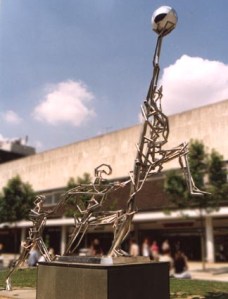
"Progression" - Michael Condron

“Progression” – Michael Condron

It is sobering to realise how quickly things fade from the memory.

The controversy surrounding “The Woodsman” and an emailed comment from a friend in Basildon Choral Society has reminded me of the fate of “Progression”, the sculpture created by another exciting Essex artist. Ten years ago, Rochford-born sculptor Michael Condron was commissioned by the Council to create a piece of work to celebrate Basildon’s journey into the new Millennium. The general nature of Condron’s work  is summarised well on the website of Chelmsford Borough Council:

“Michael Condron is a sculptor whose principal aim is to make artwork that belongs to its place. A common theme running throughout his work is a sense of fun and discovery. His sculptures can be interactive, responding to the viewer’s presence with sound, movement, light and even bubbles!”

From even that brief description it is clear that his creations are intended to be touched not just looked at. His installations are almost performance pieces, challenging young and old to explore their physicality as well as admire their lines and designs. That this was intended for “Progression” is borne out by the detailed design information that is available on Condron’s website:

“The sculpture will require little maintenance beyond routine inspection, being robust enough to withstand vandalism, people climbing, etc. Any dirt/graffiti can easily be cleaned by Basildon District Council’s normal maintenance contractors. As the sculptures are set at ground level, the surrounding grass will need to be cut with care. A nylon cord strimmer should be used close to the sculpture to prevent damage.”

Interestingly, the issue of health and safety, the reason so often cited for its removal, was addressed throughout:

“The Artist liaised with Basildon District Council to ensure that any Health and Safety concerns over the design were addressed, including edges, projecting parts, trip and slip hazards.”

The biggest controversy surrounding “Progression” centred on its cost. The Conservative opposition said that spending £25,000 of public money on public art was a waste of money. Instead, Cllr Tony Ball said that the money should be spent on Wickford Citizen’s Advice Bureau and Billericay Citizen’s Advice Bureau who, at the time, faced a cash funding crisis.

Thankfully, they are both still there doing a very important job.

“Progression” is not.

In the story linked above, Cllr Ball makes the following comment:

“We are not against the art – but the cash should be from private sponsorship.”

Personally, I disagree. I believe that public art fulfils an important purpose, in the same way other facilities do. Public art makes the places we live in less severe, breaking up their harsh anonymous lines. It helps create a unique sense of identity.

Other places have been far more welcoming of publicly-commissioned art installed in public spaces. Sticking with Condron, in Woking, his “Martian” has been hailed by visitors as a masterpiece and draws on the local heritage of H. G. Wells. In Slough, he worked with Beechwood School to mark its relocation, creating “Moving On” from pieces of steel cut according to outline drawings of pupils’ feet.

Elsewhere in Essex, his “Timeline” was the result of a commission from the Essex Records Office. The Colchester and Tendering Hospital Arts Project commissioned him to create “Tube Figures”, a series of sculpted figures installed around their hospital sites.  Even the County Council commissioned Condron – after “Progression” was installed.

Elsewhere, the importance of public art is recognised in law. In New York, that bastion of socialism, there is a 1% rule:

“In 1982, the Percent for Art law was initiated by Mayor Edward I. Koch and passed by the Council of the City of New York requiring that one percent of the budget for eligible City-funded construction projects be spent on artwork for City facilities.”

In Norway, which also has statutory funding requirements in respect of public buildings, the government has a professional body for public art (KORO) with a clear statement of purpose:

“Art expresses human creativity and originality. Through art, reality is adapted in order to convey new experiences, new understandings and new insights. Producing art for public spaces is a way of expressing a democratic idea that upholds the right of every person to experience art.”

In the course of my professional work I have had reason to visit Norway and have held discussions with senior public figures regarding the role of public art in promoting health and well-being. I had the good fortune to be shown around a new hospital being built, in which each room was carefully decorated and the communal spaces were filled with beautiful works of public art. The feeling of peaceful recuperation was palpable. (There was even a piano, regularly tuned and maintained, for patients, visitors or staff to play.)

In its own small way, “The Woodsman” did just that. It broke up the harsh lines of the commercial space around it and reminded us of softer, greener and older places – and reminded us that we each have the right to experience art. Experience is an important word, too. It is not about ‘liking’, though many of us loved “The Woodsman”. ‘Dislike’ is important in creating a discussion, getting us engaged in the debate about how our environment should look.

Where is that discussion in Basildon?

Ten years’ on from “Progression”, public art produced in Basildon, for Basildon, by a Basildon artist, is now rotting in an anonymous yard.

£38 million can be spent furthering the sporting interests of the district, but the Council is not even prepared to spend the few thousand necessary to restore “The Woodsman” to the space it was made for (and made in).

And whilst “The Woodsman” lies open to the elements, but closed to the public, what of Condron’s “Progression”? This piece, a work that was designed to “withstand climbing, swinging, vandalism or the elements”, is also in Wat Tyler Country Park, fenced off from the public like some museum piece.

This tale of two sculptures is also the story of the diminution of Wat Tyler Country Park. Wat Tyler has its own identity, its own story to tell of struggles ancient and modern.  It shouldn’t become the repository of Basildon District Council’s public art – where you have to make a visit to see it and admire it from afar.

The more I think about it, the more Friday’s symbolic funeral wreath, which could have been mocked for its mawkishness and sentimentality, captures a vital idea – the sad passing away of public art in Basildon.

I would challenge those who are “not against the art” to say otherwise.

For those who are interested in Condron’s work, I have pulled together a gallery on Flickr from publicly available pictures. It is predominantly made up of shots of his three-piece “War of the Worlds” installation in Woking – you can find examples of his other work on the links above.

If you want to find out more about public art in general, Wikipedia has a very good entry which should serve as a useful starting point. Public art online is a leading UK website which covers information from across the country as well as internationally. Artquest has a very interesting section entitled Government Policies and the Arts which looks at the statutory framework regarding public art in different countries. It also contains a free library of legal information for artists on its Artlaw subsite. There is also a directory of public art which contains news of new installations as well as a growing collection of public art from around the globe.

Add to FacebookAdd to DiggAdd to Del.icio.usAdd to StumbleuponAdd to RedditAdd to BlinklistAdd to TwitterAdd to TechnoratiAdd to Yahoo BuzzAdd to Newsvine

The Woodsman Facebook Group: the significance of public art

There is now a Facebook Group Save The Woodsman that has been set up by members of Basildon’s artistic community. If you are a Facebook user, please take the opportunity to have a look. Attitudes to public art – and the conduct of local authorities – is not just a local issue. The precedents set by councils in different local areas helps shape and define national policy and guidance. Public art makes a valuable contribution to the health and well-being of our communities.

Your support for The Woodsman will help send a message to local government about the communities we all live in.

Add to FacebookAdd to DiggAdd to Del.icio.usAdd to StumbleuponAdd to RedditAdd to BlinklistAdd to TwitterAdd to TechnoratiAdd to Yahoo BuzzAdd to Newsvine

BBC World Service on Syria

Haytham al-Maleh was arrested after an interview with opposition TV

Thank you to Maureen Thomas for drawing my attention to two important internet broadcasts by the BBC World Service. The first is with Iyas Maleh, whose father Haytham al-Maleh was imprisoned by the Syrian regime last year. He talks here about the circumstances that led to his arrest and the character of one of Syria’s greatest defenders of human rights.

The second is with Joshua Landis, the American Middle East expert who gives an expert analysis of the situation in Syria.

You can find both interviews on the BBC page Syria: The Prospects for Political Change.

Joshua Landis blogs frequently on Syria and  in 2005 carried an interview with Kamal al-Labwani from 2005, conducted by Joe Pace. It is well worth reading.

Add to FacebookAdd to DiggAdd to Del.icio.usAdd to StumbleuponAdd to RedditAdd to BlinklistAdd to TwitterAdd to TechnoratiAdd to Yahoo BuzzAdd to Newsvine

“The Woodsman” – Dissembling officialdom and a Council’s municipal vandalism

Waking this morning I didn’t expect to open my inbox to discover something to make me literally shake with rage.

In recent days I have blogged on “The Woodsman”, Dave Chapple’s carved sculpture that he gave to the people of Basildon. Yesterday, members of Basildon’s arts community celebrated his work – and mourned the Council’s decision to remove “The Woodsman”.

Back in 2008, Basildon District Council decided to consult on the future of “The Woodsman”. In the original press release , unattributed assertions are made that “it was never meant to be outside for long periods” and that “to keep it outside will require extensive treatment and could cost thousands of pounds”. No officer or councillor puts their name to the quote – it stands there as a nugget of wisdom dispensed on high from people who clearly want to give the impression that they know what they are doing and that they understand how to care for such fragile works of art (the press release later makes clear that treatment would mean it could stand for a further ten years before more treatment).

Cllr Stephen Horgan reinforces that understanding when he states that “the “woodsman” sculpture is in need of repair, or removal to an indoor location.”

Notice: the implication of repair is that it could stay outside. Otherwise – “or” – it needed putting inside. So it remaining on display was a possibility. (If it were removed, there was even the prospect of a new piece of art for the square, suggesting that King Edgar’s Head by Dave Chapple might be a possibility.)

In October 2008 a further press release was issued which requested design ideas for the lighting column to replace “The Woodsman”. Cllr Kevin Blake is quoted saying: “We asked the public whether they wanted to see the woodsman replaced, and it seems only right that we now give people the opportunity to send in their ideas of what they think a new lighting column should look like.”

It is an interestingly constructed sentence – a PR professional’s top piece of spin.

See how the second part of the sentence implies the result of the first, but without saying what the response to the survey actually showed? The survey probably did show the result they reported. However, details of it are nowhere to be found on either Basildon District Council’s website or Basildon Renaissance  Partnership’s website. I have written to the Council and requested a copy just so we can see how many people took part and exactly what it showed. I will of course share it here when it is forthcoming.

As you can see, public art is out the window now. Lighting columns are in. (Later still, in April 2009, I voted at Cabinet to accept the new money from the Government for new lighting in the Town Centre and St Martin’s Square. The Government wanting to invest in Basildon seemed a good thing. Seeing the insensitivity of the design in relation to the views of the Bell Tower, I regret how it is turning out. I wish I had also made the connection between the competition for new lighting columns, the future of “The Woodsman” and this money. I didn’t.)

Finally, in Basildon District Council’s most recent press release on “The Woodsman”, Cllr Horgan describes “The Woodsman” as “a well loved piece of public art.”

And the lighting column is now the Town Clock.

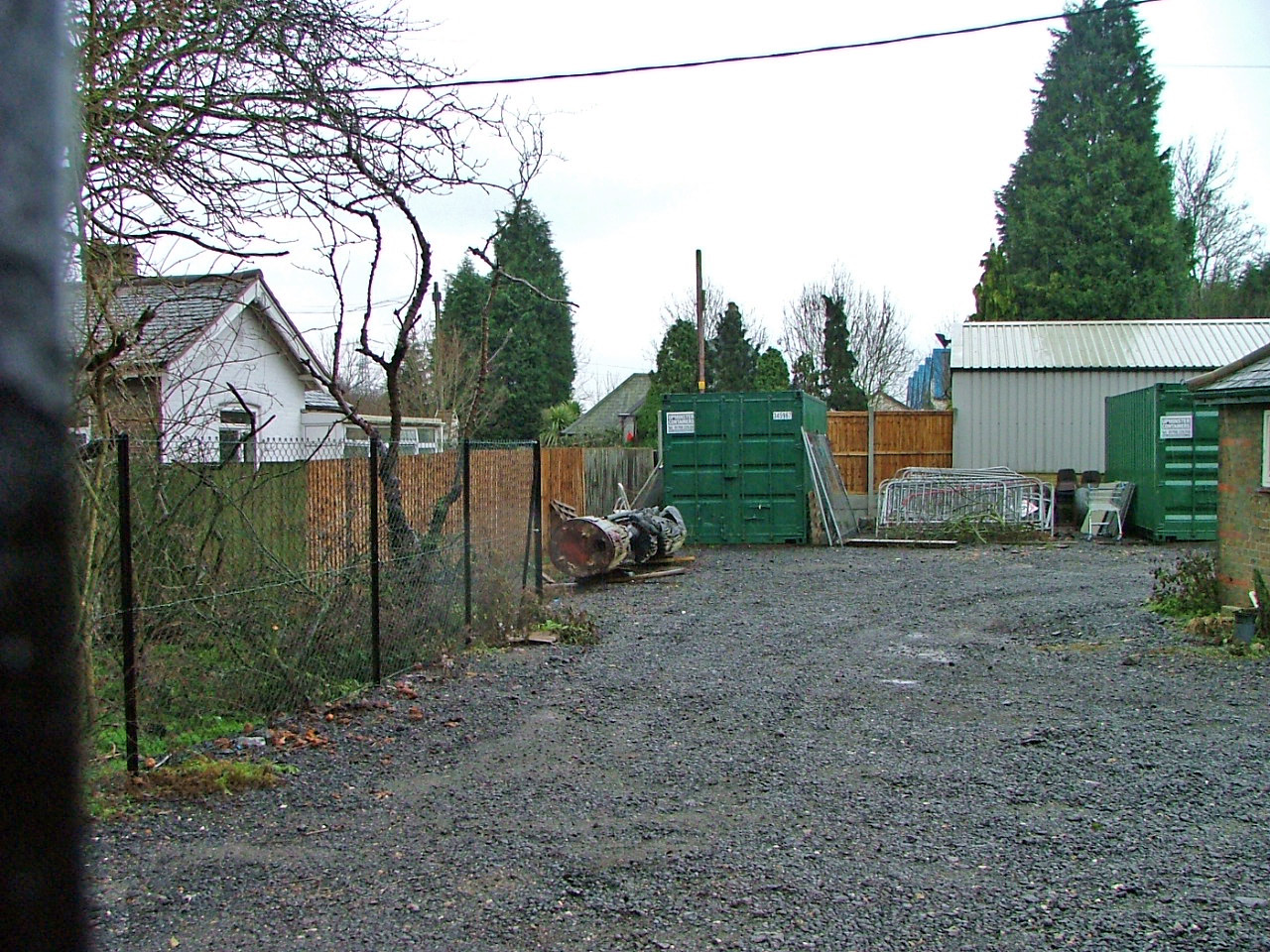
I hope the pictures below shock you as much as they shocked me when I found them waiting in my inbox.

They were taken yesterday afternoon.

They show how Basildon District Council stores “The Woodsman”, that “well loved piece of public art” which Cllr Horgan believes will be appreciated by “hundreds of thousands” in Wat Tyler Country Park – a piece of art that in the Council’s own words “was never meant to be outside for long periods” and needed “extensive treatment”:

It is nothing short of vandalism.  Cllr Michael Mowe is a Conservative councillor who condemns “brainless vandalism” – and very rightly so. I wonder what questions he will now be asking of his own Conservative administration? (Incidentally, vandalism can be reported to Basildon District Council on its website and even by mobile phone. Perhaps the Council’s own acts of vandalism should be reported?)

To my mind, though, questions and emails and letters are useless. This Conservative administration has determined its priorities – and this is how it treats a “well loved piece of public art”.

Contrast that with £38 million for a Sporting Village.

Pathetic.

Add to FacebookAdd to DiggAdd to Del.icio.usAdd to StumbleuponAdd to RedditAdd to BlinklistAdd to TwitterAdd to TechnoratiAdd to Yahoo BuzzAdd to Newsvine

“The Woodsman” – Then and Now

Then…

“The Woodsman” - Eddie Gunn

And now…

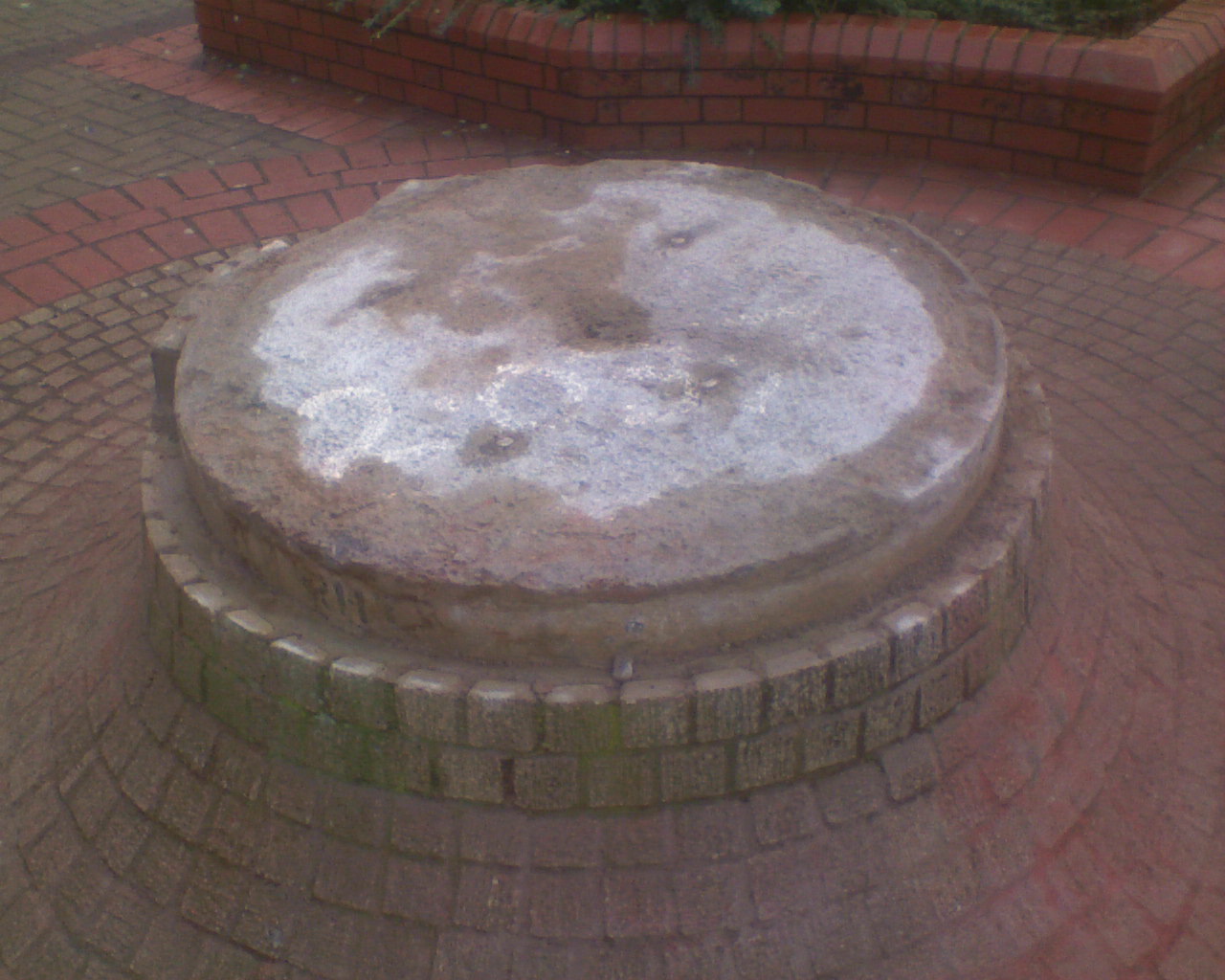
The empty plinth - Steve Waters

The empty plinth speaks for itself. Please give us “The Woodsman” back.

Add to FacebookAdd to DiggAdd to Del.icio.usAdd to StumbleuponAdd to RedditAdd to BlinklistAdd to TwitterAdd to TechnoratiAdd to Yahoo BuzzAdd to Newsvine