Eva Sajovic’s “Be-Longing”: Workshop information #gypsies #travellers #roma

News of two workshops being run at Eva Sajovic’s “Be-Longing” exhibition at 198.

Workshop with Delaine Le Bas – Saturday 13 February 2010, 12-5pm

Delaine Le Bas is part of the UK Romany community. In her works she explores many of the experiences of intolerance, misrepresentation, transitional displacement and homelessness that the community continues to experience. She uses multi media creating installations that include performance and music. Le Bas’ work was included in Paradise Lost, The First Roma Pavilion, Venice Biennale 2007; Refusing Exclusion, Prague Biennale 3, Prague 2007; Living Together, Museo De Arte Contemporeanea De Vigo, Spain, 2009 (curated by Emma Dexter and Xabier Arakistain). Her most recent exhibition was Foreigners Everywhere, with Claire Fontaine, Karl Holmqvist and Damian Le Bas at Dvir Gallery, Tel Aviv. She is included in Sixty: Innovators Shaping Our Creative Future by Thames & Hudson. Delaine Le Bas is represented by Galleria Sonia Rosso, Turin and Galerie Giti Nourbakhsch, Berlin.

Delaine is inviting people to join her for a workshop to create a piece for the gallery window cabinets, exploring the themes of Eva Sajovic’s  “Be-Longing: Traveller’s Stories, Traveller’s Lives”:  BELONGING, IDENTITY, MIGRATION, COMMUNITY, DIASPORA.

Delaine is asking participants to bring objects and images related to these ideas to contribute to the installation that will be created at the workshop.

See more examples of her work on Flickr.

The Role of Photography and Media in Challenging Stereotypes and Prejudice when Representing Gypsy, Traveller and Roma Communities – Wednesday 17 February 2010,7-9pm

This seminar will be chaired by leading  Gypsy Journalist Jake Bowers.

After growing up on the road as one of 17 children, increasingly hostile public attitudes and the impending arrival of the first of his three children pushed him into a more settled life. He now runs the Gypsy Media Company, providing education about Gypsies and Travellers through media, and presents Rokker Radio, a BBC programme for the travelling community.

With:

Resonance 104.4 FM

Delaine Le Bas

R Point

Michael Cleere

Sarah Butler

And others including people from http://www.oicd.net/

Add to FacebookAdd to DiggAdd to Del.icio.usAdd to StumbleuponAdd to RedditAdd to BlinklistAdd to TwitterAdd to TechnoratiAdd to Yahoo BuzzAdd to Newsvine

“Born of Hope”: Amateur movie-making magic that needs to be seen! Really! #lotr #bornofhope

“Every time I go to a movie, it’s magic, no matter what the movie’s about…”

So said Stephen Spielberg, and if anyone should know about the magic of cinema it is Spielberg. From Raiders of the Lost Ark to E.T. to Schindler’s List and Saving Private Ryan, Spielberg has made some of the most memorable films of modern cinema.

I have always loved film.

Em and I regularly immerse ourselves in these other worlds, be they the latest Hollywood blockbusters or, when the mood takes us, a film from abroad. The poignant beauty of Uzak, the mischievous brilliance of Amarcord and the stark honesty of 35 Shots of Rum are among the films that have helped us pass many a Sunday afternoon curled on the sofa. If we are feeling brave we might try some of the more obscure and occasionally extreme cinema from around the world. In these moments we’ve flinched at the likes of Requiem for a Dream by Darren Aronofsky, sat shell-shocked through examples of the New French Extremity and laughed at the comic-book ultra-violence of Asian martial arts movies such as The Machine Girl. Or if it has been a particularly crappy week at work, it’s hard to beat a bit of Quentin Tarantino to Pulp Fiction or Kill Bill those particularly Inglorious Basterds you work with…

And, just sometimes, there is something so truly magical about a film that it burns itself into the memory, taking on a peculiar reality all of its own that weaves its narrative into your imagination in vivid and brilliant ways.

I remember, for instance, the first time I became aware of Star Wars, the fantastical saga by George Lucas set in a galaxy far, far away. Dad had scooped up my cousin and me and taken us off to Chelmsford (I think it was Chelmsford!) to see The Jungle Book. As we went into the cinema we could see the queues for Star Wars. And as I gazed up at a cinema screen for the very first time, the trailer, accompanied by the majesty of John Williams‘s towering score,  blew me away, taking my overactive imagination off to the Millenium Falcon and the race to rescue Princess Leia from the clutches of Darth Vader (it was a long time before I realised I really wanted to be Han Solo, not Luke Skywalker). Years later I finally saw the film and I remember how excited I was when I learned I would finally get to see it, albeit on a small television rather than the big screen.

Now, my film horizons broadened, I can appreciate its homage to the Western genre and see where Lucas was influenced by the heroic samurai in the films of Akira Kurosawa.

It was a similar sense of childish excitement that gripped me in anticipation of the start of Peter Jackson‘s Lord of the Rings trilogy. I remember the dark flickerings on the screen and the spine-tingling hush in the dark theatre as Cate Blanchette‘s Galadriel whispered: “The world is changed. I feei it in the water, I feel it in the earth. I smell it in the air. Much that once was is lost. For none now live who remember it.”

There is something quite awesome about Jackson’s capacity to fully immerse you in a world of elves and orcs, dark lords and lost kings and the Lord of the Rings trilogy deservedly won Total Film’s “Epic of the decade” accolade. Even now, eight years on (eight years!), I still get goosebumps when I picture that spectacular scene where Gandalf, riding Shadowfax, leads two thousand riders under the command of Éomer to charge down Saruman’s Uruk-hai. (And yes, I don’t care that it is different in the book – it works on film!)

When a series of films has captured your imagination so completely, it is with a sense of dread that you stumble across stories on the internet of fan-made films. There is nothing quite like the post-ironic comment of a clever-dick student spoof to destroy the sense of childish wonder that fuels excited reminiscinces. On first reading about “Born of Hope” I groaned inwardly and thought that, after the eye-watering budgets that Jackson needed to transport us to Middle Earth, a fan film would be a truly dreadful exercise in wrecking the magic of his majestic trilogy.

My trepidation was hugely magnified when I learned that the director, Kate Madison, was also writer, star, budget manager, wardrobe manager, producer, prop maker, costume designer and camera operator.

I couldn’t have been more wrong.

“Born of Hope” is a stunningly realised homage to Jackson’s interpretation of Middle Earth. Madison, who spent her life savings of £8000 on the film, topped up with £17,000 in donations inspired by a trailer she posted on YouTube, has created something truly remarkable that complements Jackson’s trilogy in a way you cannot conceive until you’ve seen it.

Everything about it is first rate.

The acting, the battle scenes, the score, the costumes, the camera work, the dialogue… If there is such a thing as genius in film-making, then Madison is surely such.

The story of Arathorn and Gilraen, the parents of Aragorn, is barely a couple of paragraphs buried in the appendices of Tolkien’s sprawling saga. Madison has somehow turned these few lines that most will probably have never read into a gripping story of love, loss and battle that is entirely worthy of Jackson.

If this all sounds loony, and you think I am exaggerating, read the four star review “Born of Hope” received in The Times – and watch it free on You Tube.

Kate Madison’s gift to all of us who loved Jackson’s trilogy is 71 minutes of magic that evoke the shivers you felt the first time you saw the Nazgûl emerge from the shadows – and reminds you of those heart-pounding adrenaline surges as you glimpsed a flash of Aragorn’s blade or Gimli’s axe or Legolas’s deft bowmanship.

“Born of Hope” is £25,000, incredible talent and a whole lot of movie love.

You’ll never see Epping Forest the same way again.

UPDATE:

Due to a copyright claim by Konami Digital Entertainment CoLtd “Born of Hope” is no longer available on YouTube (what the hell is all the corporate vulturing about?). However, it is now available to watch on Daily Motion. Enjoy the brilliant efforts of Kate Madison and her cast and crew.

Add to FacebookAdd to DiggAdd to Del.icio.usAdd to StumbleuponAdd to RedditAdd to BlinklistAdd to TwitterAdd to TechnoratiAdd to Yahoo BuzzAdd to Newsvine

“The Woodsman”: Chance for Council to decide? #woodsman

Those who are interested in “The Woodsman” may wish to know that at the next Council meeting (18 February 2010 at 6pm) I will be moving the following motion for discussion:

“The Council welcomes the demonstration of public support for reinstating The Woodsman in St Martin’s Square, recognises the talent and generosity of Dave Chapple in giving The Woodsman to the people of Basildon, and commits to its restoration and reinstatement in St Martin’s Square at the earliest practical opportunity.”

It is the last item on the meeting’s agenda – and the agenda is a very long one as it will also deal with setting the level of Council Tax (there is therefore a danger that it might not be reached).

The Council meets in the St George’s Suite and it is a meeting open to the public (public question time is the first item on the agenda – questions have to be submitted in writing three days before (the deadline is usually regarded as 10am on Monday).

Add to FacebookAdd to DiggAdd to Del.icio.usAdd to StumbleuponAdd to RedditAdd to BlinklistAdd to TwitterAdd to TechnoratiAdd to Yahoo BuzzAdd to Newsvine

In defence of Neanderthals: a reader writes

In my recent post ““Progression”: ‘extraordinary attitudes’ that did for “The Woodsman”?” I questioned why “Basildon’s Conservative Party acts like a Neanderthal collective when it comes to  public art?”

This prompted one irritated reader to point out by email that this comparator was unfair to Neanderthals. As I explained in my response, I had actually worried about that myself, but decided that, on balance – and after a careful read of Wikipedia on the subject of the Neanderthal the issue of artistic activity in Neanderthal society is still significantly contested enough for me to err on the side of cliché.

However, upon reflection, the fact that it is even contested suggests the possibility of its existence in Neanderthal society in a way that could not possibly be true of Basildon’s Conservative Party.

Read for yourselves:

“How dare you make such allegations in your Blog!

I refer to your posting of 3rd February in which you liken the Basildon Conservative party to a Neanderthal collective.

I speak on behalf of that extinct community which continues to receive a negative image as a result of ill-considered remarks such as yours. For many years Neanderthals have been treated as sub-human simply because of the physical appearance of their skull. For years they were thought to be stupid and dumb as no hyoid bone had ever been found, indicating that they had vocal chords. And then twenty years ago, in 1989, a Neanderthal skeleton was found with the hyoid bone intact, and suddenly anthropologists deigned to grant the Neanderthals the power of speech – but they were still considered to be ignorant.

The trouble is that time has a strange effect on artefacts, and Neanderthal artefacts are 50,000 – 60,000 years old. Some years ago a carved bone was found in a Neanderthal cave. And last month there was the discovery of Neanderthal “make-up” artefacts in southern Spain suggested that they were “capable of symbolic thinking”.

It seems that we started off with a negative image of the Neanderthal and only concede that they have positive aspects when there is archaeological proof. I believe that Homo neanderthalensis was as civilized and cultured as the Homo erectus of 50,000 years ago. At least the Neanderthal’s left some artefacts behind by which we can judge them. The way the Basildon Conservative party is going, there will be nothing left of Basildon’s culture 50,000 years hence!

May I therefore request that when seeking a comparator in future, you do not impugn the reputation of the Neanderthals by associating them with the Basildon Conservative Party.”

However tongue-in-cheek it might sound, the point is a valid one. As the BBC is demonstrating in conjunction with the British Museum (see “A History of the World in Objects – a brilliant idea from the BBC”), our history is told through ordinary objects. We regularly impune Neanderthals for a lack of sophistication, based on little more than cartoon caricature and a lack of physical evidence.

Read more on the story of the Neanderthal ‘make-up’ containers.

Read more on the story of the discovery of the Neanderthal ‘face’.

Prehistoric art is a subject I’ll return to at a future date. In the meantime, suggestions for a more appropriate comparator to Basildon’s Conservative Party would be welcome.

Add to FacebookAdd to DiggAdd to Del.icio.usAdd to StumbleuponAdd to RedditAdd to BlinklistAdd to TwitterAdd to TechnoratiAdd to Yahoo BuzzAdd to Newsvine

Welsh poet laureate Gillian Clarke: a poem for Haiti

Sometimes poetry can bring home the reality of a situation like nothing else. Walking through Coombe Woods last weekend, listening to the Today programme, they had a feature on the live poetry reading being held in aid of Haiti. The Welsh poet laureate Gillian Clarke read a poem she had written specifically for the event.

You can hear it on the BBC website.

The post of Welsh national poet is very recent, created in 2005. Gillian Clarke is only the third poet to hold the post and her work is a potent reminder of the power of poetry to capture the raw essence of an event or situation, even in this technology-obsessed age.

Add to FacebookAdd to DiggAdd to Del.icio.usAdd to StumbleuponAdd to RedditAdd to BlinklistAdd to TwitterAdd to TechnoratiAdd to Yahoo BuzzAdd to Newsvine

“Be-Longing”: Eva Sajovic’s exhibition opens at the 198 #sajovic #gypsies #travellers #roma

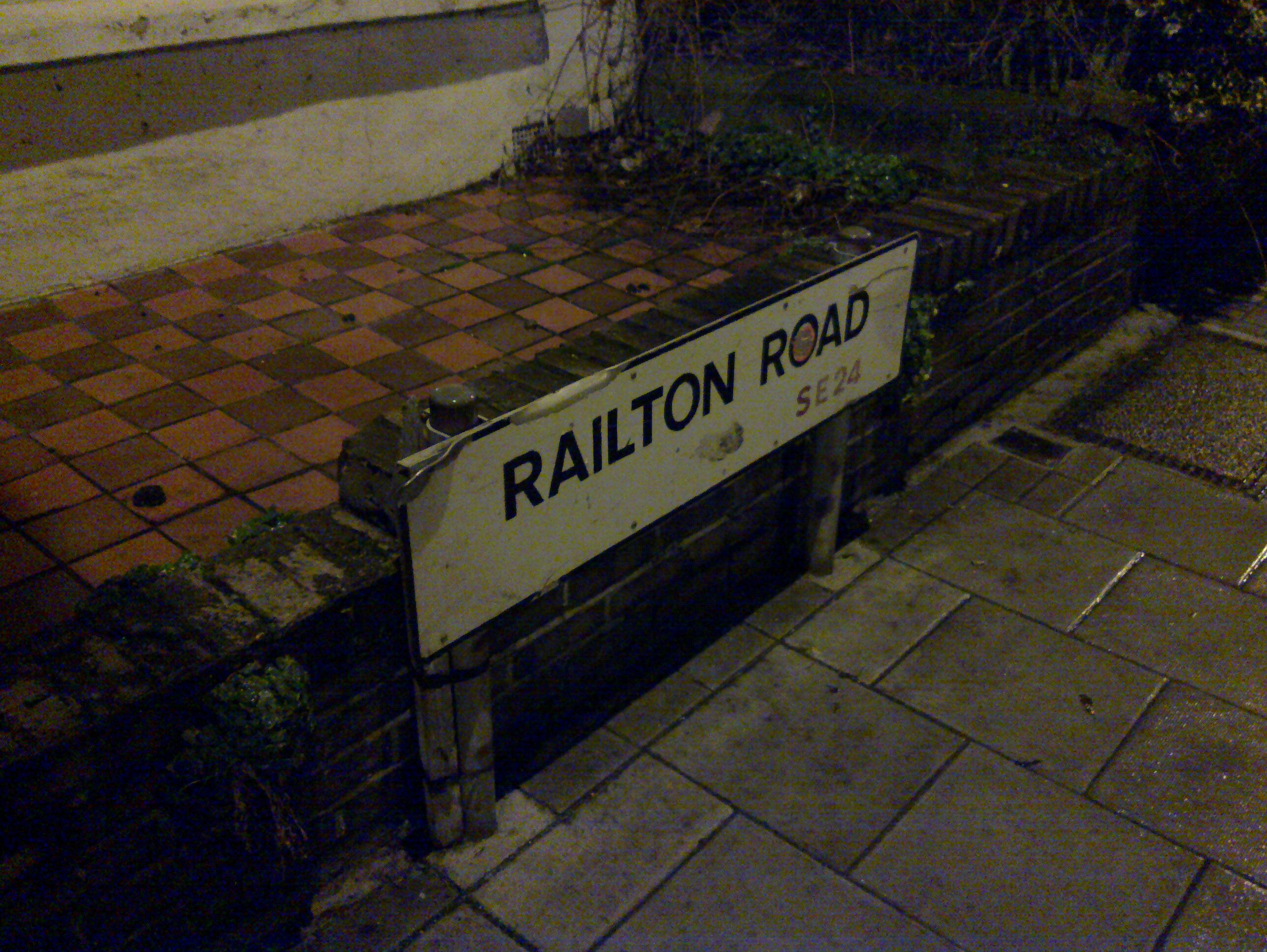
Wednesday evening, after work, I took a taxi to 198 Railton Road, home to 198 Contemporary Arts and Learning. A few days earlier I had received an invitation to the preview of its new exhibition of photographs by Eva Sajovic, the Slovenian artist I have blogged about previously.

To call 198 a gallery is to do it a disservice. Rather, it describes itself in the following way:

“198 is a pre-eminent cultural space in Brixton, which explores the rich diversity of artistic practices informed by globalisation and emerging cultural identities.”

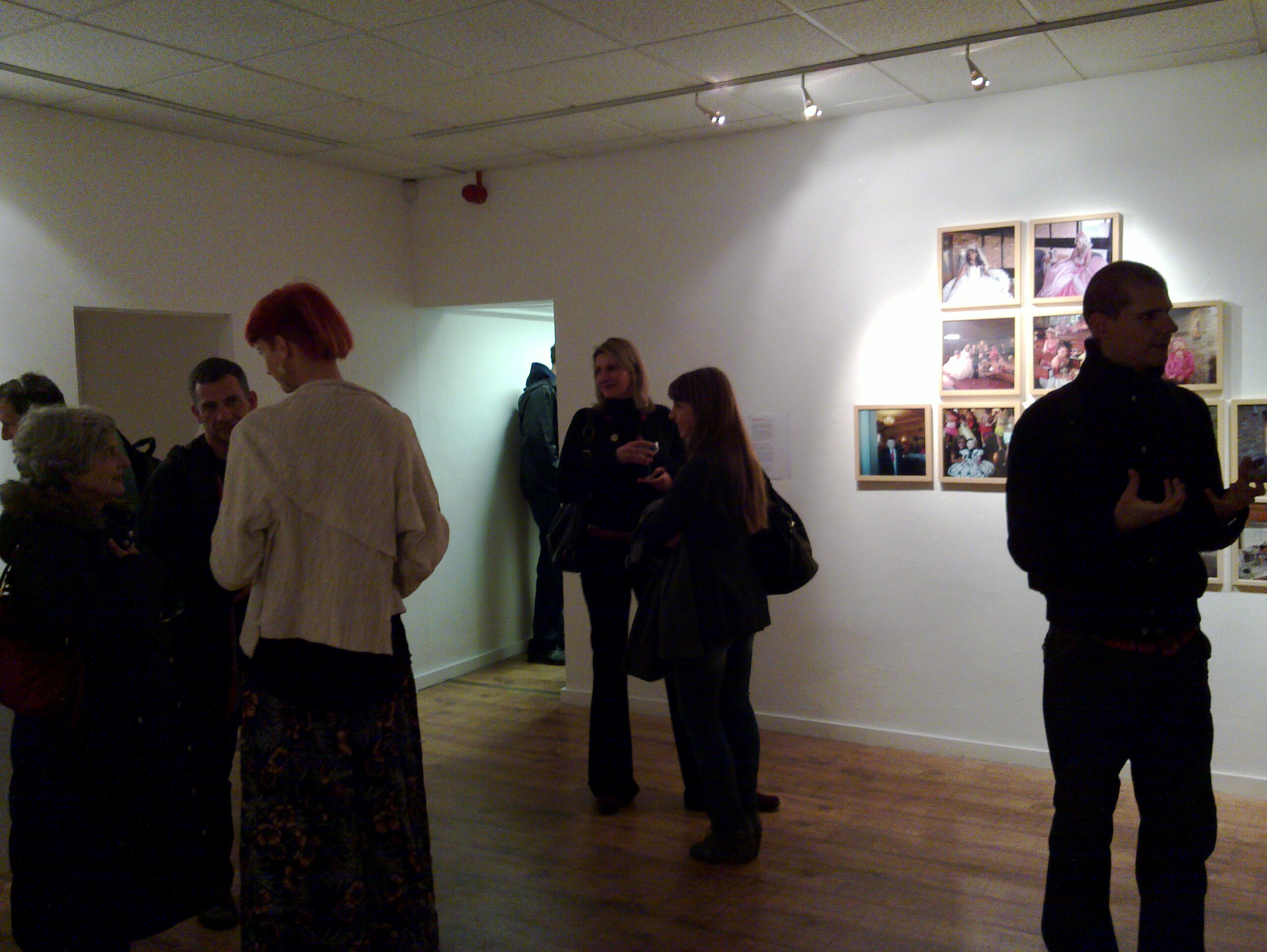
Sajovic’s exhibition, focused as it is on the experiences of Gypsies, Roma and Travellers in the United Kingdom, Italy and Slovenia, could not find a more appropriate home. The minimalist, white-washed lines of the 198 are the perfect contrast with Sajovic’s vibrant pictures that capture the raw and sometimes confused emotions that arise at the intersection of diverse migratory cultures and the settled community. Perhaps most humbling is the sheer force of will required by Gypsies, Roma and Travellers to maintain their traditions and social structures in the face of overwhelming hostility, mistrust and misrepresentation. As Sajovic’s pictures, and their accompanying stories remind us, the persecution of difference is as great today as ever it was – the UK, Italy and Slovenia representative of European societies where society appears to deem it acceptable to discriminate against travelling communities in a way that it would not contemplate with those from other minorities.

Eva Sajovic's “Be-Longing” at the 198

Eva Sajovic's “Be-Longing” at the 198

For me, talking to two Travellers living in Southwark, the greatest irony is that the value that drives them to maintain their traditions above any other is the same as that of their fiercest conservative critics: family. It is the belief in inter-generational support, of the transmission of knowledge and tradition from one generation to another, that creates the tremendous familial bonds in travelling communities. How sad it is that as the settled community laments the loss of that ideal, the communities that are the object of so much of its hatred earn that ire as a consequence of living out that same ideal. Sajovic spoke movingly of the warmth and generosity with which she was received upon gaining the trust of the communities she worked with. For me it all gives Matthew 7 a very modern context:

“Do not judge others, and you will not be judged. For you will be treated as you treat others. The standard you use in judging is the standard by which you will be judged. And why worry about a speck in your friend’s eye when you have a log in your own? How can you think of saying to your friend, ‘Let me help you get rid of that speck in your eye,’ when you can’t see past the log in your own eye? Hypocrite! First get rid of the log in your own eye; then you will see well enough to deal with the speck in your friend’s eye.”

Matthew 7, 1-5, New Living Translation

An exhibition of photographers of travelling communities may not be the first thing that comes to mind when thinking how to spend a couple of hours of an evening. However, this initiative represents another small but very important step in helping to foster understanding between settled and travelling traditions that are steeped in a mutual suspicion that is centuries-old. Be adventurous and give it a go – and see something special from an exciting new talent.

And enjoy Brixton and the 198.

Add to FacebookAdd to DiggAdd to Del.icio.usAdd to StumbleuponAdd to RedditAdd to BlinklistAdd to TwitterAdd to TechnoratiAdd to Yahoo BuzzAdd to Newsvine

“The Power of Creativity”: Lib Dems launch arts vision paper #libdems #arts

On December 15 2008 Nick Clegg delivered a speech to the think tank Demos entitled “Why I am a Liberal”. It was both passionate and philosophical, a very personal evocation of liberalism that captures the essence of political empowerment:

“A Liberal believes in the raucous, unpredictable capacity of people to take decisions about their own lives… A Liberal believes a progressive society is distinguished by aspiration, creativity and non-conformity.”

Today, Don Foster MP, the Liberal Democrats Shadow Secretary of State for Culture, Media and Sport, launched “The Power of Creativity” – a vision document for the arts that translates Liberal ideals into political commitments, policies and aspirations.

As the document highlights, the first Chairman of the Arts Council was John Maynard Keynes, the noted economist and lifelong member of the Liberal Party. He set out a clear mission for the Arts Council:

“The purpose of the Arts Council of Great Britain is to create an environment, to breed a spirit, to cultivate an opinion, to offer a stimulus to such purpose that the artist and the public can each sustain and live on the other in that union which has occasionally existed in the past at the great ages of a communal civilised life.”

In the current political and economic climate, funding, innovation, local support and creative risk-taking are all in jeopardy.  Our own experience in Basildon, with “The Woodsman”, “Progression” and The Wat Tyler Sculpture Trail are testimony to the low priority that the arts receive in terms of support from local government, particularly where politicans are obsessed with enormous capital projects to cement their political legacy. Foster’s paper seeks to sustain Keyne’s original and Liberal vision for the arts in these more uncertain times.

Add to FacebookAdd to DiggAdd to Del.icio.usAdd to StumbleuponAdd to RedditAdd to BlinklistAdd to TwitterAdd to TechnoratiAdd to Yahoo BuzzAdd to Newsvine

“The Woodsman” – Basildon Community Video Club’s video story (now on DVD) #woodsman

A reader has been in touch to explain that the “Basildon Community Video Club” produced a video recording the story of the tree which was used by Dave Chapple to produce his sculpture “The Woodsman”. Filmed during 1995, the 20 minute documentary shows Dave Chapple at work creating the statue of “The Woodsman” from the trunk of a fallen tree from Langdon Hills.

The Essex Media Workshop based in Parkside, Pitsea, has now transferred the original VHS tape onto DVD. I have been in touch with them and those who would like to see the story of how “The Woodsman” was made can purchase a copy. The Essex Media Workshop are a registered charity in England and Wales that specialises in helping charity groups and disabled organisations realise their video projects. Any proceeds from the DVD will help them continue the valuable work they do with all manner of vountary groups.

The video of “The Woodsman” being carved is available from: Essex Media Workshop, Parkside, Basildon, SS13 1NL.

The price is £4 (or £5 inclusive of post and packing).

Please order via Andy Alexander at the Essex Media Workshop, Tel. 01268 555 771 or via e-mail at andy@essexmediaworkshop.co.uk

“Progression”: ‘extraordinary attitudes’ that did for “The Woodsman”? #woodsman

Following my post on “Progression” and “The Woodsman” I made contact with the artist Michael Condron, the sculptor commissioned by Basildon Council to make “Progression”. I thought it courteous to draw his attention to the fact I was blogging about his work. His response – which he is happy for me to share – is an extraordinary and depressing indictment of the lack of courtesy and general ignorance of Basildon Council (and by extension its Conservative administration) in its dealings with artists and issues of public art:

“The attitude Basildon DC has shown towards it’s public art is pretty extraordinary, and fortunately not the kind of behaviour I’ve come across elsewhere.

The relocation of my Progression sculpture was not something I was consulted on.  Whilst I’m not entirely happy with the new situation, it is better than the artwork rotting in a storage yard somewhere.

You mentioned NYC’s percent for art programme in the blog, and I wonder if you’re aware that Essex County Council also has a percent for art policy.  Many commissions have been funded by developers through “section 106” planning requirements, including my recent Life Cycle installation at Hanningfield reservoir.

Generally speaking public art is vibrant in Essex!”

What is particularly depressing is that, whilst Basildon’s Conservatives neglect and rip out our public art, the record of Essex County Council, another Conservative administration, is a national leader when it comes to supporting public art. As Condron notes, Essex does indeed operate a percent policy for art. Art in the Open singles out Essex as its case study for best practice in “embedding public art within Council-led capital projects”. The page on commissioning guidance states:

“Essex County Council (ECC) has been commissioning art in the public realm as part of its Capital Development Programme and Essex Design Initiative for many years.  It was the first County Council to develop and adopt the principle of a public art policy in the late 1980s.  In 2002 it adopted a Percent for Art policy and, more recently, has developed a central budgeting process to create a new fund, the Public Art Common Fund, that draws money directly from ECC’s capital programmes budget, enabling the public arts team to plan longer term.  This has lead to the development of a three-year programme of more substantial commissions under the banner of ‘Genius Loci’ (‘Spirit of Place’).  These commissions are predominantly permanent but also include some temporary work to help highlight and pave the way for the permanent.”

What’s more, Essex demonstrates that it truly understands the purpose of public art:

“ECC seeks to commission art in the public realm to:

  • Improve the aesthetics of the built environment
  • Enhance a sense of community and place
  • Foster community pride and ownership
  • Celebrate artistic achievement
  • Reflect a ‘spirit of place’”

To demonstrate how serious Essex is about supporting public art, Art in the Open explains how the County Council organises the staff that support public art:

“ECC believes in an embedded and informed approach to commissioning art in the public realm.  It runs workshops and organises study trips to support internal development and understanding; the public art team sits within the built environment department, ensuring a close working relationship across planning and development teams; a Public Art Strategy Group, chaired by a cabinet member and including officers from across the council, helps keep an informed overview; occasionally, external organisations are brought in to provide additional commissioning support.”

And the big question in local government is always the money:

“Funding streams:

  • Percent for Art: up to 1 per cent of almost all capital builds across the council. This has been consolidated for 2007-2010 as the Public Art Common Fund where 0.74 per cent, £2.14 million, has been designate for Genius Loci. The continuation of the Common Fund beyond 2010 is subject to approval by the Council and is depended on a successful bid from the Public Art Team.
  • Money can also be brought in through section 106 (however, this mechanism is dependent on the policy of the local planning authority not the County Council).”

To be honest, it is a pretty extraordinary commitment from a local authority and I applaud Essex’s seriousness in making public art accessible and relevant – not shoved away in corners as museum pieces to be visited.

So why is it, with such a leading example so politically and geographically close to home, that Basildon’s Conservative Party acts like a Neanderthal collective when it comes to  public art? I can’t answer that. However, I can only think that the “pretty extraordinary” attitude identified by Condron was a principal contributing factor to the appalling ruin of “The Woodsman”.

Add to FacebookAdd to DiggAdd to Del.icio.usAdd to StumbleuponAdd to RedditAdd to BlinklistAdd to TwitterAdd to TechnoratiAdd to Yahoo BuzzAdd to Newsvine

Cultural vandals: Basildon’s Tories tear up the national motorboat collection as the Motorboat Museum is closed #toryfail #basildon

In yet another display of cultural vandalism, Basildon’s Tories have torn up the national motorboat collection, following their closure of the nation’s Motorboat Museum so it can be converted into a “green” centre. To give you an idea of the collection’s significance, here is an excerpt from the note on the website about it:

“The Motorboat Museum has been Britain’s leading authority on sporting and leisure motorboats since its creation in 1986.

Many record breakers and rare examples of boats, inboard and outboard motors are housed in the Museum. There is also an extensive collection of historic replica models and memorabilia.

The comprehensive library holds books, magazines and plans dating back to the 1890s. The library is open for use by researchers by appointment only. Enquiries can also be made through the post.”

The museum’s website says the following:

“We’re sorry to announce that the Motorboat Museum is closing down as of 4th December 2009.

Due to large scale refurbishment of the building housing the Motorboat Museum, it is necessary to close the Motorboat Museum and repatriate the collection.”

Back in November, The Echo ran a story on with the headline £1m green centre to open on site of boat museum. In that article, there is a reference to the Council’s postition:

“It would see half of the existing motorboat museum transformed into the new green museum by Spring 2011.

The other half will go out to lease, but could still remain as a venue for powerboat enthusiasts if an interested party comes forward to take over the running from Basildon Council.

Although planning is still in the early stages, it could also house historical artefacts and other items of interest.”

The article concludes:

“The council stressed all options were still open regarding the remainder of the motorboat museum, which is now only visited by about 10 per cent of visitors to the park annually.”

On the 12th November, Cabinet met and agreed to take further funding from the Department for Communities and Local Government under its Parklands Initiative. (I sit on Cabinet but, detained at work, missed the first items on the agenda, including this one. You can see from the voting record at the back of the minutes.) The report to Cabinet states:

“The second phase of funding will develop part of the Motorboat Museum to create a new community facility that provides education on the environment and the reduction of carbon.”

As this was an extensive redevelopment, you would expect it to close to the public for some time – and for the collection to be temporarily relocated.

So to recap…

On 9 November The Echo runs a story saying it could close.

On 12 November Cabinet meets and paves the way for the museum’s closure to permit the works at Wat Tyler.

On 4 December or before, the  Motorboat Museum posts a story on its website saying that as of 4 December the Motorboat Museum is to be closed and its collection repatriated.

Look again at that press comment. It is written in the clever spin-speak you come to expect of politicians and bureaucrats who want you to reach their conclusion: “now only visited by about 10 per cent of visitors to the park annually”. It is the language of minimisation, when you want to make something less significant.

But remember what Councillor Horgan said of “The Woodsman” and Wat Tyler Park? It bears repeating:

“The woodsman is a well loved piece of public art, and we believe that a new home at Wat Tyler Country Park is more suitable and appropriate, where he will be appreciated by the hundreds of thousands of people that visit the park each year.”

Note the figure: hundreds of thousands. Ten percent of hundreds of thousands means that the Motorboat Museum was being visited by tens of thousands of people annually. A rather more impressive figure than we are led to believe by the figure of ten percent. Indeed, the Cabinet report of 12 November is very specific about Wat Tyler’s projected visitors: numbers are projected to increase to 450,000 in two years. That means that the Council are acknowledging that the museum would receive 45,000 visitors a year in the next two years.

I don’t think 45,000 visitors is an insignificant number for a museum that I doubt has been widely promoted in recent years. (If you have time, the Cabinet report is worth a read – it is riddled with contradictions which it has been suggested to me is the product of repeated redrafting and editing.)

The Motorboat Museum is a registered museum with the Museums, Libraries and Archives Council. As such, upon closure, certain protocols have to be followed to ensure that the collection is properly dispersed (I am not certain, but I presume that this is so that items in the collection can be traced). I have seen correspondence which reassures me that those protocols are being followed. However, the fact remains that the collection as was is no longer intact and a sizeable number of the boats have already been relocated.

Personally, I don’t believe the Council has invested any serious effort in maintaining the integrity of the collection. I have nothing against taking funding from Government for a new green education centre. However, if the Council were bothered enough, they could have sought to preserve this nationally significant collection. I think that when the meeting was held on 12 November, the decision had already been taken privately by administration councillors that they were no longer interested in the Motorboat Museum. They wanted to be rid of it – and the “hassle” of looking after its collection. If I am wrong, and I hope I am, then we will see plans coming forward to preserve and display the remaining boats. After all, all options are still open. Or were.

For once, Basildon was able to lay claim to providing a home to a nationally significant collection (if you Google “”motorboat museum” basildon” you get over 8,000 hits). The Motorboat Museum was a landmark institution – and I don’t recall Basildon Council Tax payers being consulted as to whether Basildon should continue to provide that home.

Irrespective of local people’s views, the fact is Basildon no longer is.

Once again, the Tories have demonstrated their complete contempt for our local and national heritage – and taken us all for suckers.

Add to FacebookAdd to DiggAdd to Del.icio.usAdd to StumbleuponAdd to RedditAdd to BlinklistAdd to TwitterAdd to TechnoratiAdd to Yahoo BuzzAdd to Newsvine