Population 51,201 and Waldo the bird is dead… It is gloriously bonkers and I am glad to be back home

“The owls are not what they seem…”

I remember it vividly.

1990 and Twin Peaks had been the subject of fevered classroom conversation for weeks. There had been teasers and trailers. Deliciously, it was airing on BBC2. Mark and I were in our final year of sixth form, enjoying a friendship that had been long in the making: a knowledge of each other in primary school refined by the ruin of other friendships in secondary school and a discovery of shared interests in gaming and cards and quirky television.

Twin Peaks, the product of the warped creative genius of David Lynch and Mark Frost, was unlike anything else that had been on television. It was the 1990s and it was the first decade I felt I could truly own, really aware of the music and film and television informing the media culture we were growing up in. It was also the last Century of a dying Millennium and somehow the dark weirdness of Twin Peaks seemed utterly appropriate. And from the slow motion opening credits, accompanied by Angelo Badalamenti’s haunting score, I knew we were hooked.

The murder of Laura Palmer – and the seductive overtures of Sherilyn Fenn’s Audrey Horne – would overshadow our final school days.

That all seems a long time ago now and in the intervening years I forgot the specific qualities that made Twin Peaks uniquely brilliant. More sadly, friendships faded and with them the remembrance of things that made them live so vividly at the time.

Then, several years back I spotted Twin Peaks on DVD.

I couldn’t resist. I wanted to know if it had stood the test of time. And I wasn’t disappointed.

Like the very best wine and the very best whisky it had improved. In an almost Lynchian way, it didn’t feel dated – perhaps because so many of the usual markers that age television of a period (technology, city fashions etc) are absent. Instead it was fresh and provocative. And, once again, Twin Peaks accompanied the transformation of a relationship – this time in a very much better direction.

Having previously watched the whole of Sex and the City back to back with Em, Twin Peaks was always going to be something of a contrast. However, we were immediately immersed in Lynch’s mischievous and murderously dark envisioning, lapping up Agent Cooper’s humorous musings, Audrey Horne’s sensuous teasings and hankering after a mug of “damn fine coffee” and a slice of cherry pie.

Lynch is one of our favourite directors.

Even at his most disturbing, there is something shockingly honest about his camera and what it sees. Wild at Heart is one of the films that sticks most in my memory, my Midnight Cowboy or  The Graduate, seeing it for the first time after I moved away from home to begin my studies in Hull. Nicolas Cage and Laura Dern give two career-defining performances in this twisted celluloid nightmare that somehow veers just the right side of kitsch, ricocheting through the violent badlands of an America that is only equalled by that of Quentin Tarantino and Oliver Stone in its capacity for brutality. IMDb has a long list of film trivia that is testament to the influences on Lynch and which he recognises in Twin Peaks through wry asides and visual tributes.

Em loved it.

And we both shared the same enormous frustration at learning that the release of Series Two had been held up by legal wranglings. I was particularly keen to get hold of it as I had – have – seen every episode except the very last. Mark never spoiled it for me and I don’t know to this day how the series resolved.

On several consecutive August excursions to Cornwall we asked the guy in Moods and Visions, in Falmouth’s George’s Arcade, if it had been released. We always left empty-handed, wondering if we would ever get to sit down with Coop again.

Then, quite by chance, walking past Basildon’s HMV just last week, I saw it.

Series Two.

Tonight we went back to Twin Peaks and picked up where we left off. It is gloriously bonkers and I am glad to be back home.

Buy it. Watch it.

Enjoy it for the uniquely brilliant piece of extended television theatre it is.

And just in case you are reading, Mark, here’s another little reminder of 1990…

Add to FacebookAdd to DiggAdd to Del.icio.usAdd to StumbleuponAdd to RedditAdd to BlinklistAdd to TwitterAdd to TechnoratiAdd to Yahoo BuzzAdd to Newsvine

Boys, Beer, Birds and Bingley: the randomness of a perfect afternoon

The White Lion, Fobbing

I meant to write this some days ago, but I am discovering that work is eating the hours as never before. It’s not only when you are having fun that time flies…

But last Sunday afternoon was perfect for late March. I spent the best of it at The White Lion in Fobbing, drinking jars of ale with my cousin and enjoying bright sunshine, being the only two sitting out in the garden. There was something timeless about enjoying a beer, surrounded by violets, the stone tower of the church behind us and it was impossible not to feel the history.

We were joined on the bench by a craggy wildfowler and the conversation turned to trees and birds, the durability of fence posts hewn from different hard woods and a reassuringly rural challenge to burn chestnut without it spitting (apparently if it is seasoned after a natural dead fall it doesn’t – in any other circumstances it does). So very good to be reminded that there are still folk around who really do understand the way in which our lives are bound up with the countryside – and not in a soppy, sentimental way, but one that recognises the co-dependence of different habitats. It’s not many afternoons that I get to discuss the impact of plastic fascia boards on the nesting potential of houses and their contribution to declining garden bird populations. We left giving merry assurances to investigate the re-siting of owl boxes.

I then went to his parents to collect a book by local historian Randal Bingley. In return for ten pounds I received a copy of Behold The Painful Plough, Country Life in West Tilbury, Essex 1700-1850. (For those interested in obtaining a copy, drop me an email or contact Thurrock Museum Services who singularly fail to promote this brilliant book – which they publish: ISBN 0-9506141-8-1.) I was gobsmacked to arrive and find Randal Bingley there, drinking tea at a picnic bench under an apple tree, and talking about political anscestry with my uncle. We joined them and spent a pleasant hour discussing the value of the written record, the folly of reliance on digital information, East Tilbury’s Bata shoe factory and Sir Peter Scott on Nature Parliament, part of Children’s Hour.

It was wonderful and random.

As life should be.

Add to FacebookAdd to DiggAdd to Del.icio.usAdd to StumbleuponAdd to RedditAdd to BlinklistAdd to TwitterAdd to TechnoratiAdd to Yahoo BuzzAdd to Newsvine

A familiar ache… And so a ranger prepares to return to Norrath #eq2

“He is as Autumn shadows, stealing soundlessly beneath the vaulted arches of the Moon-burnt sky, the deadly promise of a winter’s blade in the dark watches of the night. Relentlessly he pursues Her. Defiantly he loves Her.”

Keredh Windryder, Ranger

Gaming is either something you get or something you don’t.

For some of us, the prospect of immersing ourselves in the LCD glow of a world constructed from bits and bytes sets our pulses racing. Our imaginations can spend all day rehearsing the moment we turn the lights off and sit down to lead our friends and guild-mates into battle.

For the rest, the prospect leaves them cold. The world of the geek gamer is a dark and alien place, strewn with the detritus of a life lived online:  cans of coke, empty coffee mugs with a crusted sediment deep inside, discarded crisp packets and sweet wrappers – and the musty – occasionally rancid – smell of immobile, sleepless concentration.

I suspect most of my family, friends and colleagues fall into this latter category, bemused at the hours of life that Em and I can spend in these virtual worlds, each with its own lexicon, politics and social mores.

Computer gaming, though, has been a huge part of my life for almost thirty years.

As technology has developed, so the boundaries between real life and virtual life have shifted and blurred. Sometimes this has had catastrophic personal consequences – and on other occasions it has resulted in moments of sheer serendipity. I can honestly say that gaming, specifically the two incarnations of Everquest, has impacted my life in far more significant ways than I could have ever envisaged.

More on that another time, perhaps.

So it was today, sitting at work, that I felt a familiar ache. A longing for a place I know better than the back of my hand. A place that most script kiddies and World of Warcraft fanbois have never known – but a place that makes Azeroth look as exciting as Tellytubby land.

Norrath.

Sony’s Everquest is the Great Granddaddy of Massively Multiplayer Online Roleplaying Games (MMORPGs). Everquest 2 is its electrifying reinvention.

On and off for the last seven years, Everquest (Everquest 2 for me these days) has been a way of escaping from the stresses and strains of an exhausting day. But how did I reach a point in life where I can see a point to investing hours in the development, customisation and manipulation of a virtual avatar, a wood-elf ranger that specialises in striking down his enemies with a blow from the shadows or a bow-strike inflicting massive damage from afar? (And believe me,  I can!)

That is a story that takes me from Mazogs on the ZX-81 in 1982, to Sentinel of Fate, the latest EQ2 expansion, in 2010. In an occasional series of pieces in the coming weeks I will explore that story. I want to reflect on the friendships forged in huddled hours around the screen – and remember the computers and the games that have given me so many fond memories.

In the meantime, take a look at where it started in 1982:

And see where that story is now in 2010:

Add to FacebookAdd to DiggAdd to Del.icio.usAdd to StumbleuponAdd to RedditAdd to BlinklistAdd to TwitterAdd to TechnoratiAdd to Yahoo BuzzAdd to Newsvine

Amiga nostalgia – one for Stringbean if he’s reading… #amiga

So there I am, thinking about a post I want to write on my imminent return to Everquest 2, when absent Googling throws up this little gem. 100 Amiga games in ten minutes. What a trip down memory lane!

Add to FacebookAdd to DiggAdd to Del.icio.usAdd to StumbleuponAdd to RedditAdd to BlinklistAdd to TwitterAdd to TechnoratiAdd to Yahoo BuzzAdd to Newsvine

The Motorboat Museum – pictures from the past #toryfail

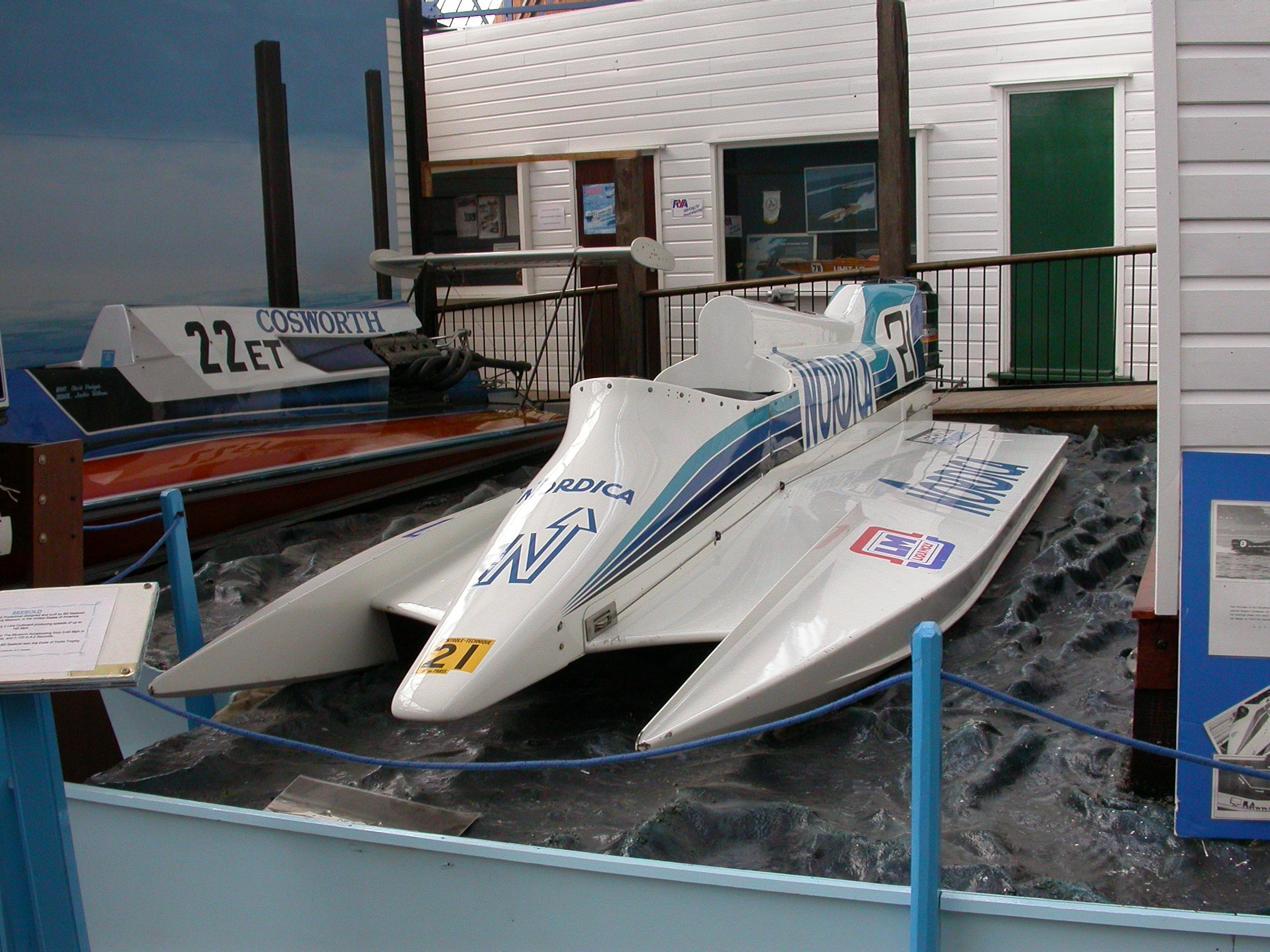
I’ve not heard any news regarding progress on rehousing the collection of rare boats formerly stored at the Motorboat Museum in Wat Tyler Country Park. However, a friend has sent me three pictures of some of the magnificent boats once displayed there.

Closing down the museum was an act of cultural vandalism – something that Basildon’s Conservative Party seem prone to.

Enjoy the pictures – and if you have any more, please send them through.

Add to FacebookAdd to DiggAdd to Del.icio.usAdd to StumbleuponAdd to RedditAdd to BlinklistAdd to TwitterAdd to TechnoratiAdd to Yahoo BuzzAdd to Newsvine

Cold war ghosts: legacies in concrete and film

At dinner last night, we talked about the way that the experience of war imprints itself on the experiences of individuals and societies differently, according to the war and the immediacy of its domestic impact.

Reflecting on that conversation, it struck me that growing up with the threat of Mutually Assured Destruction hanging over us left its own imprints. Less immediately dramatic, perhaps, than the years of evacuation, rationing and lights out of World War Two, but no less terrifying in its own insidious way, the Cold War offered plenty of sleepless nights to this over-active imagination.

I remember panicking when we were told that total annihilation was just four minutes away. Whenever the sirens were tested I found myself wondering if the radar I now know was based at Jodrel Bank had picked up inbound enemy missiles that would destroy my school and my family and the small world of Langdon Hills that I inhabited. I imagined Soviet tanks trundling through my childhood stamping ground of the Fränkische Schweiz and rolling across Western Europe, destroying everything in their path.

Television films like Threads and the Day After depicted the horrors of a nuclear Armageddon in chilling detail. I remember lying awake for nights, terrified of what would happen.

I also remember taking the bus to Romford to see Rocky IV in 1985 and being reassured that we would always beat the bad guys. How could we not be? Our plucky little hero was avenging his friend’s death and completed his training montage in the frozen Russian countryside with just a few logs at his disposal.

Drago on the other hand, his giant of an opponent, was wired up to the most sophisticated computers and pumped full of steroids – yet our man still triumphed and, in doing so, won the admiration of the Russian President.

Gloriously awful nonsense, but now, looking back, the parameters seem so much safer. In much the way that my father’s grandparents reflected on the unique camaraderie of the Second World War, the sense of social obligation and national community, I catch myself thinking back fondly to the geo-strategic certainty of a time when two superpowers leaned in on each other. The USA and the USSR were the hammer-beam roof of our geo-politics, creaking and immobile under the weight of their respective nuclear edifices.

In this changed world of terrorist cells, underground bombers, dirty bombs and cyber-warfare, such certainty seems oddly nostalgic. For me, that surreal stalemate of infinite nuclear escalation has woven itself into the fabric of memory, mischievously tangling itself with normative childhood archetypes of safety, and I find myself prompted to rueful reflection by the architecture of redundant physical structures or the clumsily amateurish animation of public information broadcasts.

They each harbour the childhood ghosts of lingering summers spent wondering on the end of the world.

The Nuclear Bunker at Kelvedon Hatch is a local example of such a building. I find a certain poignancy in the way that this extraordinary structure, disguised beneath a simple cottage and chillingly significant in its original purpose, has been reduced to such a level that it can now be hired out for parties. If you click the picture below you might see what I mean in the gallery that I have pulled together on Flickr.

Kelvedon Hatch Nuclear Bunker

In a similar way, the series of Protect and Survive public information films retain their ability to shock, despite their amateurishness. I still wonder if hiding under some doors and suitcases would ensure my survival in the event of a nuclear strike.

But perhaps the greatest reminder that this period in our history is dead and gone is the strange news that Latvia recently sold Skrunda, an entire Soviet-era town, now completely deserted. Click on the photo below and you will be transported to an eerie gallery on Flickr that paints a haunting picture of decaying urban sprawl  – its architecture, posters and purpose abandoned to the past.

skrunda

Here the ghosts of my childhood nightmares can still play amongst the radar stations and the tower blocks and the crumbling, brick-strewn classrooms.

Add to FacebookAdd to DiggAdd to Del.icio.usAdd to StumbleuponAdd to RedditAdd to BlinklistAdd to TwitterAdd to TechnoratiAdd to Yahoo BuzzAdd to Newsvine

In defence of Neanderthals: a reader writes

In my recent post ““Progression”: ‘extraordinary attitudes’ that did for “The Woodsman”?” I questioned why “Basildon’s Conservative Party acts like a Neanderthal collective when it comes to  public art?”

This prompted one irritated reader to point out by email that this comparator was unfair to Neanderthals. As I explained in my response, I had actually worried about that myself, but decided that, on balance – and after a careful read of Wikipedia on the subject of the Neanderthal the issue of artistic activity in Neanderthal society is still significantly contested enough for me to err on the side of cliché.

However, upon reflection, the fact that it is even contested suggests the possibility of its existence in Neanderthal society in a way that could not possibly be true of Basildon’s Conservative Party.

Read for yourselves:

“How dare you make such allegations in your Blog!

I refer to your posting of 3rd February in which you liken the Basildon Conservative party to a Neanderthal collective.

I speak on behalf of that extinct community which continues to receive a negative image as a result of ill-considered remarks such as yours. For many years Neanderthals have been treated as sub-human simply because of the physical appearance of their skull. For years they were thought to be stupid and dumb as no hyoid bone had ever been found, indicating that they had vocal chords. And then twenty years ago, in 1989, a Neanderthal skeleton was found with the hyoid bone intact, and suddenly anthropologists deigned to grant the Neanderthals the power of speech – but they were still considered to be ignorant.

The trouble is that time has a strange effect on artefacts, and Neanderthal artefacts are 50,000 – 60,000 years old. Some years ago a carved bone was found in a Neanderthal cave. And last month there was the discovery of Neanderthal “make-up” artefacts in southern Spain suggested that they were “capable of symbolic thinking”.

It seems that we started off with a negative image of the Neanderthal and only concede that they have positive aspects when there is archaeological proof. I believe that Homo neanderthalensis was as civilized and cultured as the Homo erectus of 50,000 years ago. At least the Neanderthal’s left some artefacts behind by which we can judge them. The way the Basildon Conservative party is going, there will be nothing left of Basildon’s culture 50,000 years hence!

May I therefore request that when seeking a comparator in future, you do not impugn the reputation of the Neanderthals by associating them with the Basildon Conservative Party.”

However tongue-in-cheek it might sound, the point is a valid one. As the BBC is demonstrating in conjunction with the British Museum (see “A History of the World in Objects – a brilliant idea from the BBC”), our history is told through ordinary objects. We regularly impune Neanderthals for a lack of sophistication, based on little more than cartoon caricature and a lack of physical evidence.

Read more on the story of the Neanderthal ‘make-up’ containers.

Read more on the story of the discovery of the Neanderthal ‘face’.

Prehistoric art is a subject I’ll return to at a future date. In the meantime, suggestions for a more appropriate comparator to Basildon’s Conservative Party would be welcome.

Add to FacebookAdd to DiggAdd to Del.icio.usAdd to StumbleuponAdd to RedditAdd to BlinklistAdd to TwitterAdd to TechnoratiAdd to Yahoo BuzzAdd to Newsvine

Cultural vandals: Basildon’s Tories tear up the national motorboat collection as the Motorboat Museum is closed #toryfail #basildon

In yet another display of cultural vandalism, Basildon’s Tories have torn up the national motorboat collection, following their closure of the nation’s Motorboat Museum so it can be converted into a “green” centre. To give you an idea of the collection’s significance, here is an excerpt from the note on the website about it:

“The Motorboat Museum has been Britain’s leading authority on sporting and leisure motorboats since its creation in 1986.

Many record breakers and rare examples of boats, inboard and outboard motors are housed in the Museum. There is also an extensive collection of historic replica models and memorabilia.

The comprehensive library holds books, magazines and plans dating back to the 1890s. The library is open for use by researchers by appointment only. Enquiries can also be made through the post.”

The museum’s website says the following:

“We’re sorry to announce that the Motorboat Museum is closing down as of 4th December 2009.

Due to large scale refurbishment of the building housing the Motorboat Museum, it is necessary to close the Motorboat Museum and repatriate the collection.”

Back in November, The Echo ran a story on with the headline £1m green centre to open on site of boat museum. In that article, there is a reference to the Council’s postition:

“It would see half of the existing motorboat museum transformed into the new green museum by Spring 2011.

The other half will go out to lease, but could still remain as a venue for powerboat enthusiasts if an interested party comes forward to take over the running from Basildon Council.

Although planning is still in the early stages, it could also house historical artefacts and other items of interest.”

The article concludes:

“The council stressed all options were still open regarding the remainder of the motorboat museum, which is now only visited by about 10 per cent of visitors to the park annually.”

On the 12th November, Cabinet met and agreed to take further funding from the Department for Communities and Local Government under its Parklands Initiative. (I sit on Cabinet but, detained at work, missed the first items on the agenda, including this one. You can see from the voting record at the back of the minutes.) The report to Cabinet states:

“The second phase of funding will develop part of the Motorboat Museum to create a new community facility that provides education on the environment and the reduction of carbon.”

As this was an extensive redevelopment, you would expect it to close to the public for some time – and for the collection to be temporarily relocated.

So to recap…

On 9 November The Echo runs a story saying it could close.

On 12 November Cabinet meets and paves the way for the museum’s closure to permit the works at Wat Tyler.

On 4 December or before, the  Motorboat Museum posts a story on its website saying that as of 4 December the Motorboat Museum is to be closed and its collection repatriated.

Look again at that press comment. It is written in the clever spin-speak you come to expect of politicians and bureaucrats who want you to reach their conclusion: “now only visited by about 10 per cent of visitors to the park annually”. It is the language of minimisation, when you want to make something less significant.

But remember what Councillor Horgan said of “The Woodsman” and Wat Tyler Park? It bears repeating:

“The woodsman is a well loved piece of public art, and we believe that a new home at Wat Tyler Country Park is more suitable and appropriate, where he will be appreciated by the hundreds of thousands of people that visit the park each year.”

Note the figure: hundreds of thousands. Ten percent of hundreds of thousands means that the Motorboat Museum was being visited by tens of thousands of people annually. A rather more impressive figure than we are led to believe by the figure of ten percent. Indeed, the Cabinet report of 12 November is very specific about Wat Tyler’s projected visitors: numbers are projected to increase to 450,000 in two years. That means that the Council are acknowledging that the museum would receive 45,000 visitors a year in the next two years.

I don’t think 45,000 visitors is an insignificant number for a museum that I doubt has been widely promoted in recent years. (If you have time, the Cabinet report is worth a read – it is riddled with contradictions which it has been suggested to me is the product of repeated redrafting and editing.)

The Motorboat Museum is a registered museum with the Museums, Libraries and Archives Council. As such, upon closure, certain protocols have to be followed to ensure that the collection is properly dispersed (I am not certain, but I presume that this is so that items in the collection can be traced). I have seen correspondence which reassures me that those protocols are being followed. However, the fact remains that the collection as was is no longer intact and a sizeable number of the boats have already been relocated.

Personally, I don’t believe the Council has invested any serious effort in maintaining the integrity of the collection. I have nothing against taking funding from Government for a new green education centre. However, if the Council were bothered enough, they could have sought to preserve this nationally significant collection. I think that when the meeting was held on 12 November, the decision had already been taken privately by administration councillors that they were no longer interested in the Motorboat Museum. They wanted to be rid of it – and the “hassle” of looking after its collection. If I am wrong, and I hope I am, then we will see plans coming forward to preserve and display the remaining boats. After all, all options are still open. Or were.

For once, Basildon was able to lay claim to providing a home to a nationally significant collection (if you Google “”motorboat museum” basildon” you get over 8,000 hits). The Motorboat Museum was a landmark institution – and I don’t recall Basildon Council Tax payers being consulted as to whether Basildon should continue to provide that home.

Irrespective of local people’s views, the fact is Basildon no longer is.

Once again, the Tories have demonstrated their complete contempt for our local and national heritage – and taken us all for suckers.

Add to FacebookAdd to DiggAdd to Del.icio.usAdd to StumbleuponAdd to RedditAdd to BlinklistAdd to TwitterAdd to TechnoratiAdd to Yahoo BuzzAdd to Newsvine

Lest we forget: Holocaust Memorial Day 2010 – The Legacy of Hope

It was more made more striking by its ordinariness: a standard-issue Council desk with a signing book and cheap pen placed neatly in the middle and little yellow booklets strewn about. The foyer of the BasCentre bustled, but the space around the table was poignantly empty. Sitting at the desk, words failed me and I was unsure what to write. Everything seemed trite – a sentiment that couldn’t reflect the sheer horror of the Holocaust, sanitised as it is through the combined filters of years and internet technology and information overload.

Yesterday was Holocaust Memorial Day. Visiting the site I discovered that I was the 34,127th person to light a virtual candle and become part of the Legacy of Hope. Each year, Holocaust Memorial Day (known this year as HMD2010”) identifies and develops a particular theme:

Holocaust survivors have played an immense role in bringing our attention to the lessons of the Holocaust. They speak of pain and loss, of strength and survival, of despair and their wish for a Legacy of Hope. They encourage us to look within and without, to be sure of our moral compass, to be certain of our choices and to use our voice, whenever we can, to speak out. They have translated difficult experiences to create a future that is free from the dangers of exclusion and persecution. They have passed a message of resilience and hope to the next generation.

Our responsibility is to remember those who were persecuted and murdered, because their lives were wasted. Our challenge is to make the experience and words of the victims and survivors of the Holocaust and subsequent genocides a meaningful part of our future. The aspirations of those who have suffered from the effects of the Holocaust and of genocide around the world, should inform our lives today. Their words can make us think about our own attitudes, our behaviour, our choices, the way we vote, the way we interact with one another, the way we respect and celebrate the differences between us and the way in which we build a safer future together. It is their example that can inspire us to greater action. We need to ask ourselves what we should be doing today to build a safer, stronger society so that the risk of the building blocks of genocide ever being laid is removed.

As humanitarian activist Hugo Slim says of the voices that speak out of tragedy to our shared sense of humanity: “We need to listen, for a change.”

Remembering is a responsibility on all of us.

It is too easy in this age of instant tragedy, when an earthquake or tsunami can be broadcast into our living room, to forget the sheer brutality we are capable of inflicting on each other as human beings. I saw the legacy of that insane cruelty in my recent work in Sierra Leone. According to the UNDP, Sierra Leone is the third poorest country in the world. I saw single, double, triple and quadruple amputees attempting to rebuild and live their lives alongside those who had perpetrated their agonies upon them in a vicious civil war.

The Holocaust is the ultimate manifestation of that evil that drives man to brutalise man.

To be honest, I struggle to get my head around the figures involved. Auschwitz-Birkenau was the largest Nazi killing camp, murdering approximately 1,100,000 men, women and children. In total, 6,000,000 Jews were murdered (almost two out of every three Jews in Europe), alongside 200,000 Roma and Sinti (Gypsies) and almost 250,000 mentally or physically disabled people. Tens of thousands of gay men and women, Jehovah’s Witnesses, intellectuals and political opponents were also murdered. They are the sort of stratospheric figures that become meaningless – and in that meaninglessness lies incredible danger.

Holocaust Memorial Day reminds us that genocide is not a thing of the past:

Genocide is with us today. It is another inconvenient truth that, in its hopeless enormity and our helpless inadequacy, we push uncomfortably from our minds.

In Nuremberg, in  Bavaria, the city closest to the village where I spent my first few years growing up, part of the monstrous unfinished remains of the Nazi Party’s Congress Hall (Kongresskalle) has been transformed into a museum of brutal truth: the The Documentation Center Nazi Party Rallying Grounds (Dokumentationszentrum Reichsparteitagsgelände). I have visited it three times and it has never failed to move me to tears. It tells the story of the rise of Adolph Hitler and the  Third Reich, the Holocaust, liberation and the Nuremberg trials. It does not flinch in admitting the culpability of the German nation in the Holocaust. It is a harrowing experience – but one that begins to make a dent in the inconceivability of such horror. Importantly, the centre serves as a reminder of the hatred and evil that was spawned in ordinary men and women on that very site.

It demonstrates, in terrifyingly precise detail, the truth in that phrase coined by Hannah Arendt: “The banality of evil”. (Her premise was, essentially, that it is ordinary people -not monsters – who are responsible for the greatest acts of evil in history. They accept what they are told by the state and so participate in even extreme acts because it is normal to do so.)

“First they came…” may be a poem that has become mired in controversy over its origins. However, whether they are the words of the Lutheran pastor Martin Niemöller or not, they contain a simple and uncomfortable truth about our preparedness to speak out in circumstances of right and wrong that we should all reflect upon. Read them again and think about them – not with the eyes of knowing, ironic commentators who might claim these words are the refuge of the lazy and clichéd, but as if you’re seeing them for the first time:

“First they came for the communists, and I did not speak out—because I was not a communist;
Then they came for the trade unionists, and I did not speak out—because I was not a trade unionist;
Then they came for the Jews, and I did not speak out—because I was not a Jew;
Then they came for me—and there was no one left to speak out.”

Add to FacebookAdd to DiggAdd to Del.icio.usAdd to StumbleuponAdd to RedditAdd to BlinklistAdd to TwitterAdd to TechnoratiAdd to Yahoo BuzzAdd to Newsvine

A History of the World in Objects – a brilliant idea from the BBC #bbc #history

As part of my recuperation I spent a morning out walking in the hills, enjoying the bleak beauty of the Langdon ridge in winter. As I tramped I listened to Radio 4 – a regular vice.

One of the programmes advertised was A History of the World in 100 Objects. Narrated by Neil MacGregor, director of the British Museum, it does as it says on the tin – tell our human history through the objects we have made. The reason it caught my ear was that the item being discussed was a Braille-related device, the operator explaining that it was virtually unchanged since the 1920s and offering the sentiment that it was unlikely that many people were using objects of such an age today.

An hour and a half earlier I had been speaking to a relative who had been working with machinery from the 19th Century – in an industry unchanged for hundreds of years (he produces the shallots for pipe organs – if you are lost as to what a shallot is, this page in Understanding the Pipe Organ might help!).

Both experiences prompted the (unoriginal!) thought that so much of our history is told in small, everyday ways. We’ve all got defining memories of ordinary objects, large and small, that have been part of our life story. The BBC’s programme, recounting our global history in such objects, is genius. Each programme is just fourteen minutes long. If you’ve missed them so far, you can catch up by listening to the podcasts on the BBC.

If you go to the page A History of the World, you can join in their project to tell a history of our world in objects, submitting your own entries.

The Sinclair ZX81 and Sinclair Spectrum for me I think!

Add to FacebookAdd to DiggAdd to Del.icio.usAdd to StumbleuponAdd to RedditAdd to BlinklistAdd to TwitterAdd to TechnoratiAdd to Yahoo BuzzAdd to Newsvine