This is why cats are cool

I’ve always liked cats.

I’m a fan of dogs, of course, but cats just do it for me with that slightly snide cunning, that sense that they really are the sharpest tools in the box. In that spirit, meet Kido – a very cool cat who plays a shell game and wins every time.

That said, I think mine would rip my throat out if I tried to get him to perform on camera…


Poem: The Beggar Girl

I often wonder in more generous moments if the colossal indifference we, as a society, show the homeless – particularly those forced to scavenge an existence from the streets – is because of the fear we experience in recognising that there is the finest line between the life we live and the life we could live if just one or two things changed.

We often fail to see the human being, with hopes, dreams and aspirations that now ekes out an existence on our streets. Somehow he or she is less than human. And sometimes we see the most violent reaction to a person asking for coin to survive. There is an automatic assumption that they are a scrounger or criminal, that they want the money for drink or drugs (and if they do, that in and of itself is a reason not to give them money). We are more comfortable with attaching a label.

I have struggled to reconcile street living with the values of a civilised society.

I still can’t make it fit.

The Beggar Girl

She appals and disgusts,

this beggar girl,

croaking and coughing

down on the pavement,

thin fingers

groping from her

nicotine threads,

a skin-sack of bones,

heaped in her corner,

trolling our evenings for

pity and silver.


She angers and provokes,

this beggar girl,

shaking and stinking

down on the pavement,

sunken eyes

searching from her

spit-stained hood,

like piss holes in snow,

dead in her skull,

jabbing our consciences with

hunger and shivers.


She defies and disturbs,

this beggar girl,

whining and weeping

down on the pavement,

once alive –

dancing with her

sister and friends,

swimming in an ocean,

eating floss in the wind,

imagining her future of

chances and lovers.


She confronts and questions,

this beggar girl,

pleading and praying

down on the pavement,

now dying –

tiring from our

fearful silence,

forgiving embarrassment,

appealing for release,

grasping her moments of

softness and giving.

Poem: A Cold Night

A Cold Night

This night is bitter –

like you.

With your words cracked

like ice.

With your smile sharp

like glass.

Ink and songs

like camphor.


I warm myself –

despite you.

With my tears spilled

like wine.

With my sighs soft

like rain.

Blood and dreams

like apples.

Strange natural phenomena: sinkholes

We often grumble about the potholes that seem to appear overnight. Water freezes into ice, placing stress on an already cracked pavement or road, and the chunks of surface between the cracks are dislodged. Rain washes away more and more and before long we realise that what was once just a small depression is now a ruddy great hole, in danger of ruining our bikes and cars. (Those – usually Lib Dems – with a greater than normal interest in them can read more about potholes.)

In some parts of the world, however, the potholes that vex County Councils and insurers across the country pale into insignificance. Sinkholes are of a very different order of magnitude. Once again, there is an interaction between water and minerals, but the result is of a wholly different order of magnitude.

One of the most shocking stories in recent years comes from Guatemala. For weeks local residents in Guatemala City had heard rumblings and had no idea what was causing them. Then, suddenly, in February 2007, the ground suddenly fell away 30 stories almost instantly. It is quite breath-taking, both in its geometry and scale, two dying and a thousand being evacuated.

I can’t imagine it. Going to bed one night, everything as you expect it, the next day seeing a hole in your back garden hundreds of feet deep. Somehow, we develop a sense that nature changes slowly. Sinkholes join earthquakes and other “sudden change” phenomena that somehow seem unnatural.

Guatemala City

Guatemala City

In Venezuela, there is a flat-topped mountain which is punctuated with the Sarisariñama holes, four sinkholes that are particularly beautiful to look at. Each is a self-contained eco-system, some supporting species found nowhere else on Earth.

The largest sinkhole is in Egypt, where the mindbogglingly large Qattara Depression is 80km wide by 120 km long. Unlike the Sarisariñama, the Qattara Depression is completely lifeless.

For more information, the Sinkhole Report logs new sinkholes in urban and natural settings. Below is a gallery of these strange, beautiful but terrifying phenomena.

And finally, and judging by its record with Essex potholes, I hope Essex County Council doesn’t have to deal with one of these any time soon.

This slideshow requires JavaScript.


The perils of GPS… In Belgium

I don’t drive but am fairly confident that, if I did, I would avoid this particular mistake. Even with a GPS…

Flanders News reports the rather amusing/alarming/entertaining case of a Belgian who, wanting to drive to Brussels, programmed her GPS and ended up in Zagreb:

The woman identified by Het Nieuwsblad as the 67-year-old Sabine Moureau told the paper: “I was absent-minded so I kept on putting my foot down.”

Sabine started her journey in Erquelinnes on the morning of last Saturday week. “I was going to pick up my friend in the Brussels North Station” she told the paper.

The journey should have taken just over an hour, but she ended up 1,450 km from her starting point.

Sabine continues her tale: “I switched on the GPS and punched in the address. Then I started out. My GPS seemed a bit wonky. It sent me on several diversions and that’s where it must have gone wrong.”

“I saw tons of different signposts, first in French, later in German, but I kept on driving.”

Sabine had to fill up twice and slept a few hours by the wayside, but claims she never really caught on to the fact that she might be on the wrong track.

“It was only when I ended up in Zagreb that I realised I was no longer in Belgium.”

Oops!

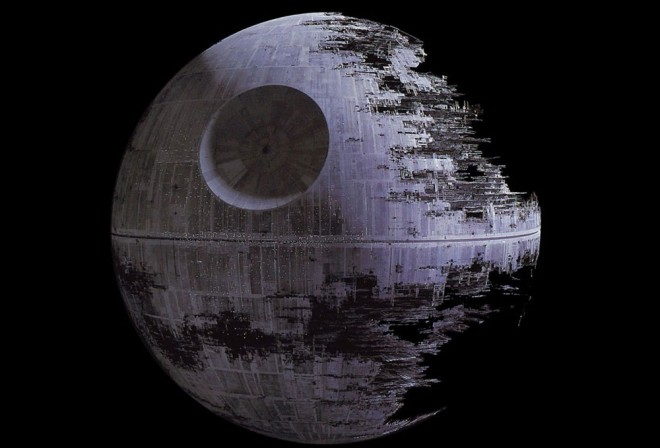
White House reassures Jedi with no to Death Star

death-star-660x448According to the last census (2011), there were still 176, 632 Jedi Knights in the United Kingdom.  As the Guardian reported, that represented a significant decline on 2001 when around 300,000 Jedi Knights were keeping us safe from The Empire (coincidentally, George Bush was US President from 2001 to 2009), but they are still a force to be reckoned with. And thankfully, we are not in Star Wars: Episode IV “A New Hope” territory yet.

Hopefully, the ranks of aspiring Luke Skywalkers will be emboldened by the latest announcement from the White House. In responding officially to a petition on the White House website calling for America to build a Death Star, Paul Shawcross, Chief of the Science and Space Branch at the White House Office of Management and Budget, offered this formal response:

“The Administration shares your desire for job creation and a strong national defense, but a Death Star isn’t on the horizon. Here are a few reasons:

  • The construction of the Death Star has been estimated to cost more than $850,000,000,000,000,000. We’re working hard to reduce the deficit, not expand it.
  • The Administration does not support blowing up planets.
  • Why would we spend countless taxpayer dollars on a Death Star with a fundamental flaw that can be exploited by a one-man starship?”

The geopolitical ramifications of building a Death Star aside, Shawcross is quite right to remind folks that actually it wasn’t exactly a masterpiece of robust design. Perhaps a little more worryingly it shows just how deeply imprinted Star Wars is on the American psyche. But let’s not go there!

Anyone wanting a little light relief and some reassurance that, just occasionally, government officials do have a sense of humour, should read his full response.

Poem: The Promise

I debated putting this up. I wasn’t going to dip into the back catalogue. However, I wrote this a couple of years ago and was reminded of it by a weather forecast promising snow. It was also written at the turning of the year and so I can still plead New Year.

Snow creates a momentary illusion of a new world, a blank canvas on which to write the day and as a child I always thought that it lay for weeks. In truth, it only lay for days and, as with many things, my recollections benefit from a gloriously over-active imagination.

Still, even now, my heart skips a beat when I wake to blanket of snow and everything looks pristine. Childish, perhaps, but as C. S. Lewis wrote: “When I became a man I put away childish things, including the fear of childishness and the desire to be very grown up.”

The Promise

In a curious loneliness of friends,
despite the quiet regard of strangers,
we beg our days – so fast and few – not fade,
but lie, like snow, the virgin fall that sings
audacious promise and begs us step into
a world renewed, where scars are hid and
tired paths are lost to love’s adventure.

In the coldest reckoning of our hours,
as frosts are whispered through our night,
I crave the comfort of your creased smile,
the shudder of your aching limbs,
your weary arms that give up the promise
of your quickening, breaking, bleeding heart:
the safer silence of another year.

Coming soon… A history of noise

Noise.

It fills our lives. It is something that is so constant that I doubt any of us really experience true silence except perhaps on a few occasions in our lives. There is the daily burr that forms a soundtrack to our lives that we barely pay attention to any more. There are the phones chirruping away, cars passing, doors closing, papers shuffling, colleagues talking at the water cooler, footsteps in the corridor. The list is endless.

In more peaceful places there is still noise: the wind in the trees, birds singing, the sea on the shore, the rustle of grass as we walk. Even now, in this house, with no music playing, the windows double-glazed and with the heating currently off, I can hear the whirr of the computer’s fan and my fingers clicking on the keyboard (and what a joy it is to be typing on a real keyboard, not a laptop or a Blackberry). At other times there might be the creak of pipes or the sound of the house settling after the day or a distant siren howling through the town.

Interestingly, pretty much the world’s quietest place isn’t in the middle of nowhere at all. It is at Orfield Laboratories, in their anechoic chamber:

anechoic chamberAnechoic means echo free and this chamber is designed to completely absorb sound waves and create an experimental space in which there can be absolute silence. Somehow or other I suspect that I would end up being driven mad by the sound of the blood rushing in my ears!

Anyway, browsing Facebook, the feed of an old friend with whom I wish I kept in better touch flashed up a link to a blog: Noise – A human history. Starting Monday 18 March, this 30-part series will explore the role of sound in the past 100,000 years of human history As it says on the blog:

“Recorded on location around the world, it will take us from the shamanistic trance-music of our cave-dwelling ancestors, the babel of ancient Rome, the massacre of noisy cats in pre-revolutionary Paris, and the sonic assaults of trench warfare, right through to our struggle to find calm in the cacophony of a modern metropolis. This is not about sound in the abstract: it is about sound as a matter of life and death, pain and pleasure, feeling and intellect. People, and their past behaviours, are at the heart of it.”

Sound has always fascinated me – how we become attuned to some sounds and not to others, how music can bend our emotions, how people communicate, how we hear the world when we actually stop to listen. Something tells me that this series will be quite special.

Check it out – and those of you who enjoy quality radio, listen out for it.

Poem: The House Alone

The House Alone

I know a strange aloneness tonight –
Though noise ruled the day,
The house stands quiet now,
An absence of sounds conquering the
Loud and shrill and banging.

There is a whine of blood and air
Where chatter had displaced thinking –
And I think I miss the sound of you,
Restless and laughing, love and
Madness in the stories we shared.

I know a strange aloneness tonight –
Though light ruled the day,
The house stands dark now,
Shadows and glimmers banishing the
Harsh and artificial.

There is a dance of soft colours
Where brightness had blinded seeing –
And I think I miss the sight of you,
Restless and laughing, love and
Mischief in the comfort of friends.

Dick Turpin: Horrible Histories rock the highwayman

A few days ago I couldn’t help post up the Horrible Histories take on Vikings and their great soft rock ballad. This time it’s Dick Turpin who gets the rock history treatment – and did you know he was caught out by his handwriting? Nor did I!